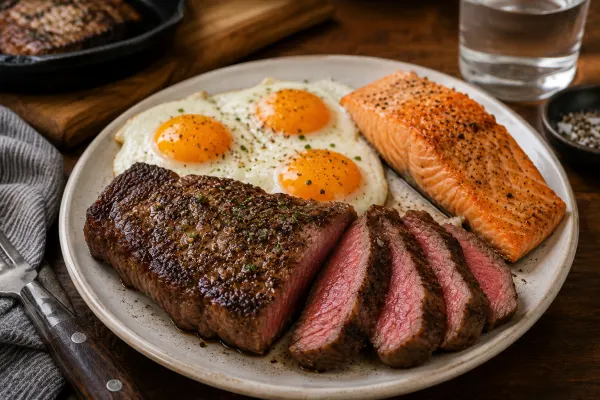
Losing body fat still requires an energy deficit, but that doesn't mean food quality is irrelevant. A high-protein, whole-food diet can make weight loss easier by improving satiety, preserving muscle, and helping you build meals that are actually worth eating.
You don't need to live in the gym to build muscle. If weekly training volume, effort, progression, and recovery are handled correctly, three well-designed training days can produce excellent hypertrophy results.
Working at a desk doesn't have to mean living a sedentary lifestyle. Here's how much exercise desk workers should aim for, why movement breaks matter, and how to stay active when your job keeps you sitting for most of the day.
One gram of protein per pound is a practical target, not a muscle-building minimum. Learn what the research says, how to count your intake, and when context matters.
Beef tallow is making its way back into home kitchens. Here’s why we prefer this traditional cooking fat, what makes it stable under heat, and what the research actually says about tallow, seed oils, saturated fat, and heart health.
You don't need exactly 10,000 steps to benefit from walking, but that doesn't make 10,000 a bad goal. Here's what the research says about daily steps, how much walking makes a difference, and why your overall activity matters more than hitting one perfect number.
Matching calories and macros does not make diets nutritionally equivalent. Learn what trials show about ultra-processed foods, appetite, food quality, and practical choices.
Whole eggs provide protein and useful nutrients, but 2–4 daily is not a universal target. Understand cholesterol responses, research limits, and practical meal choices.
Weekly training volume can support muscle growth, but there is no universal optimum. Learn how to count challenging sets, account for compound exercises, and adjust your workload.
Whole fruit offers more than sugar. Learn how food structure, portions, and satiety matter, why juice and honey count as free sugars, and how fruit can fit your goals.
What creatine can add to training, how water affects early weight gain, and what evidence says about dosing, kidneys, hair loss, and uncertain cognitive benefits.
How to support nutrition and strength during GLP-1-based weight loss, what lean-mass studies actually measure, and why individualized long-term care matters.