Fruit vs. Added Sugar: Why Your Body Doesn't Treat an Apple Like a Soda
Sugar has become one of the most feared words in nutrition. That concern makes sense when we're talking about diets filled with soda, candy, pastries, sweetened cereals, and other ultra-processed foods. The problem begins when the same logic gets applied to an orange, a banana, a bowl of berries, or a spoonful of honey simply because they also contain glucose and fructose.
At FitCalc, we don't think that makes much sense. The source of sugar matters. Your body ultimately processes the individual sugar molecules found in different foods through many of the same metabolic pathways, but that doesn't make the foods themselves nutritionally equivalent. Food structure, fiber, water, micronutrients, polyphenols, digestion rate, portion size, and the rest of the meal all influence what happens after you eat it.
Whole fruit is one of our preferred carbohydrate sources. We also consider 100% fruit juice, particularly fresh-squeezed juice, and quality honey useful carbohydrate sources for healthy, active adults. That's very different from recommending that people obtain most of their carbohydrates from refined sugar and ultra-processed food.
Reducing nutrition to "sugar is sugar" ignores almost everything surrounding the sugar.
An Apple and a Soda Can Both Contain Sugar. That's About Where the Comparison Ends
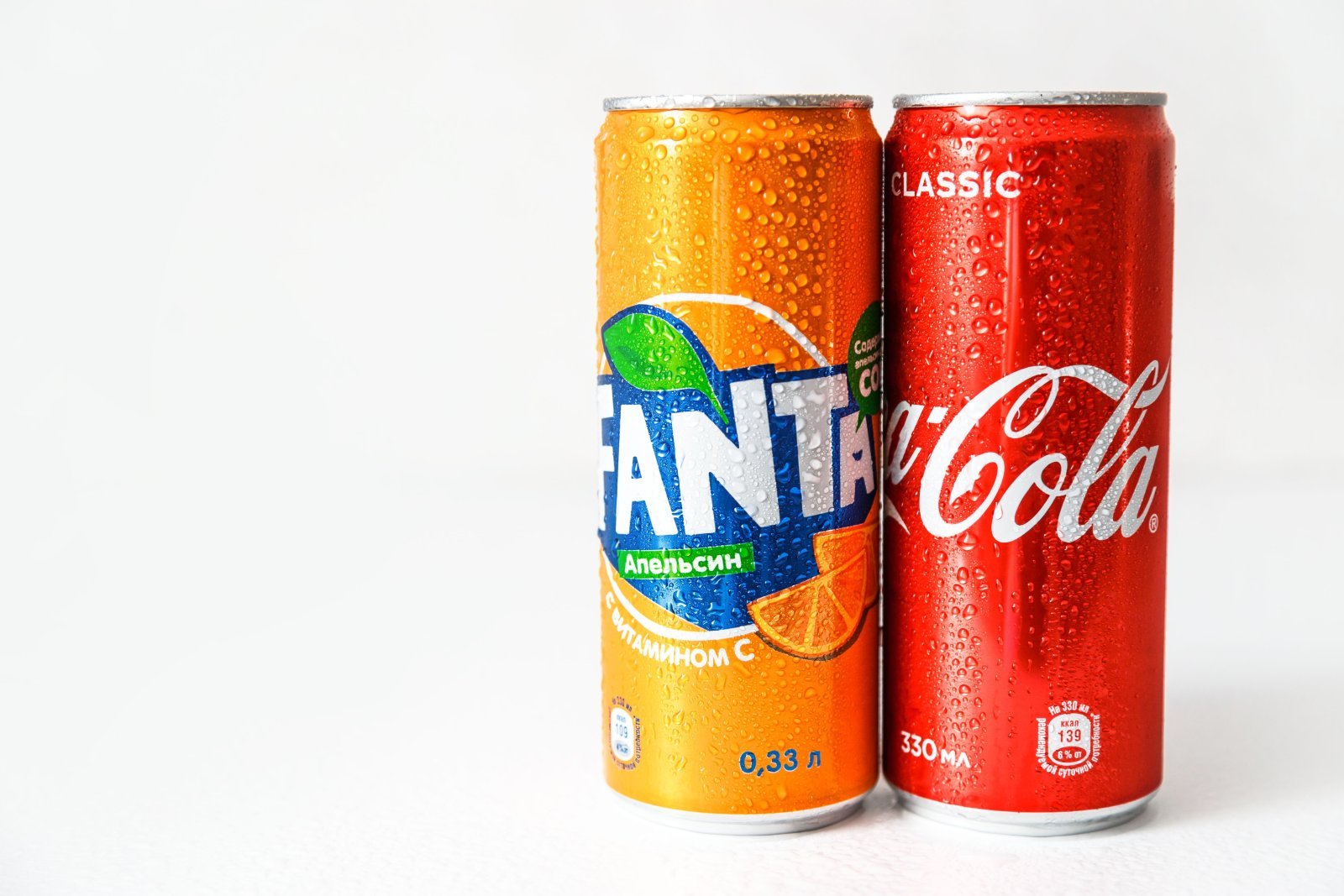
An average apple contains naturally occurring sugars, including fructose, glucose, and sucrose. A sugar-sweetened soda can also contain glucose and fructose, whether those sugars come from high-fructose corn syrup, sucrose, or another sweetener.
If we isolate those individual molecules, fructose remains fructose and glucose remains glucose. Your body doesn't have a special form of glucose reserved exclusively for fruit.
But we don't eat isolated molecules. We eat food.
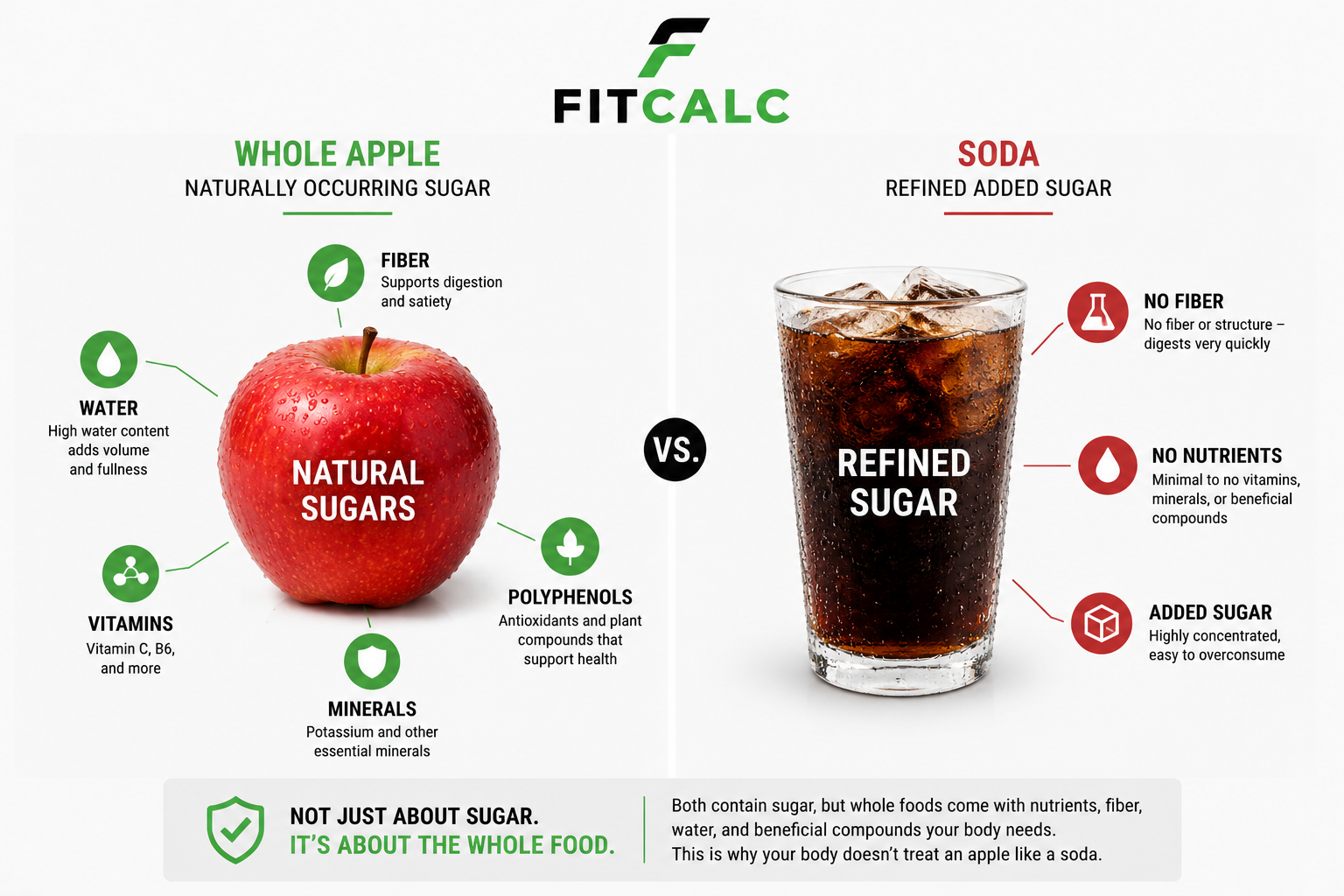
An apple contains water, fiber, vitamin C, potassium, polyphenols, and a physical cellular structure that must be chewed and digested. A typical soda delivers sugars already dissolved in liquid, with essentially none of the intact fruit structure and relatively little nutritional value accompanying the calories.
This distinction is increasingly recognized in research examining different sources of sugar. A review looking specifically at whether all sugars produce the same physiological response concluded that food source can meaningfully influence the effects of sugar, with food structure, fiber, potassium, polyphenols, and energy density among the factors that may explain differences between whole fruit, fruit juice, and sugar-sweetened beverages.
That's why comparing two foods based only on their grams of sugar can be misleading. Twenty grams of sugar tells us something about their carbohydrate content. It does not tell us everything about the foods delivering those carbohydrates.
Whole Fruit Comes With a Food Matrix
One of the most important differences is something called the food matrix. This simply refers to the physical structure of a food and the way its nutrients are packaged together.
When you bite into an apple, you have to chew through intact plant tissue. The sugars exist within a structure containing water and fiber rather than arriving as a concentrated solution. Digestion has to break that structure apart before all of its carbohydrates become available.
Fiber also contributes to fullness and can influence the rate at which a meal is digested. Fruit's high water content adds substantial volume without adding calories, which is one reason eating several hundred calories of whole fruit generally requires more effort than drinking the same number of calories from a sweetened beverage.
Then there are the nutrients that accompany the carbohydrates. Different fruits provide varying amounts of vitamin C, potassium, folate, carotenoids, and numerous polyphenols and other plant compounds. Berries don't provide exactly the same nutrients as bananas, and oranges don't provide exactly the same nutrients as watermelon, but whole fruit consistently gives you more than isolated sugar.
This is why we don't recommend avoiding fruit simply because someone is trying to reduce refined sugar. Eliminating soda while continuing to eat berries and oranges isn't inconsistent. They're completely different foods.
Does Fruit Sugar Spike Blood Sugar?
Fruit contains carbohydrates, so blood glucose can rise after eating it. That's normal. The human body is designed to handle changes in blood glucose after carbohydrate-containing meals.
What matters is context.
The glycemic response to a food depends on the amount and type of carbohydrate, the food's structure, fiber content, ripeness, preparation, what else is eaten with it, and the person's individual metabolic health. A banana eaten alongside eggs and beef, for example, exists within a very different meal than a large soda consumed on its own.
Research examining fructose-containing foods reinforces the importance of source. Controlled-intervention evidence has found different glycemic effects depending on whether sugars come from foods such as fruit or from nutrient-poor sources such as sugar-sweetened beverages.
This doesn't require pretending fruit has no effect on blood glucose. It means a temporary increase in glucose after eating carbohydrate is not, by itself, evidence that the food is unhealthy.
For a healthy, active person, carbohydrates are also useful. Glucose can be stored as glycogen in muscle and liver, and carbohydrate availability can support demanding training and physical activity. Someone lifting weights, playing sports, running, or working a physically demanding job has little reason to fear a banana because it contains sugar.
Fruit Can Actually Make a Good Diet Easier
There is another practical reason we like fruit: people generally enjoy eating it.
A healthy diet has to work outside a laboratory. If someone believes eating well requires eliminating everything sweet, avoiding carbohydrates, and living on bland food, that diet probably isn't going to last very long. Fruit gives people naturally sweet foods that also provide useful nutrition.
It is also extremely convenient. An apple requires no preparation. Bananas travel well. Frozen berries can be kept for months. Dates provide concentrated carbohydrates. Oranges and melons provide substantial water alongside their carbohydrate content.
For people trying to gain weight or support athletic performance, higher-carbohydrate fruits can make it easier to consume enough energy. For people trying to lose weight, fruits with large amounts of water and fiber can provide sweetness and food volume without requiring many calories.
Different goals may change which fruits or portions someone prefers, but we don't see a reason for the average healthy person to avoid fruit because of its natural sugar content.
What About Fruit Juice?
Fruit juice is where the conversation becomes more interesting because juicing changes the physical structure of the fruit.
When you squeeze oranges into a glass, much of the intact fiber and cellular structure remains behind. The resulting juice is easier to drink quickly, and it takes several oranges to produce a large glass. That makes it considerably easier to consume a large dose of carbohydrates from juice than from whole oranges.
We don't automatically consider that a problem.
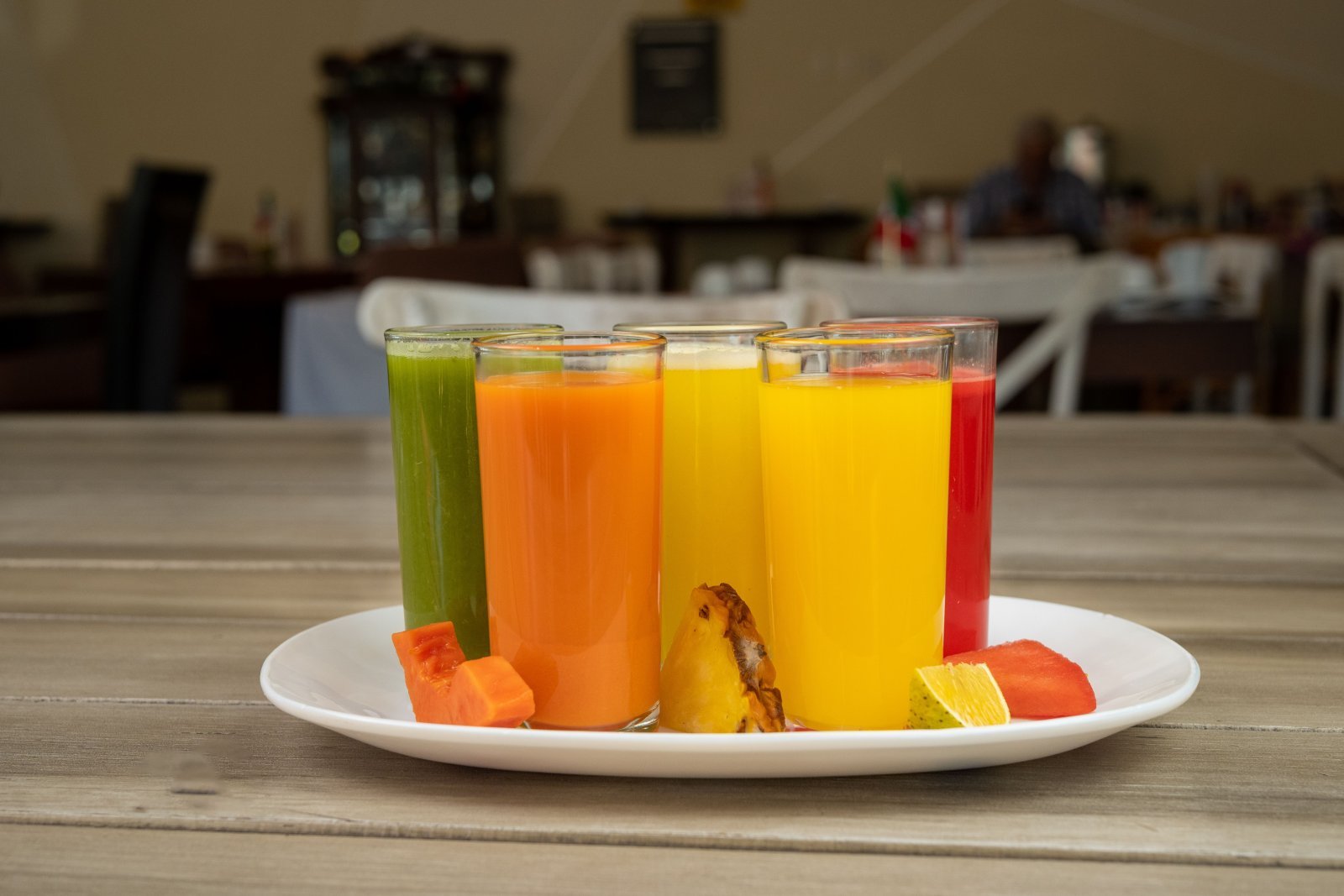
For an active adult who needs carbohydrates, 100% fruit juice can be a useful and enjoyable carbohydrate source. Orange juice provides vitamin C and potassium alongside its naturally occurring sugars. Other juices provide different combinations of micronutrients and plant compounds. Fresh-squeezed juice is our preference because it keeps the product simple: fruit goes in, juice comes out.
The important distinction is between 100% fruit juice and a "fruit drink" containing water, refined added sugar, flavorings, colors, and a small amount of actual juice. Those are not the same product simply because both have a picture of an orange on the label.
Research on 100% fruit juice is also considerably less alarming than the common claim that fruit juice is basically soda. A 2024 umbrella review examining systematic reviews and meta-analyses found that most evaluated health outcomes showed no significant effect from 100% juice, while some analyses reported potential benefits and relatively few reported adverse associations. The authors concluded that the overall evidence did not support excluding 100% fruit juice from healthy-eating guidance.
Whole fruit still has advantages, particularly its fiber and greater satiety. But "whole fruit is generally more filling" does not mean "fruit juice is unhealthy."
For someone training hard, a glass of fresh orange juice alongside a protein-rich breakfast can be an easy way to add carbohydrates. The same applies around exercise when rapidly digestible food may actually be desirable.
Honey Is Sugar, but It Isn't Something We Treat Like Candy
Honey deserves a similar distinction.
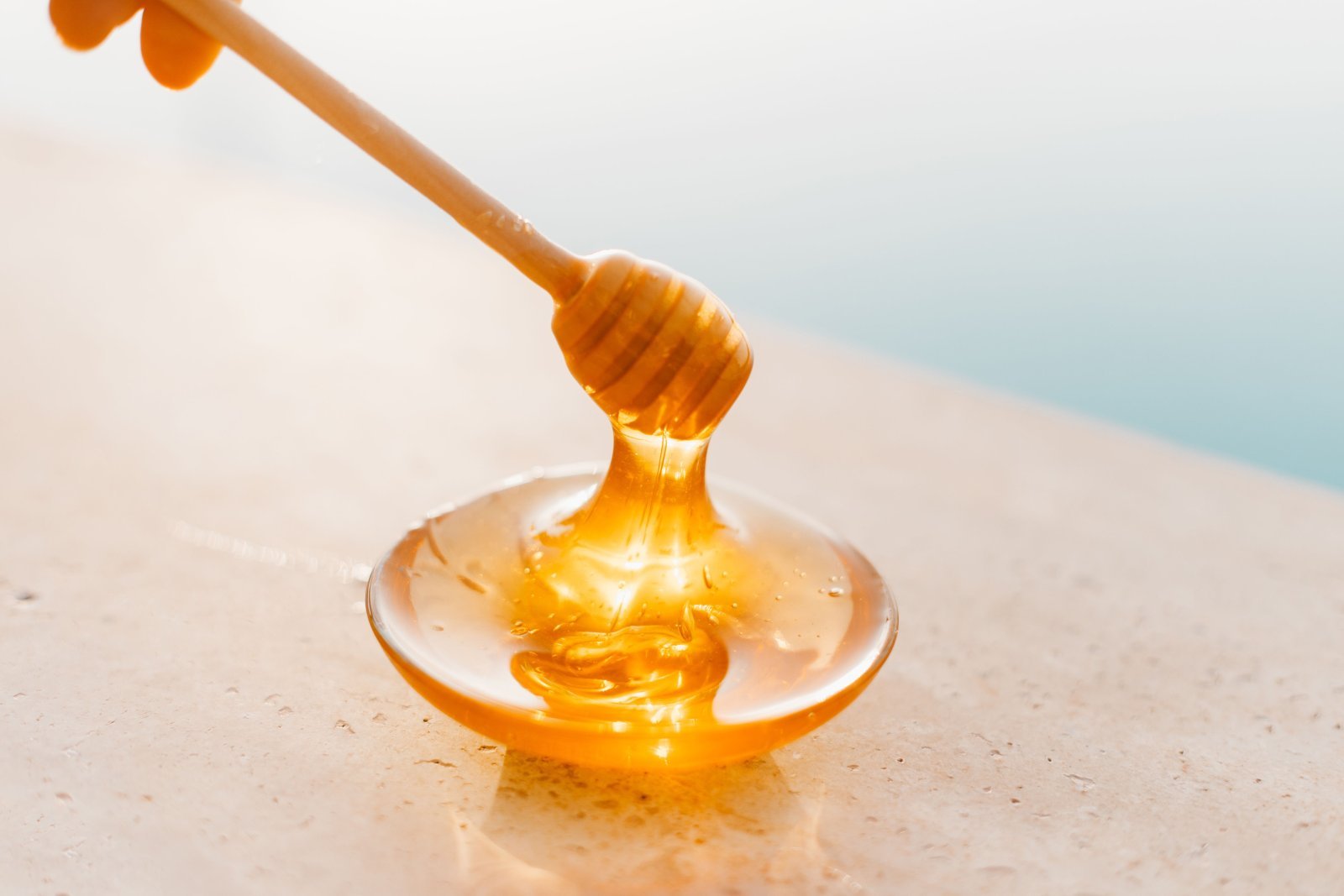
Honey is primarily carbohydrate and should be treated as a concentrated carbohydrate source. A tablespoon contains a meaningful amount of sugar, and adding six tablespoons of honey to something doesn't suddenly become calorie-free because the honey came from bees.
But honey is also a traditional food that contains a mixture of sugars alongside small amounts of minerals, organic acids, enzymes, and various bioactive compounds. Its composition varies depending on the floral source and how it has been processed.
Controlled-trial research has produced some interesting results. A systematic review and meta-analysis of 18 controlled trials involving more than 1,100 participants found that honey consumption was associated with modest improvements in several cardiometabolic markers, including fasting glucose, triglycerides, LDL cholesterol, and HDL cholesterol, although the certainty of evidence varied and many findings were considered low-certainty. Raw honey and certain floral sources appeared particularly interesting in subgroup analyses.
That doesn't turn honey into medicine, and newer analyses have reinforced that the effects can vary depending on dose and population. It does, however, demonstrate why the simplistic idea that every food containing sugar must have identical health effects doesn't hold up particularly well.
At FitCalc, we prefer quality honey over refined table sugar or highly processed sweeteners when someone wants to add sweetness or easily digestible carbohydrates. Raw or minimally processed honey is our preference.
A spoonful over fruit or Greek yogurt, some honey before physical activity, or honey used in a homemade recipe fits comfortably into the kind of diet we advocate.
Refined Added Sugar Is a Different Part of the Diet
Our criticism of refined added sugar isn't based on the idea that a molecule of glucose suddenly becomes poisonous when it enters a factory. The problem is how refined sugars are commonly delivered and consumed.
Added sugars are easy to incorporate into foods that are extremely calorie-dense and easy to overeat. Soda can provide hundreds of calories without requiring any chewing. Cookies, pastries, candy, sweetened cereals, and desserts frequently combine refined sugar with refined flour, added fats, flavorings, and other ingredients that make consuming large amounts of energy remarkably easy.
These foods can displace more nutrient-dense foods as well. Five hundred calories from candy doesn't simply add sugar to the diet. Those calories could otherwise have come from meat, eggs, dairy, fruit, potatoes, rice, or other foods providing protein and micronutrients.
This is why the overall dietary pattern matters more than finding one ingredient and pretending it explains everything. A diet dominated by refined and ultra-processed foods is fundamentally different from one built around whole foods, even when someone manages to make the carbohydrate totals look similar.
If most of your carbohydrates come from fruit, potatoes, rice, quality dairy, honey, and other simple foods, we're far less concerned about the fact that some of those foods contain sugar.
Do You Need to Limit Fruit When Trying to Lose Weight?
Not because of the sugar.
Fat loss still requires an appropriate energy balance over time. If someone consumes more calories than they expend, eating exclusively "natural" foods doesn't make the excess energy disappear. Honey and juice are particularly easy to consume in larger quantities, so portions can matter when calories are deliberately restricted.
Whole fruit, however, can be extremely useful during weight loss precisely because many fruits provide considerable volume and sweetness for relatively few calories. Strawberries, watermelon, oranges, peaches, and similar fruits contain large amounts of water. An apple or banana can also make a convenient snack without requiring an ultra-processed replacement.
There's no metabolic rule stating that someone must remove bananas or grapes before body fat can decrease.
If your calorie intake supports fat loss, fruit does not need to be the enemy.
The same common sense applies in the opposite direction. Someone trying to gain weight may intentionally choose more calorie-dense fruits, dried fruit, honey, or fruit juice because consuming enough carbohydrates and calories becomes easier.
The food remains the same. The person's goal changes how it is used.
The FitCalc Approach
We don't believe sugar should be evaluated without considering where it came from.
Whole fruit is one of our preferred carbohydrate sources and can be eaten regularly as part of a healthy diet. It provides naturally occurring carbohydrates alongside water, fiber, vitamins, minerals, and plant compounds in an intact food matrix.
For healthy, active adults, we also view 100% fruit juice and quality honey as useful carbohydrate sources. Fresh-squeezed juice is our preference, and raw or minimally processed honey is an easy way to add carbohydrates and sweetness without reaching for heavily refined products. They are more concentrated than whole fruit, so someone managing calorie intake should use an amount appropriate for their goals.
Refined added sugars and ultra-processed sweets belong in a different category. They make it remarkably easy to consume large amounts of energy while contributing relatively little nutrition, and they frequently arrive inside foods designed around combinations of refined ingredients rather than nutrient density.
That doesn't mean you need to panic because you ate a piece of birthday cake. As with the rest of our nutrition philosophy, what you do consistently matters more than an occasional exception.
But an apple is not a soda simply because both contain sugar. A glass of fresh orange juice is not nutritionally identical to a soft drink. A spoonful of raw honey isn't the same food as a handful of candy.
Calories matter. Total carbohydrate matters. Sugar quantity can matter.
The source still matters too.
Sources
Mela DJ, Woolner EM. Are all sugars equal? Role of the food source in physiological responses to sugars with an emphasis on fruit and fruit juice. Reviews evidence showing that the food source of sugar can influence physiological responses and discusses the roles of food structure, fiber, potassium, polyphenols, and energy density.
Sievenpiper JL, et al. Food sources of fructose-containing sugars and glycaemic control: systematic review and meta-analysis of controlled intervention studies. Examined whether the effects of fructose-containing sugars differ according to the foods supplying them, including fruit and sugar-sweetened beverages.
Ruxton CHS, et al. Health effects of drinking 100% juice: an umbrella review of systematic reviews with meta-analyses. 2024. The review found that most evaluated outcomes were neutral, some showed potential benefits, and the overall evidence did not support excluding 100% fruit juice from healthy dietary guidance.
Ahmed A, et al. Effect of honey on cardiometabolic risk factors: a systematic review and meta-analysis. Nutrition Reviews. 2023. Included 18 controlled trials and examined glycemic control, blood lipids, blood pressure, inflammatory markers, and other cardiometabolic outcomes.
Norouzzadeh M, et al. Dosage exploration of the effects of honey and its derivatives on cardiometabolic outcomes: an overview of systematic reviews and GRADE-assessed updated meta-analysis. Nutrition & Diabetes. 2025. Evaluated randomized evidence concerning honey and other bee products while emphasizing differences by dose and population.