The Best Calorie-Dense Whole Foods for Gaining Weight Without Living on Junk Food
For someone who has always been naturally skinny, "just eat more" can be surprisingly frustrating advice. You may already feel like you eat plenty. You might finish large meals, rarely skip breakfast, and still step on the scale a month later to find that your weight has barely moved.
The basic reason is straightforward: to gain weight consistently, you need to consume more energy than your body uses. If your weight isn't increasing over time, your average calorie intake isn't high enough to produce that result, regardless of how large individual meals may feel.
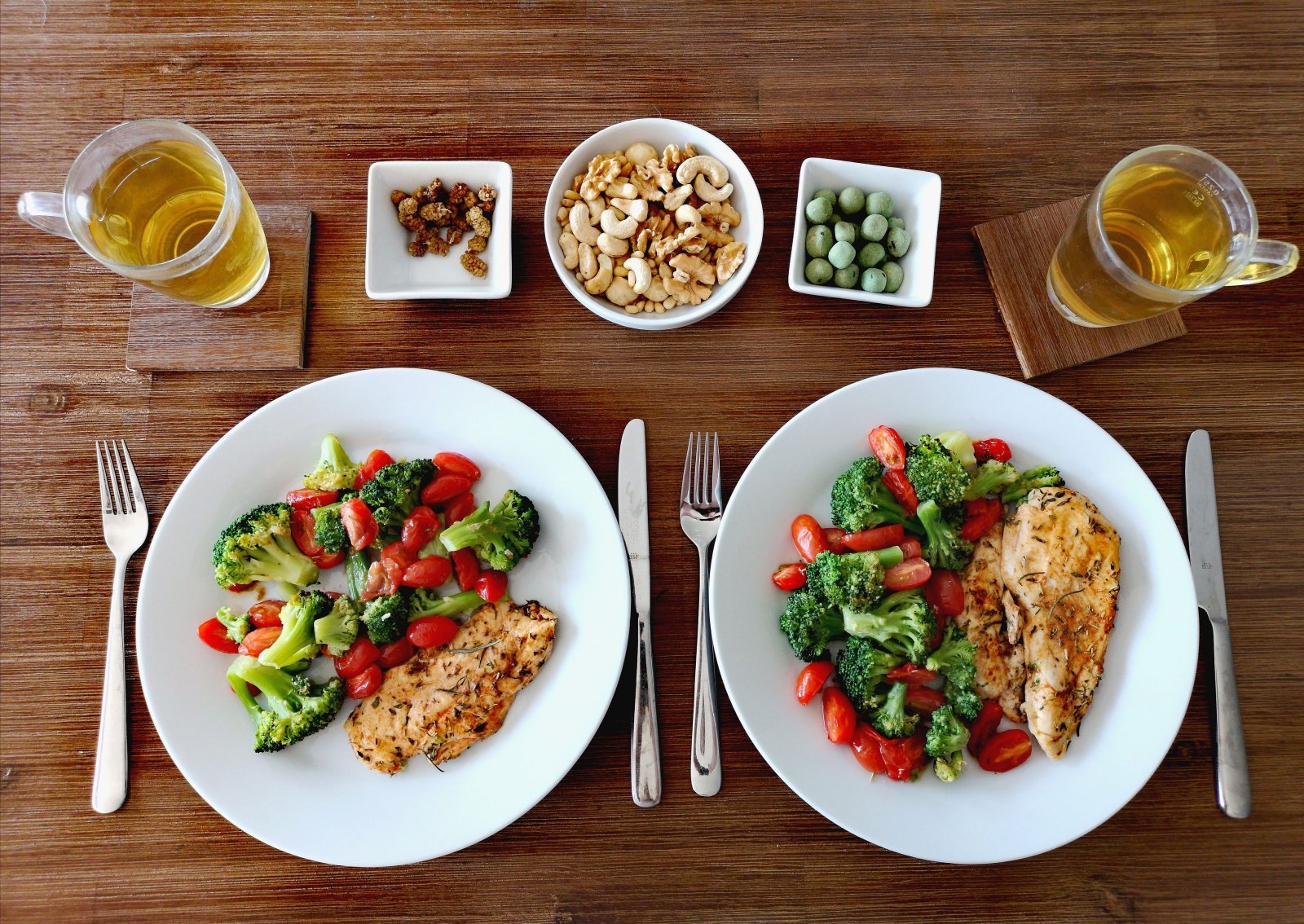
That doesn't mean the solution is to spend every evening eating fast food, candy, pastries, and other ultra-processed foods just because they're easy calories. At FitCalc, we'd rather make a whole-food diet more calorie dense. Fattier meats, eggs, rice, potatoes, quality dairy if tolerated, fruit, olive oil, avocado, nuts, nut butters, honey, and 100% fruit juice can make reaching a calorie surplus considerably easier without abandoning food quality.
For people who struggle to gain weight, choosing the right foods can be just as important as trying to eat larger portions.
First, You Still Need a Calorie Surplus
No particular food causes weight gain independently of total energy intake. Peanut butter won't make you gain weight if your overall diet still leaves you consuming fewer calories than you expend, and eating perfectly "clean" foods doesn't override the same principle.
Your first step should therefore be estimating how many calories you currently need to maintain your weight. FitCalc's TDEE Calculator can provide a useful starting estimate based on factors including bodyweight and activity level. From there, adding roughly 300–500 calories per day is a common starting strategy for intentional weight gain. A review of weight-gain recommendations for athletes found that this range is commonly recommended alongside adequate protein, carbohydrates, energy-dense foods, and resistance training.
The exact surplus required varies. Calorie calculators provide estimates, not laboratory measurements of your metabolism. If you add 300 calories and your average morning bodyweight remains unchanged for several weeks, you probably need to eat more. If weight is increasing much faster than intended, particularly during a muscle-building phase, the surplus may be unnecessarily large.
This is why the scale is useful when viewed over time. Daily bodyweight fluctuates because of water, food, glycogen, sodium, and other factors, so don't react to every morning measurement. Look at the trend across several weeks and adjust your intake based on what is actually happening.
Why "Eating Healthy" Can Accidentally Make Weight Gain Harder
Whole foods are often recommended for weight loss because many are filling relative to their calorie content. That's useful when someone is deliberately trying to eat less energy, but the same property can become frustrating when the goal is gaining weight.
Imagine trying to reach 3,000 calories using nothing but chicken breast, huge salads, steamed vegetables, berries, and very lean foods. You could build an extremely nutritious diet and still spend most of the day feeling stuffed. Low-energy-density foods provide a relatively large volume of food for comparatively few calories, which is precisely why they're frequently used to help control calorie intake during weight loss.
For weight gain, we can use the same principle in reverse. You don't need to abandon whole foods. You need to choose more calorie-dense versions of them.
Instead of making every protein source extremely lean, include fattier cuts of meat. Instead of eating a plain potato, add butter or olive oil. Instead of forcing down another giant plate when you're already full, use calorie-dense toppings or drink some of your carbohydrates. Small changes can add hundreds of calories without dramatically increasing the physical amount of food on your plate.
1. Fattier Beef and Ground Beef
Beef is one of our favorite foods for healthy weight gain because it combines high-quality complete protein with substantial calories and useful micronutrients. It provides vitamin B12, zinc, iron, selenium, creatine, and other nutrients alongside the protein needed to support muscle growth.
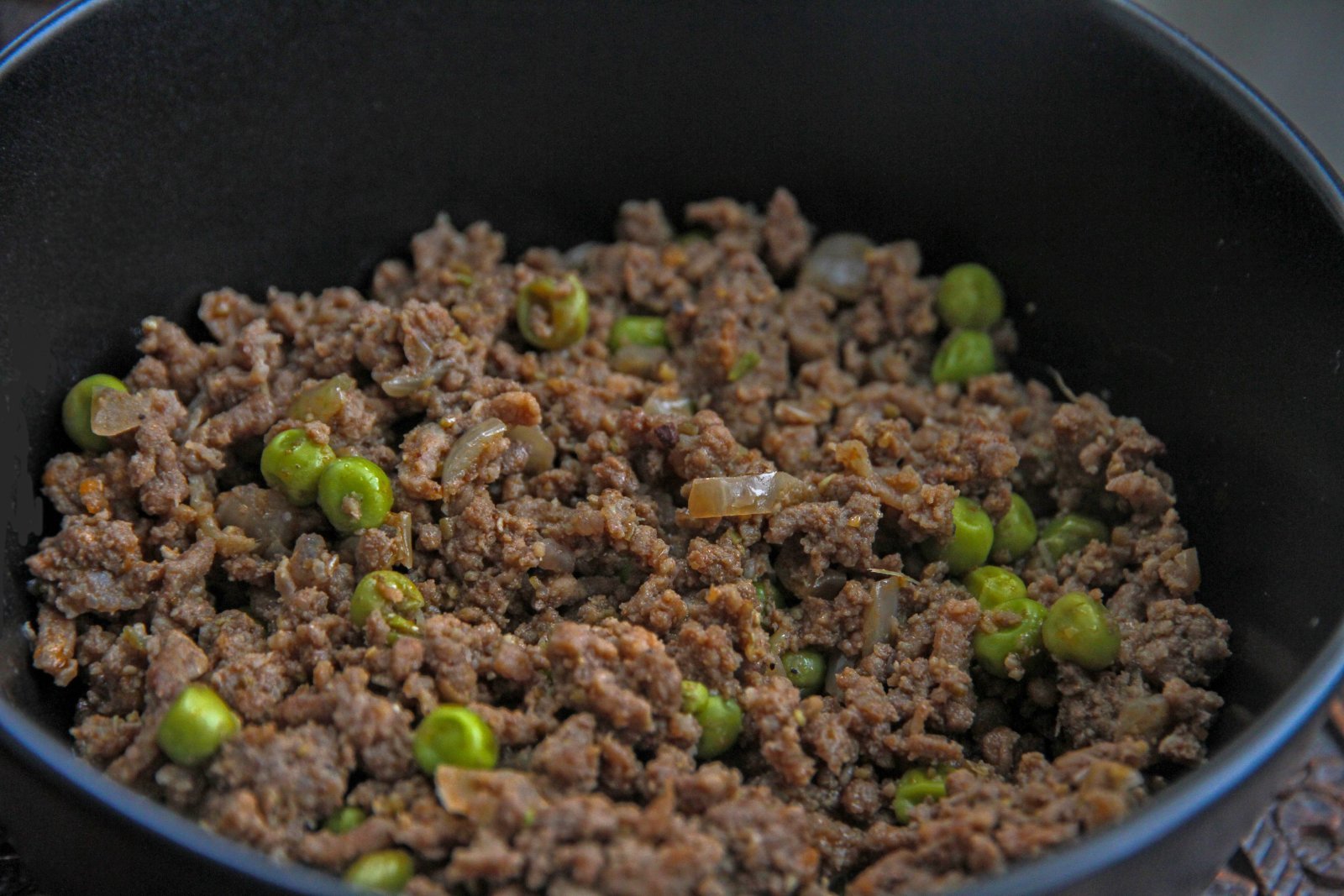
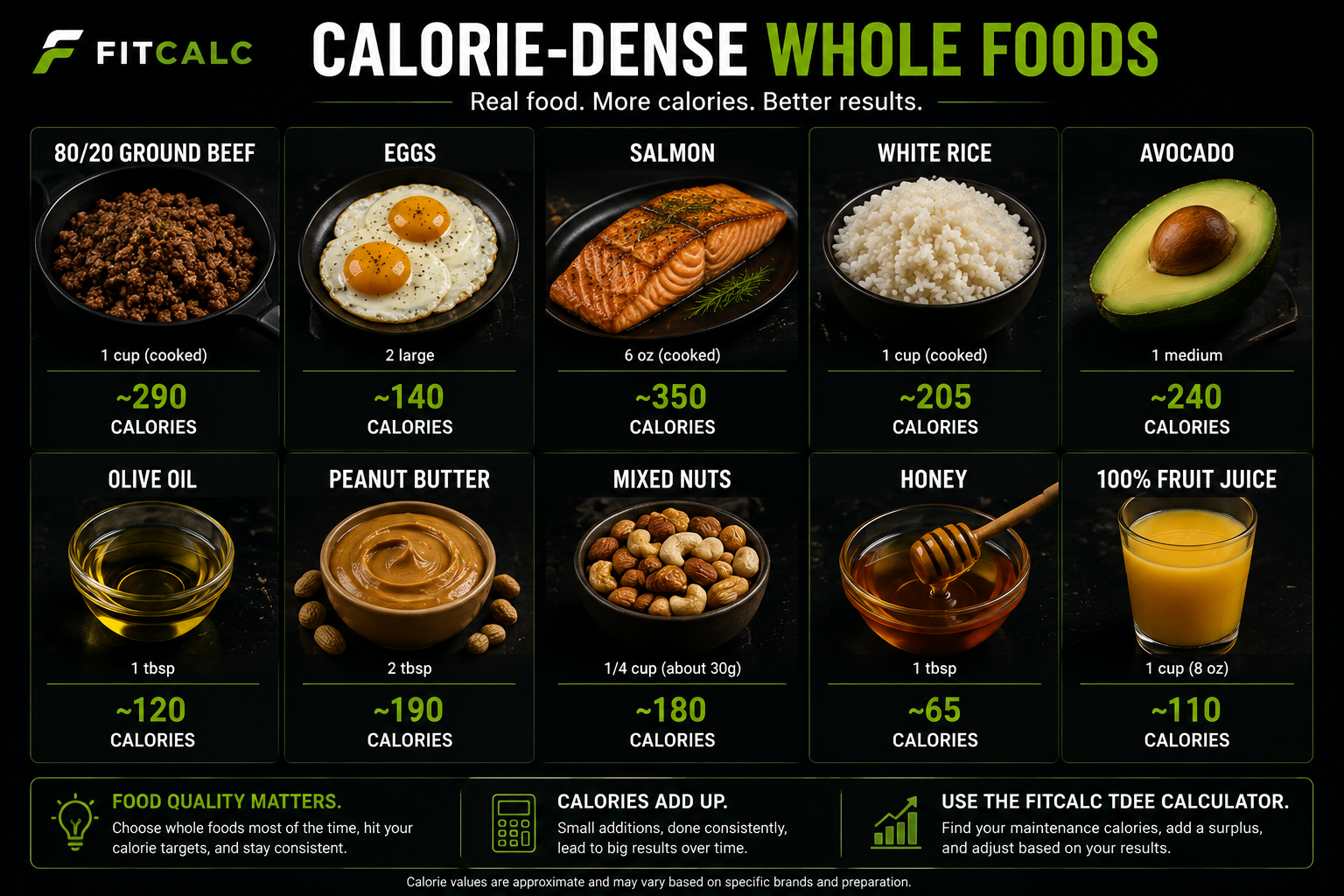
For someone struggling to gain weight, 80/20 ground beef can be more useful than making every meal with extremely lean ground beef. The additional fat increases calorie density considerably without requiring you to eat a larger portion of meat. Steak and other naturally fattier cuts can serve the same purpose.
This doesn't mean every piece of meat needs to be the fattiest cut available. The point is that someone struggling to reach a calorie target has little reason to automatically strip every source of dietary fat from the meal.
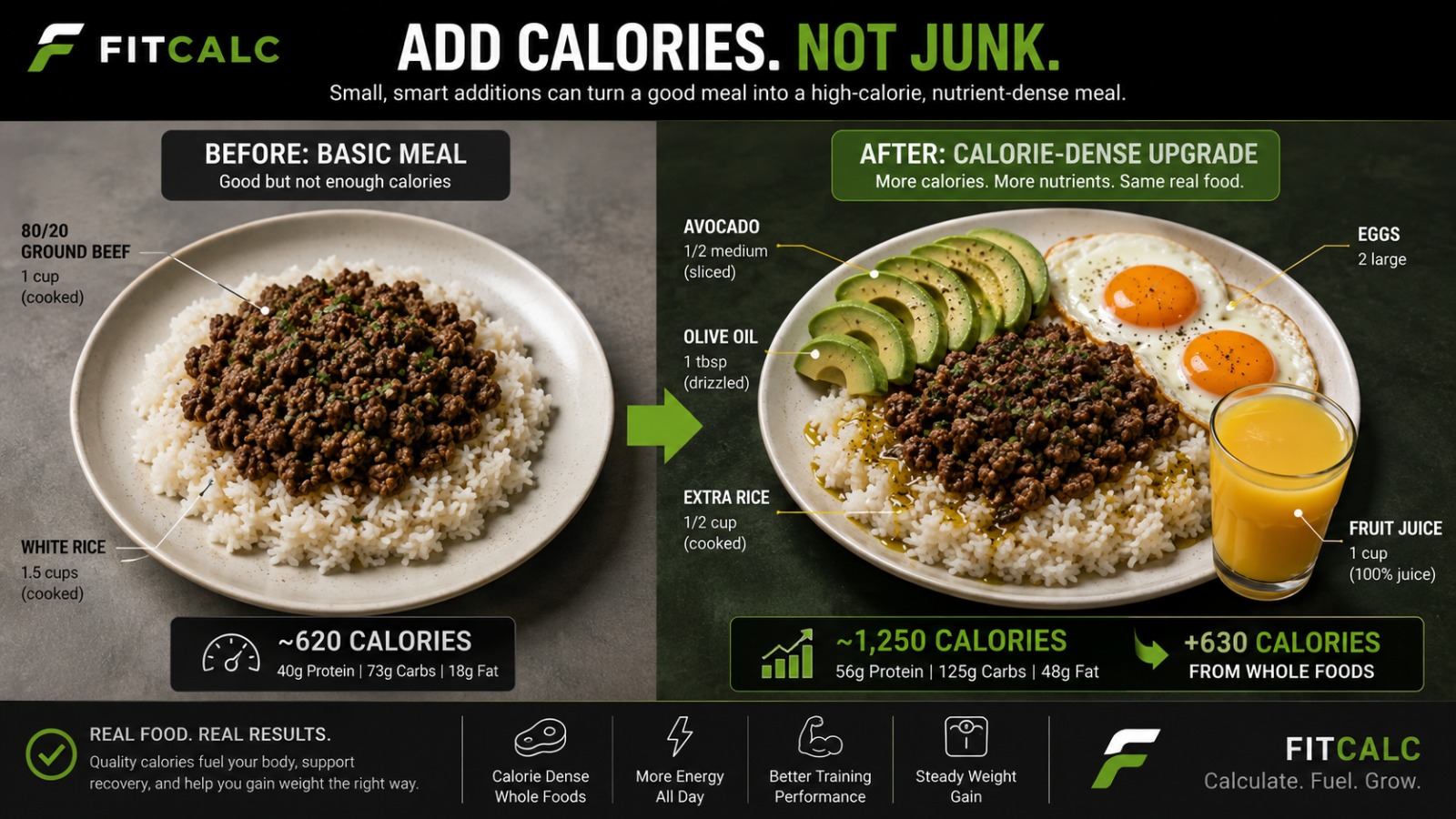
A bowl containing ground beef and rice can easily become a substantial weight-gain meal while remaining extremely simple. Add avocado, fruit, or another carbohydrate source and you have protein, fats, carbohydrates, and micronutrients without needing a long ingredient list.
2. Whole Eggs
Eggs are another easy way to add both calories and high-quality animal protein. Three or four whole eggs can fit alongside breakfast, beef, potatoes, or rice without creating an enormous amount of food.
As we discussed in our article on eating eggs daily, we recommend eating the whole egg rather than throwing away the yolk. The yolk contributes calories but also contains much of the egg's choline, carotenoids, vitamins, minerals, and fat.
For someone trying to gain weight, replacing whole eggs with a giant plate of egg whites makes little practical sense unless there is a specific reason to restrict calories or fat. The goal here is the opposite. We want nutritious foods that make eating enough easier.
Eggs are also inexpensive relative to many other animal proteins and can be prepared in minutes, making them particularly useful for adding another protein-centered meal to the day.
3. Salmon and Other Fatty Fish
Salmon provides high-quality protein while also contributing considerably more energy than very lean fish. Its fat includes the long-chain omega-3 fatty acids EPA and DHA, making it useful for reasons beyond simply increasing calories.
A serving of salmon with white rice or potatoes creates an easy calorie-dense meal without requiring processed ingredients. Add olive oil, avocado, or another energy-dense whole-food ingredient and the calories increase quickly.
If appetite is a major problem, variety also matters. Eating ground beef three times every day may technically work, but many people eventually become tired of the same foods. Rotating beef, eggs, salmon, chicken, dairy, and other animal foods can make a high-calorie diet considerably easier to maintain.
4. White Rice
Rice is one of the simplest carbohydrate sources for people trying to eat more.
For weight gain, we particularly like white rice because it is easy to prepare, relatively easy to digest for many people, and simple to consume in substantial portions. It also pairs naturally with beef, chicken, eggs, fish, and countless other foods.
Rice itself isn't extraordinarily calorie dense compared with pure fats, but it becomes extremely useful because it allows you to add several hundred carbohydrate calories to a meal without overwhelming amounts of chewing or fiber. Someone struggling to eat enough may find a bowl of rice much easier than trying to obtain the same calories from several additional servings of fibrous vegetables.
Adding olive oil, butter, tallow, avocado, or the natural fat from ground beef can increase the energy content further without dramatically changing the volume of the meal.
5. Potatoes Prepared for Weight Gain
Potatoes sometimes get treated as a diet food because plain boiled potatoes are extremely filling. That doesn't mean they can't work for gaining weight.
Preparation changes everything.
A plain potato and potatoes roasted with olive oil or beef tallow are very different meals from a calorie standpoint. Add butter if you tolerate dairy, serve them alongside steak or ground beef, and suddenly potatoes become part of a substantial weight-gain meal.
This is an important lesson beyond potatoes themselves. You don't always need different foods. Sometimes you need to prepare the foods you already eat differently.
Someone who enjoys potatoes shouldn't replace them simply because rice is easier to eat in larger quantities. Use whichever carbohydrates make it easiest to consistently reach your calorie target.
6. Whole-Fat Dairy, If You Tolerate It
For people who tolerate dairy well, whole milk, Greek yogurt, cottage cheese, and cheese can make weight gain significantly easier while providing high-quality animal protein and calcium.
Whole milk is particularly convenient because calories can be added to a meal without requiring more solid food. A glass alongside breakfast or dinner provides protein, carbohydrates, and fat in a relatively easy-to-consume form.
This can be especially helpful for people whose appetite disappears after large meals. Reviews of intentional weight-gain strategies have identified nutrient-containing beverages and liquid meals as potentially useful tools for increasing calorie intake, although the effect of liquid versus solid calories on satiety varies between people and studies.
If dairy doesn't agree with you, don't force it. There are plenty of other ways to reach a calorie surplus.
7. Olive Oil, Avocado, Nuts, and Nut Butter
Dietary fat contains about 9 calories per gram, compared with roughly 4 calories per gram for protein and carbohydrate. That makes fat particularly useful when someone needs more calories without dramatically more food volume.
Extra-virgin olive oil can be added to rice, potatoes, vegetables, or finished meals. Avocado provides fat alongside potassium, fiber, and other nutrients. Nuts are extremely calorie dense for their size, while natural peanut or other nut butters can add several hundred calories with very little effort.
These foods are valuable because they can modify meals you're already eating. You don't necessarily need to schedule another dinner. Adding a couple tablespoons of olive oil across the day, eating some nuts, or adding nut butter to fruit can close a calorie gap without leaving you painfully full.
Portions still matter. The same calorie density that makes these foods useful for gaining weight makes them easy to underestimate, so someone tracking calories should measure them accurately at least until they develop a good sense of serving size.
8. Fruit, Dried Fruit, Honey, and 100% Fruit Juice
Fruit is one of our preferred carbohydrate sources, but certain forms are particularly useful for gaining weight.
Bananas, mangoes, grapes, dates, and other sweeter or more calorie-dense fruits can provide carbohydrates without requiring enormous portions. Dried fruit removes much of the water, concentrating the calories into a much smaller volume. Dates with natural peanut butter, for example, can become a surprisingly calorie-dense snack made from very simple ingredients.
Honey is another easy way to increase carbohydrates. Add it to fruit, yogurt, toast, or other foods you already eat. It is concentrated, so a relatively small amount can meaningfully increase the calorie content of a meal.
Then there is 100% fruit juice. Whole fruit has advantages from fiber and satiety, but satiety isn't always what someone struggling to gain weight needs. Fresh-squeezed orange juice or another 100% fruit juice can provide carbohydrates in a form that is easy to consume alongside meals. We prefer fresh-squeezed juice when practical, but a simple 100% juice without unnecessary added ingredients can also work.
This is one situation where the ease of consuming liquid calories can be an advantage rather than a problem.
You Don't Need a Dirty Bulk
Once someone realizes junk food makes gaining weight easy, the temptation is to stop caring about food quality entirely.
That's the classic "dirty bulk": eat as much as possible, watch the scale climb, and assume more weight automatically means more muscle.
It doesn't.
A calorie surplus supports weight gain, but your body's ability to build new muscle tissue is limited. Once you're providing enough energy to support training and growth, making the surplus dramatically larger doesn't force muscle to appear proportionally faster. The extra weight increasingly has somewhere else to go, including body fat.
Research on intentional weight gain acknowledges that the exact surplus required to maximize hypertrophy is not firmly established, and individual response varies considerably. For bodybuilders specifically, published recommendations commonly suggest a more controlled surplus of roughly 10–20% above maintenance, with novice and intermediate lifters targeting around 0.25–0.5% of bodyweight gained per week and advanced lifters generally taking a more conservative approach.
For someone who is genuinely underweight and primarily trying to restore bodyweight, the priorities may be somewhat different. But even then, calorie-dense whole foods give you a way to increase energy intake without turning most of your diet into ultra-processed food.
A Simple High-Calorie Day Doesn't Need to Look Crazy
A weight-gain diet can still look like normal food.
Breakfast might contain four whole eggs, potatoes cooked in tallow, fruit, and whole milk or juice. Lunch could be 80/20 ground beef with a generous serving of white rice and avocado. A snack might include Greek yogurt with honey and fruit, or dates with natural peanut butter. Dinner could be salmon or steak with potatoes, rice, or another carbohydrate source finished with olive oil.
None of those meals require mass-gainer powder or a drive-through.
The exact foods and portions depend on your calorie needs, appetite, preferences, and tolerances. Someone requiring 2,600 calories to gain weight has a very different problem from someone who needs 3,800. This is why estimating your maintenance intake first and then monitoring your weight trend is so useful.
If your meals already look similar to this but you're still not gaining, increase portions or add calorie density before assuming your metabolism has somehow made weight gain impossible. Another cup of rice, an extra tablespoon of olive oil, two more eggs, a glass of juice, or a serving of nut butter can collectively change your daily intake considerably.
If You're Lifting, Make the Extra Calories Count
Someone trying to gain weight does not have to be a bodybuilder, but if building muscle is part of the goal, resistance training should accompany the calorie surplus.
Progressive resistance training gives your body a reason to adapt by building muscle tissue. Modern evidence strongly supports resistance training for increasing muscle size, with training volume and progressive overload among the variables that influence hypertrophy.
Protein matters as well. As we've discussed in our protein article, FitCalc recommends approximately 1 gram of high-quality protein per pound of bodyweight per day for someone serious about maximizing muscle growth, with meat, eggs, dairy, fish, and poultry forming the foundation.
Once those pieces are covered, the additional calories required for the surplus can largely come from the carbohydrate and fat sources that make the diet easiest to maintain. Rice, potatoes, fruit, juice, honey, olive oil, avocado, and other calorie-dense foods can support the higher energy demands without forcing protein intake unnecessarily high.
A good bulk should make you stronger, better fueled, and gradually heavier. It doesn't need to make you feel sick from eating or cause your bodyweight to explode upward as quickly as possible.
The FitCalc Approach
If you're naturally skinny or underweight and struggling to gain, stop trying to solve the problem by simply eating enormous amounts of low-calorie food. You need a consistent calorie surplus, and making your meals more energy dense can make that surplus considerably easier to maintain.
Build most of your diet around quality foods: beef, eggs, fish, dairy if tolerated, rice, potatoes, fruit, avocado, olive oil, nuts, nut butter, honey, and 100% fruit juice. Choose fattier protein sources when appropriate, add quality fats to meals, use easy-to-digest carbohydrates generously, and don't be afraid to drink some of your calories when appetite is limiting you.
You also don't need to eat perfectly. An occasional restaurant meal or processed food isn't going to ruin your health or your weight-gain progress. But needing more calories is not a reason to make ultra-processed food the foundation of your diet.
Start by estimating your maintenance calories, add a reasonable surplus, and track your average bodyweight. If the scale isn't moving after a few consistent weeks, increase your intake. Your body can't gain weight from calories you intended to eat but never actually consumed.
Gaining weight may require more food than you're naturally comfortable eating. That's exactly why food selection matters.
Eat more calories, not necessarily more volume.
Sources
Mayo Clinic Staff. Underweight? See how to add pounds healthfully. Mayo Clinic. Recommends nutrient- and calorie-dense foods, more frequent eating, calorie-rich additions to meals, and nutritious beverages for people trying to gain weight.
Garthe I, et al. Weight Gain Recommendations for Athletes and Military Personnel: a Critical Review of the Evidence. Current Nutrition Reports. 2022. Reviews common intentional weight-gain strategies, including calorie surpluses of approximately 300–500 kcal/day, larger portions, energy-dense foods, and liquid nutrition.
Slater GJ, Dieter BP, Marsh DJ, Helms ER, Shaw G, Iraki J. Is an Energy Surplus Required to Maximize Skeletal Muscle Hypertrophy Associated With Resistance Training? Frontiers in Nutrition. 2019. Reviews the role of energy surplus in supporting muscle hypertrophy and the uncertainty surrounding an exact optimal surplus.