Why High-Protein Diets Make Weight Loss Easier Even When Calories Still Matter
Weight loss is often reduced to one instruction: eat fewer calories than you burn. At the most basic level, that's true. If your body consistently receives less energy than it uses, stored energy has to make up the difference. But knowing that doesn't tell you what to eat, how hungry you're going to be, or whether the weight you lose comes entirely from body fat.
At FitCalc, we're much more interested in improving the quality of someone's diet than teaching them to survive on the smallest number of calories possible. Build most meals around quality animal protein, eggs, fruit, vegetables, potatoes, rice, and other whole or minimally processed foods. Once that foundation is in place, calorie intake becomes much easier to manage.
Protein is particularly valuable during weight loss because it addresses several problems at once. It tends to be more satiating than the other macronutrients, requires more energy to digest and process, and helps preserve lean tissue when calories are restricted. Combined with resistance training, a high-protein diet can help make sure your weight-loss phase is focused as much as possible on losing fat rather than simply making the number on the scale smaller.
Calories Still Matter, but They Aren't the Whole Diet
There is no getting around energy balance. Someone can eat steak, eggs, fruit, avocado, and other nutritious foods and still gain weight if total calorie intake consistently exceeds what the body uses. Whole foods don't make the laws of energy balance disappear.
That doesn't mean the best advice for every beginner is to immediately weigh every blueberry and spend the rest of life entering meals into an app. For some people, tracking calories temporarily can be extremely useful because it teaches portion sizes and provides a realistic picture of how much they're actually eating. Our TDEE Calculator can also provide a starting estimate of how many calories you use each day, which can then be adjusted based on real changes in bodyweight.
But calorie totals tell only part of the story. A diet containing 2,000 calories of meat, eggs, fruit, potatoes, rice, and vegetables is very different from 2,000 calories built around soda, pastries, chips, candy, and fast food. Both provide energy, but they differ dramatically in protein, micronutrients, food volume, satiety, and how easy they are to overeat.
That's why food quality should be the foundation and calorie control should support it, not the other way around.
Protein Helps You Stay Full
One of the hardest parts of losing weight isn't understanding what a calorie deficit is. It's remaining in one long enough to make progress.
Hunger can make that difficult. As calorie intake decreases, the body doesn't necessarily cooperate by making you less interested in food. This is where protein becomes particularly useful.
Controlled research and reviews generally find that higher-protein meals and diets can increase satiety compared with lower-protein alternatives. A systematic review of randomized investigations found convincing evidence that higher protein intake increases both satiety and diet-induced thermogenesis. The evidence also suggested that high-protein meals can reduce subsequent energy intake, although longer-term weight-loss outcomes depend on whether the calorie deficit is actually maintained.
This is easy to appreciate outside a laboratory. A substantial serving of beef with potatoes and fruit usually produces a very different eating experience from consuming the same number of calories from a pastry and sweetened drink. The protein-rich meal requires more chewing, provides considerably more nutrition, and tends to feel like an actual meal rather than a temporary interruption in hunger.
Not every study finds a dramatic appetite advantage from simply increasing protein, particularly when total calories and other aspects of the diet are tightly controlled. But in real life, building meals around substantial servings of high-quality protein is one of the simplest ways to make a reduced-calorie diet more satisfying.
Protein Costs More Energy to Process
Calories from different macronutrients all contribute energy, but the body doesn't process each macronutrient with identical efficiency.
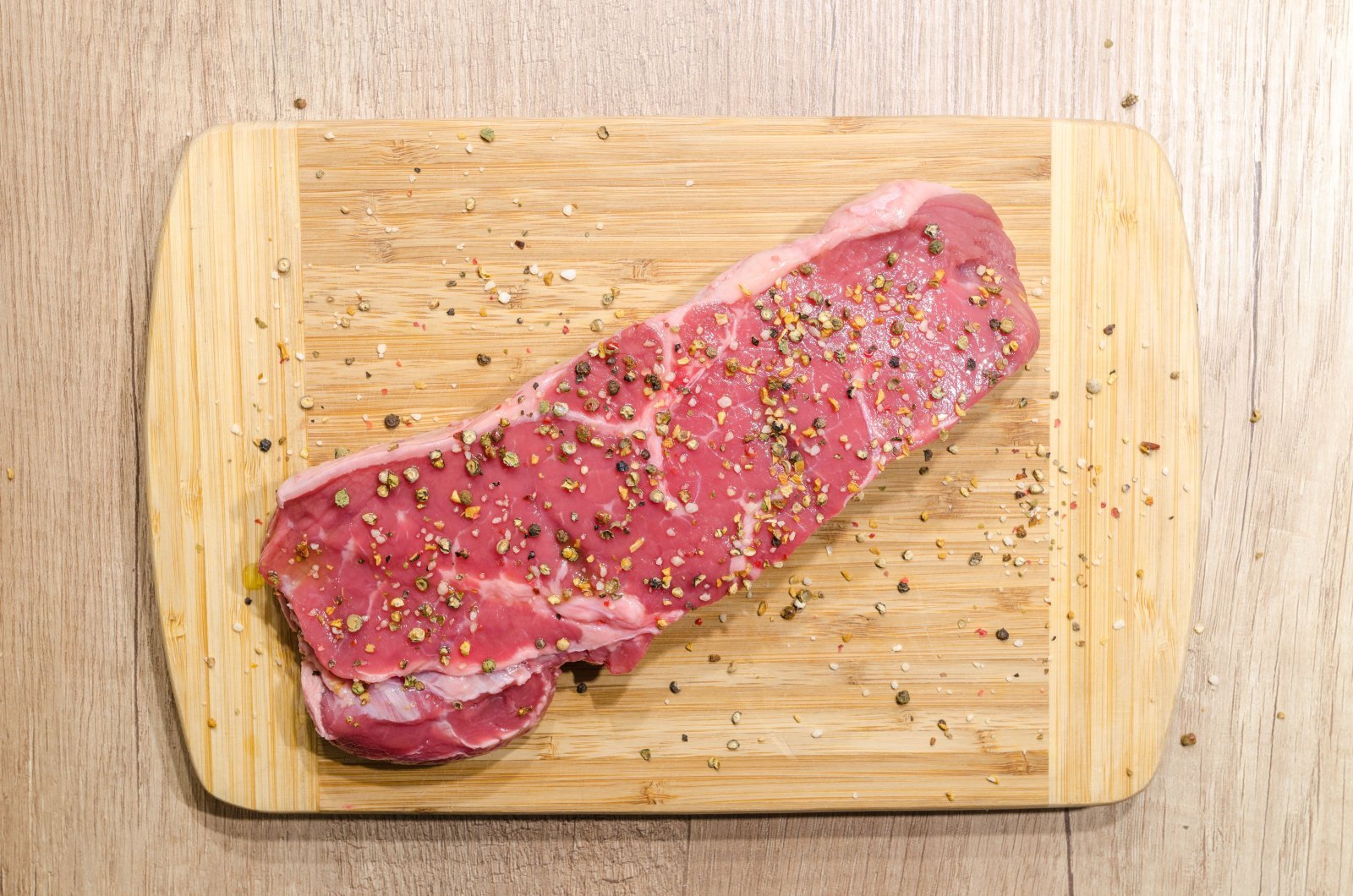
Digesting, absorbing, transporting, and metabolizing food itself requires energy. This is called the thermic effect of food. Protein has a substantially higher thermic effect than either carbohydrate or fat, meaning a larger portion of the energy contained in protein is used during its processing. Reviews of higher-protein diets consistently identify this increased diet-induced thermogenesis as one of the reasons protein can modestly increase energy expenditure.
This should not be exaggerated into the claim that protein somehow makes calories irrelevant. Eating an extra 1,000 calories of steak doesn't become a weight-loss strategy because protein has a high thermic effect. The difference is meaningful, but it's nowhere near large enough to overcome chronic overeating.
Instead, think of it as another small advantage. Protein can help with fullness while also requiring more energy to process than the same caloric amount of fat or carbohydrate. During a weight-loss phase, those advantages are useful.
Losing Weight and Losing Fat Aren't Exactly the Same Goal
If the only objective were making the scale decrease, preserving muscle wouldn't matter very much. You could simply eat as little as possible and celebrate every pound that disappeared.
That's not how we recommend approaching weight loss.
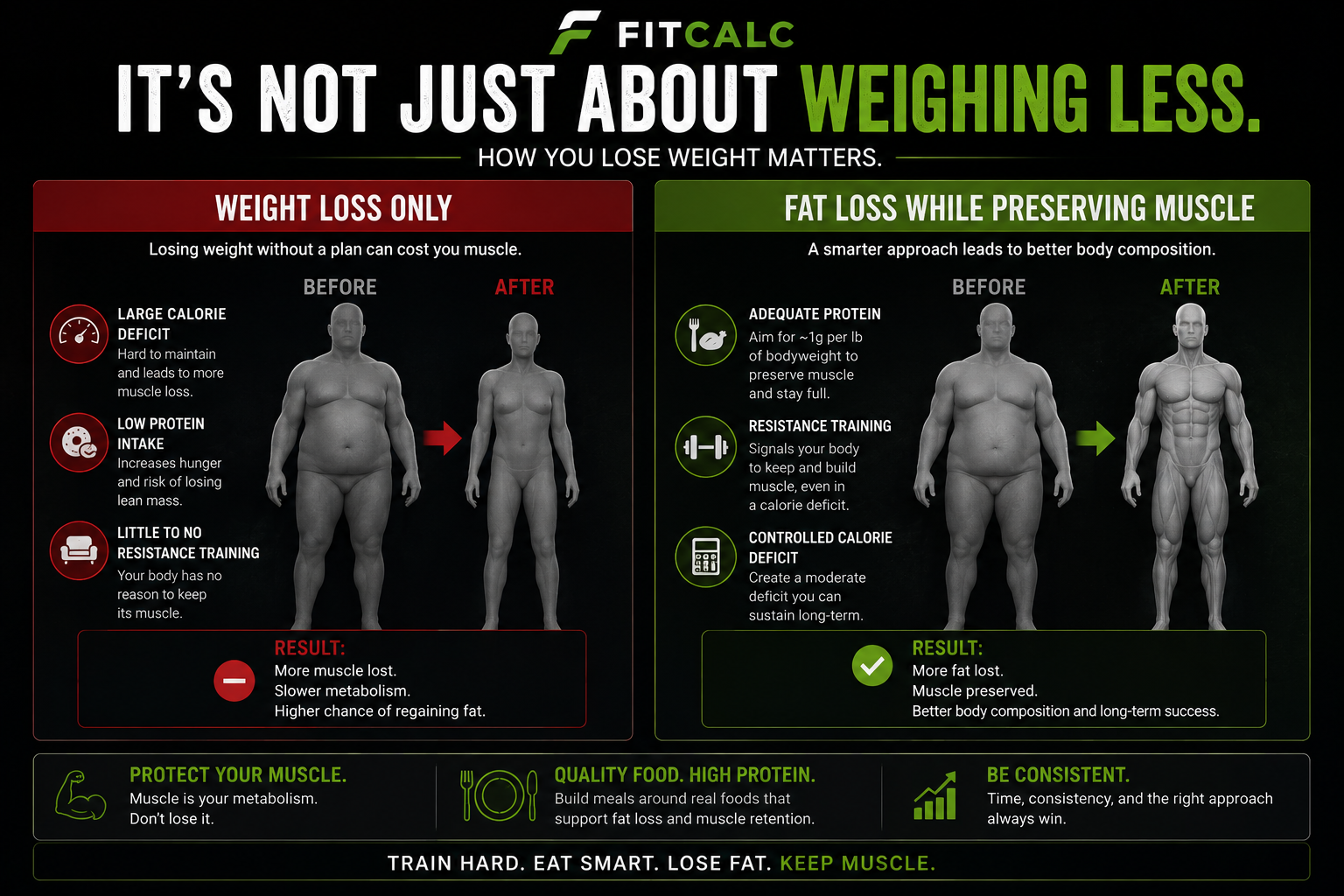
Ideally, someone losing weight wants to reduce body fat while retaining as much lean tissue as possible. Calorie restriction creates an environment where lean mass can be lost alongside fat, particularly when the deficit becomes aggressive or the person doesn't provide enough protein and resistance-training stimulus.
A systematic review and meta-analysis found that consuming protein above the standard RDA helped attenuate lean-mass losses during energy restriction compared with consuming protein at the RDA. Research in lean, resistance-trained athletes suggests protein requirements may increase further when someone becomes leaner or uses a more aggressive calorie deficit.
Resistance training adds another layer of protection. A meta-analysis in adults with overweight or obesity found resistance-based exercise improved body composition, while other research shows that combining calorie restriction with resistance training can substantially reduce the amount of lean mass lost during dieting.
The practical message is straightforward: don't just eat less. Give your body a reason to keep its muscle.
How Much Protein Should You Eat While Losing Weight?
For someone taking nutrition and training seriously, our recommendation remains simple: aim for roughly 1 gram of protein per pound of bodyweight per day, with some common-sense adjustment for people carrying a substantial amount of excess body fat.
Research shows that many people can preserve muscle and make progress on less than 1 gram per pound. As we covered in our protein article, however, FitCalc isn't interested in finding the smallest amount someone can technically get away with. One gram per pound is easy to remember, gives you room for variation, and provides a strong protein intake during a period when preserving lean tissue matters.
Where that protein comes from matters as well. We recommend building your intake primarily around meat, eggs, poultry, fish, and quality dairy for people who tolerate it. These foods provide highly digestible protein with strong essential-amino-acid profiles while also contributing valuable micronutrients.
For someone significantly overweight, using total scale weight can produce an unnecessarily high target. A person weighing 300 pounds does not automatically need 300 grams of protein every day. Goal bodyweight or an individualized target can make more sense in those circumstances.
The important thing is that each meal has an obvious high-quality protein source rather than protein being an afterthought.
Start With Better Food Before Making Weight Loss Complicated
This is where our approach differs from diets built entirely around calorie arithmetic.
If someone's current diet contains soda, pastries, chips, fast food, packaged snacks, and very little quality protein, we would rather improve those foods first than immediately hand them a spreadsheet and tell them to eat exactly 1,847 calories.
Build breakfast around eggs and another animal protein instead of sweetened cereal. Replace a fast-food lunch with beef, chicken, rice, potatoes, fruit, or vegetables. Drink water most of the time. Keep convenient whole foods around the house so hunger doesn't automatically mean opening a bag or ordering something.
Those changes don't guarantee a calorie deficit, but they create a much better environment for one. Whole-food meals centered around protein tend to provide more nutrition and satiety, while removing many of the ultra-processed foods that make consuming large amounts of calories remarkably easy.
If bodyweight still isn't decreasing after those changes, then adjust portions or begin tracking more closely. Calorie tracking is a useful tool when you need it. It doesn't need to become the entire philosophy behind eating.
Don't Make the Deficit More Aggressive Than Necessary
Another common mistake is assuming that if a 300-calorie deficit works, a 1,000-calorie deficit must work three times better.
Larger deficits can produce faster scale-weight loss, but faster isn't automatically better. More aggressive energy restriction can make training harder, increase hunger, reduce energy, and create a more difficult environment for preserving lean mass. A meta-analysis examining resistance training under energy restriction found that prolonged deficits impaired gains in lean mass, with the researchers estimating that a deficit around 500 calories per day prevented lean-mass gains on average in the analyzed data.
That doesn't mean everyone must eat exactly 500 calories below maintenance. Someone with substantial body fat may tolerate a larger deficit differently from a lean athlete. The point is that there is rarely a reason to make weight loss more miserable than necessary.
A moderate deficit combined with high-quality food, adequate protein, resistance training, walking, and patience is generally a much better strategy than alternating between extreme restriction and overeating.

The FitCalc Approach
If you're trying to lose body fat, start by improving the quality of your food.
Build your meals around high-quality animal protein, eggs, fruit, vegetables, potatoes, rice, and other simple foods. Aim for roughly 1 gram of protein per pound when appropriate. Strength train regularly and remain active throughout the day. Once those habits are established, use calorie intake as the tool that controls the rate of weight loss.
You still need a calorie deficit. We aren't suggesting otherwise. But there is an enormous difference between understanding energy balance and believing the nutritional quality of your food no longer matters because you've hit a calorie target.
A higher-protein whole-food diet can make the process easier by helping with satiety, increasing the thermic effect of your diet, and providing the amino acids needed to preserve lean tissue while weight comes down. Research supports higher protein intakes as particularly useful during energy restriction, especially when combined with resistance training.
Don't make weight loss a competition to see how little food you can survive on. Eat quality food, prioritize protein, train your muscles, create a reasonable energy deficit, and give the process enough time to work.
The goal isn't simply to weigh less.
It's to come out of the process leaner, stronger, and eating better than when you started.
Sources
Helms ER, Zinn C, Rowlands DS, Brown SR. A systematic review of dietary protein during caloric restriction in resistance trained lean athletes: a case for higher intakes. International Journal of Sport Nutrition and Exercise Metabolism. 2014. The review found that protein requirements can increase during calorie restriction, particularly as athletes become leaner or use more severe energy restriction.
Halton TL, Hu FB. The effects of high protein diets on thermogenesis, satiety and weight loss: a critical review. Journal of the American College of Nutrition. 2004. The review found convincing evidence that higher-protein diets increase thermogenesis and satiety compared with lower-protein diets.
Moon J, Koh G. Clinical Evidence and Mechanisms of High-Protein Diet-Induced Weight Loss. Journal of Obesity & Metabolic Syndrome. 2020. Reviews clinical evidence involving satiety, thermogenesis, energy intake, weight loss, and preservation of fat-free mass with higher-protein diets.
Hudson JL, Wang Y, Bergia RE III, Campbell WW. Protein Intake Greater than the RDA Differentially Influences Whole-Body Lean Mass Responses to Purposeful Catabolic and Anabolic Stressors: A Systematic Review and Meta-analysis. Advances in Nutrition. 2020. Protein intakes above the RDA attenuated lean-mass losses during energy restriction.
Murphy C, Koehler K. Energy deficiency impairs resistance training gains in lean mass but not strength: A meta-analysis and meta-regression. Scandinavian Journal of Medicine & Science in Sports. 2022. Examined the relationship between energy deficits, resistance training, lean mass, and strength.
Sardeli AV, Komatsu TR, Mori MA, Gáspari AF, Chacon-Mikahil MPT. Resistance Training Prevents Muscle Loss Induced by Caloric Restriction in Obese Elderly Individuals: A Systematic Review and Meta-Analysis. Nutrients. 2018. Resistance training substantially attenuated calorie-restriction-induced lean-mass loss in the analyzed trials.