How to Get Enough Protein on a Budget
A protein-heavy grocery basket can become expensive quickly, especially when every meal seems to require a premium cut of meat, a single-serving snack, or a product with “high protein” on the front. You can build a useful protein intake from ordinary foods, but saving money takes more than finding the lowest shelf price.
The better question is how much usable food a purchase adds to your week. That means checking its protein content, the portion you actually want to eat, and whether you can finish or freeze it. A slightly more expensive food can be better value if it fits your meals and prevents waste. Here is how to make those decisions without turning every grocery trip into a spreadsheet.
Set a Realistic Target Before Shopping
Start with a protein target that fits your body size, training, and goals. The International Society of Sports Nutrition position stand describes approximately 1.4–2.0 grams per kilogram of body weight per day as sufficient for most exercising people. That is a general range, not an instruction for everyone to choose its highest number. Needs can differ during a calorie deficit and with individual circumstances.
Use the FitCalc Protein Calculator to establish a practical starting target, then look at what you already eat. Include protein from your regular milk, grains, beans, eggs, and other foods before deciding how much extra you need to buy. Someone missing a modest amount needs a different shopping change from someone whose meals rarely contain a substantial protein source.
You can meet protein needs with food; protein powder and specialty snacks are optional. If you have kidney disease or a clinician-prescribed diet, get an individualized target rather than applying a general lifting recommendation.
Compare Protein Value, Then Check the Portion
Shelf labels often show a price per ounce or kilogram. That helps compare similar products, but package weight alone can mislead when you are comparing protein sources. Water, bones, sauces, and other ingredients all contribute weight without contributing the same amount of protein.
The FDA's label guidance recommends starting with serving size and servings per container. Multiply protein per labeled serving by the number of servings to estimate the package's total protein. Check whether the figures describe the food as sold, drained, or prepared, and keep that basis consistent.
For a quick comparison, divide the package price by its total grams of protein, then multiply by 25. This gives the cost of 25 grams of labeled protein. The number 25 is simply a convenient comparison unit. It is not a required meal dose or a measure of protein quality, and it does not mean that every food should supply a full 25 grams by itself.
A Worked Example With Hypothetical Prices
All prices and nutrition-label figures in this example are invented for illustration. They are not current retail prices or claims about a specific product.
Imagine Package A costs . Its label lists five servings with 20 grams of protein each. That is 100 grams in the package, so its cost per 25 grams is ÷ 100 × 25 = .
Package B costs and contains two servings with 25 grams each. Its total is 50 grams, so the same calculation is ÷ 50 × 25 = .50. Package B costs less at checkout, but Package A supplies protein at a lower cost in this example.
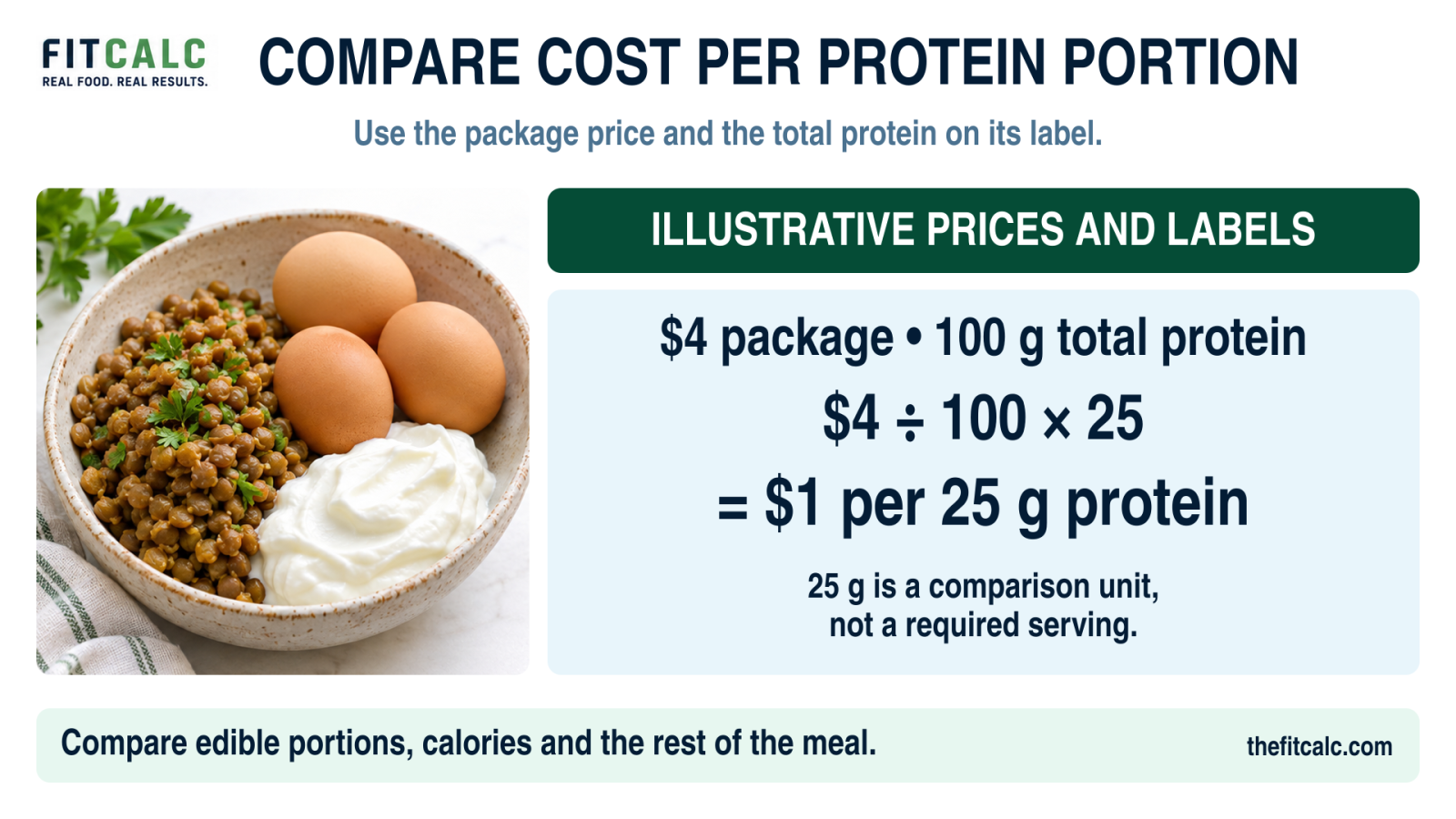
Now check the real-world portion. How much food would provide those 25 grams? Would you enjoy that amount, and does it fit the rest of your meal? A food can perform well in the calculation but require a portion you find impractical. You can also combine smaller contributions from several ingredients instead of expecting one food to do everything.
Build a Short List of Foods You Will Actually Eat
You do not need a universal ranking of the cheapest proteins. Prices vary by store, location, package size, and week. Build a short list of foods you enjoy, then compare the options available to you. Include plant foods even if you eat meat, and skip foods that conflict with your allergies, preferences, or dietary requirements.
Beans, Lentils, and Soy Foods
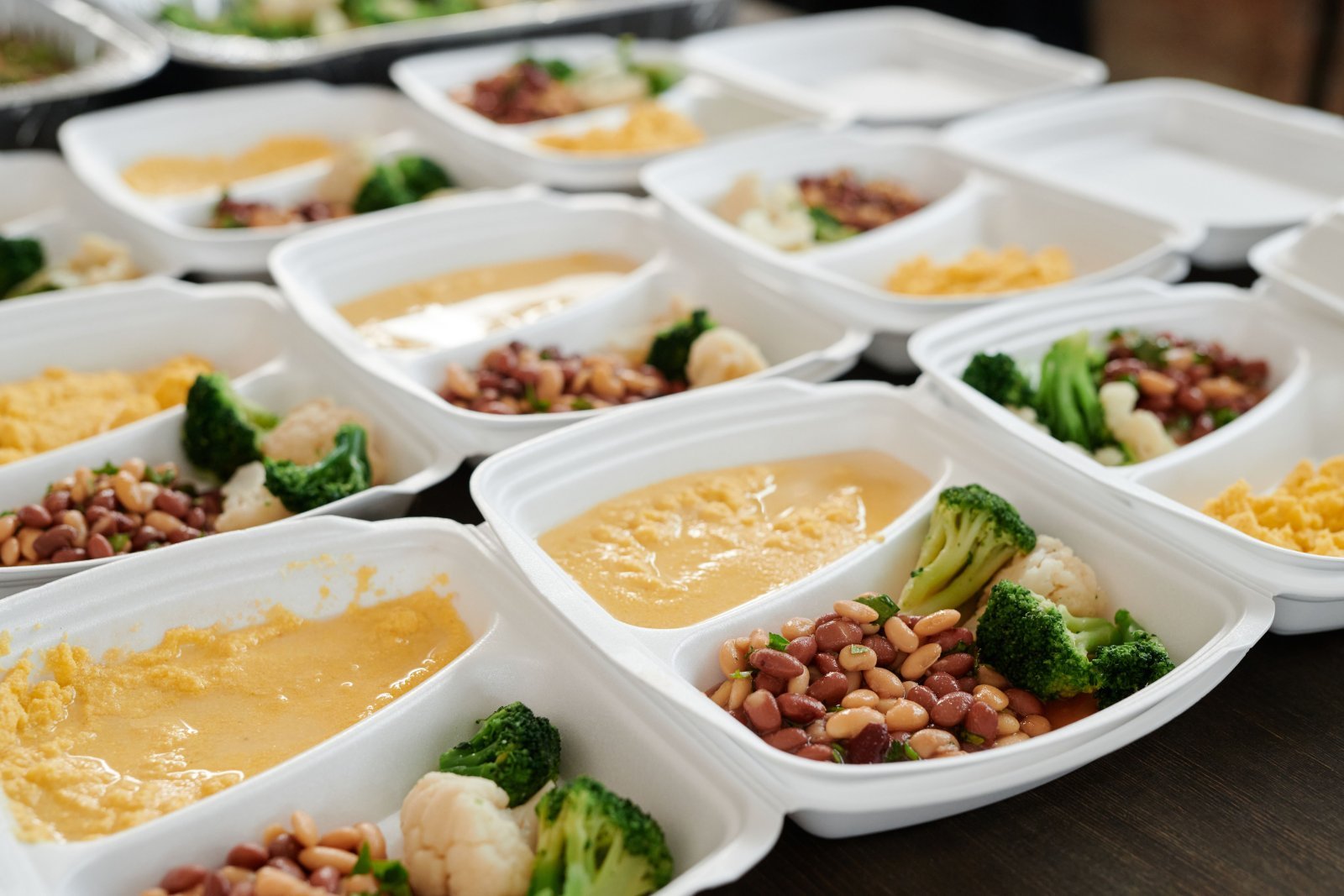
Beans and lentils can form the base of soups, curries, chili, or grain bowls. They also provide carbohydrate and fiber, so judge their value as part of a meal rather than treating them as interchangeable with a lean cut of meat. Dry versions may be attractive when you have cooking time and storage space. Canned versions can be the more useful purchase when you need something ready to eat.
Tofu, tempeh, and edamame offer further options. Compare labels because protein content varies across products and styles. A bean-and-tofu bowl, for example, lets both ingredients contribute without requiring an oversized portion of either. Health Canada lists legumes, soy foods, and other plant proteins among the choices for a varied eating pattern.
Eggs, Dairy, Meat, and Fish
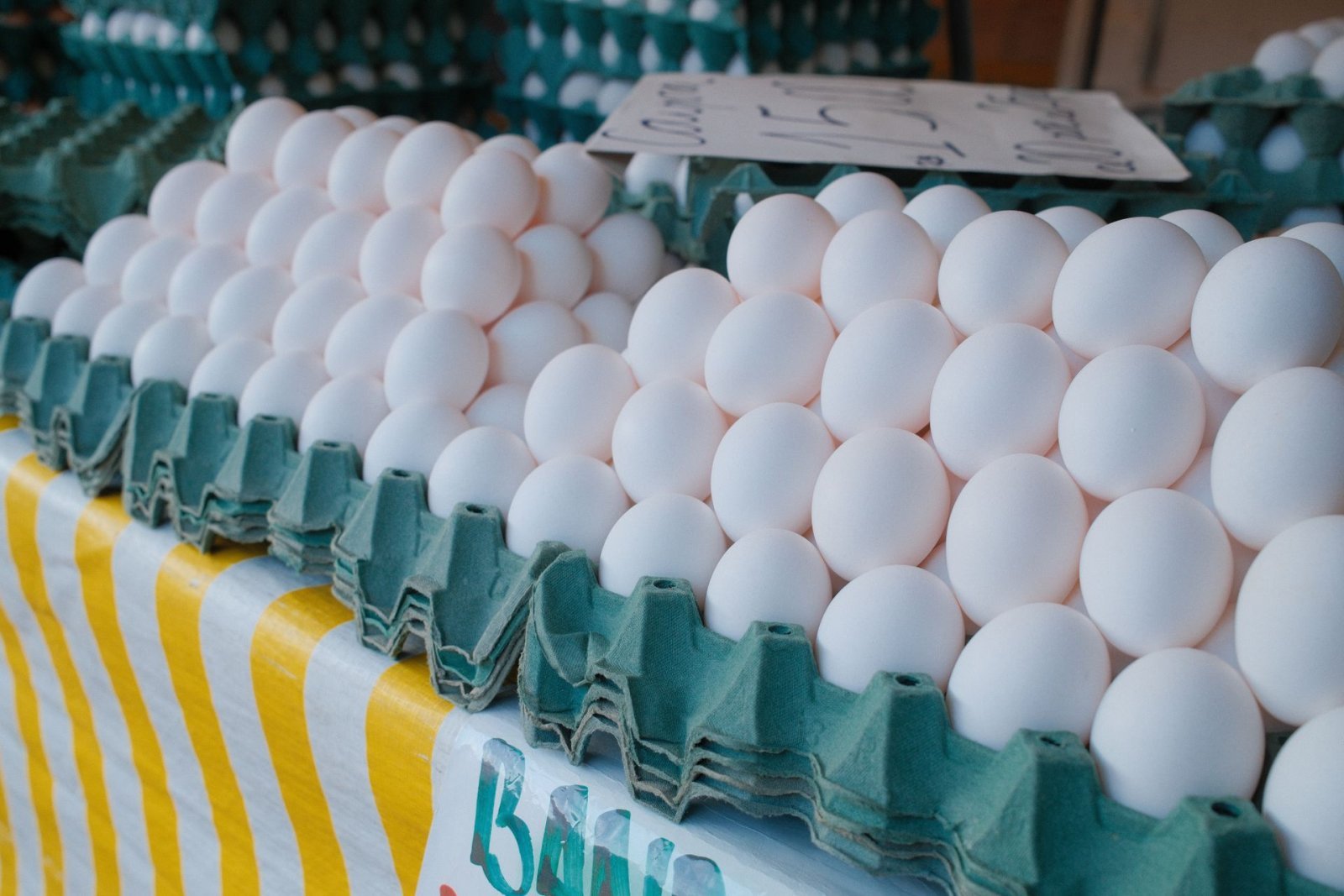
If you eat them, compare eggs, plain yogurt, cottage cheese, milk, and available cuts of meat or poultry. Look beyond the prominent package price: a tub and individual cups can differ in both serving size and protein concentration. For meat, consider whether you will eat the skin, how much bone is included, and how many meals the purchase realistically provides.
Canned fish can be a useful pantry option. Vary your choices rather than relying on tuna every day. Salmon, sardines, and canned light tuna appear in the FDA/EPA lower-mercury “Best Choices” category. Anyone who is pregnant, might become pregnant, or is breastfeeding should follow the specific serving advice in the FDA/EPA fish guidance.
Make the Whole Meal Fit Your Goal
Cost per gram of protein is one tool, not the only measure of a worthwhile food. Nuts, seeds, and peanut butter can contribute protein, but the portions needed to supply a large amount also bring substantial energy. That can be useful when you need more calories, while smaller portions may fit more easily during fat loss. Check the actual label rather than assuming “contains protein” means “mostly protein.”
For muscle gain, keep enough room in the budget for foods that provide training fuel and overall variety. Rice, oats, potatoes, fruit, vegetables, and dietary fats still belong in a balanced plan. During fat loss, look at the protein and calories in the portion you intend to eat, including cooking oil, sauces, and toppings. The FitCalc TDEE Calculator can help you estimate an initial calorie target, which you can adjust using your progress over time.
There is no need to make every ingredient high in protein. A satisfying meal can combine a main protein source with inexpensive staples, rather than replacing all of those staples with premium protein-branded versions.
Give Every Perishable Purchase a Job
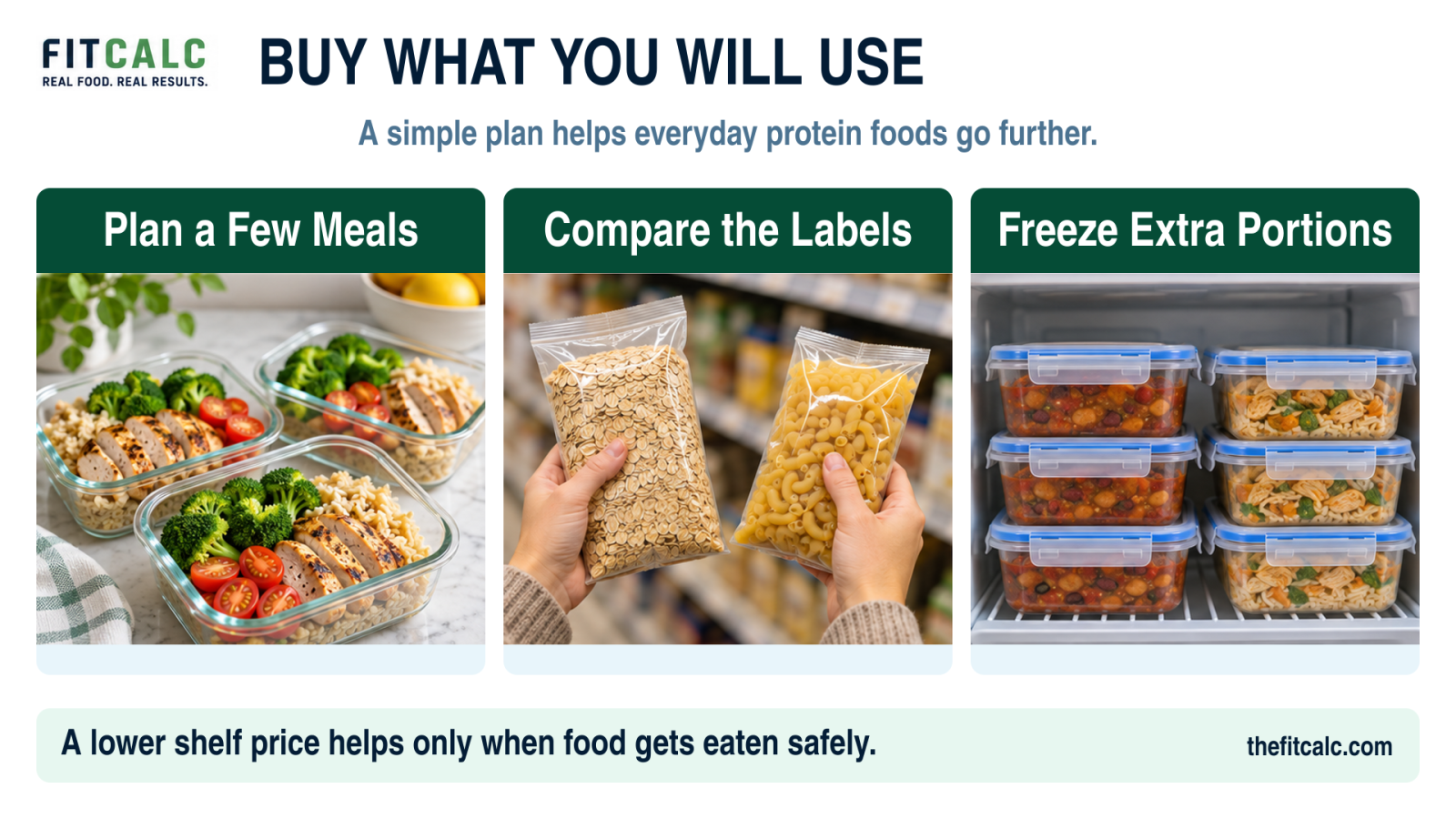
Before shopping, check your fridge, freezer, and cupboards. Pick a few meals that share ingredients, then assign each perishable protein to a meal or a freezer portion. If you cannot say when you will use a large pack, choose a smaller one or a shelf-stable alternative.
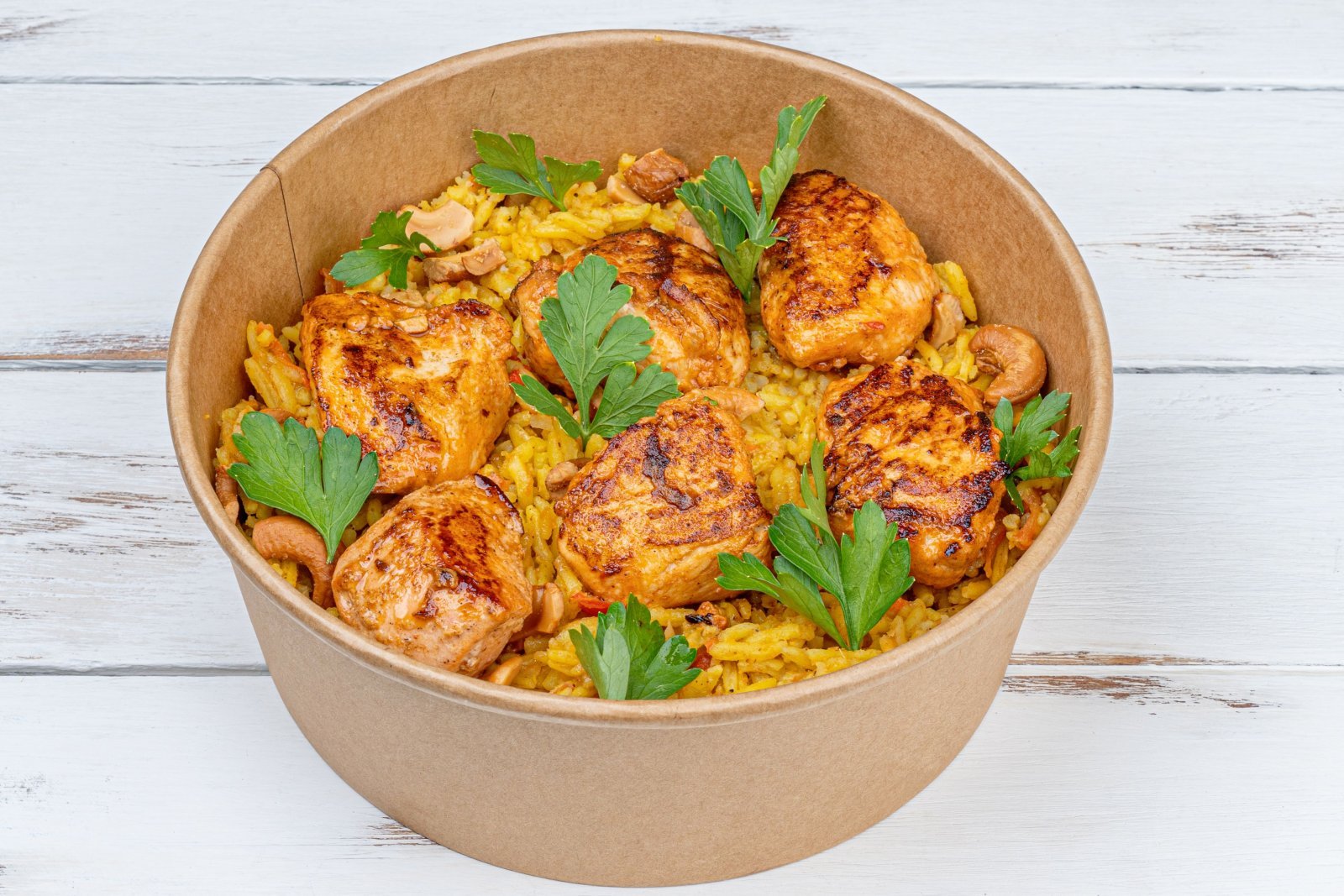
A useful weekly plan might include lentil curry, tofu stir-fry, and egg sandwiches, or chicken bowls, bean chili, and yogurt breakfasts. These are meal ideas, not a prescribed menu. The useful part is having a destination for each purchase. Change seasonings and side dishes so that buying one ingredient in quantity does not mean eating an identical dinner all week.
Keep one backup meal that needs little preparation. Canned beans with microwave rice, or an egg dish with frozen vegetables, can help when your original plan falls through. Choose backups that fit your kitchen equipment and available storage. A discount on ingredients is less useful if preparing them demands time or facilities you do not have.
Watch for False Economies
Bulk buying only saves money when you can use the quantity. Consider another hypothetical example: a pack provides six portions, making each portion if you eat all six. If two portions are wasted, the four portions you actually eat have cost .50 each. The shelf price did not change; the value you received did.
Convenience also has a legitimate role. A ready-to-use can of lentils may cost more than the equivalent dry amount, but it can be the better fit if the dry bag would sit untouched. Likewise, a smaller yogurt tub may make more sense for one person than a large discount tub they cannot finish. Compare the expected cost per meal eaten, including the practical effort involved.
Avoid buying unfamiliar foods in bulk on the strength of their protein numbers alone. Try a small amount first. Once you know you like the taste and can prepare it reliably, a larger purchase becomes an informed decision.
Protect Your Savings With Safe Storage
Batch cooking works best when you portion and store food promptly. CDC food-safety guidance recommends refrigerating perishable food within two hours, or within one hour when temperatures exceed 90°F/32°C. Divide large batches into shallow containers for faster cooling. Keep your refrigerator at 40°F/4°C or below.
The federal cold-storage chart gives cooked meat and poultry, soups, and stews three to four days in the refrigerator. Freeze portions you will not use within that window, label them, and thaw safely in the refrigerator rather than on the counter. When reheating leftovers, use a food thermometer to check they reach 165°F/74°C. Different unopened foods have different storage requirements, so follow their labels rather than applying one rule to everything.
Follow proper cooking instructions for dried legumes. In particular, do not put dry red kidney beans straight into a slow cooker: Health Canada warns that slow cookers do not reliably destroy their harmful lectins. Canned kidney beans have already received the necessary heat treatment.
A sustainable budget protein plan is one you can afford, enjoy, and repeat. Start with a few dependable foods, compare their real portions, and improve one shopping or storage habit at a time.
Practical Takeaways
- Choose a realistic protein target and count what your existing meals already provide.
- Compare package price against total labeled protein, then check whether the portion suits your meal.
- Keep a mix of protein foods that fit your preferences, including plant-based options.
- Buy perishables with a specific use in mind, and keep a convenient backup meal available.
- Judge bulk deals by what you will actually eat. Freeze extra portions promptly and follow safe storage guidance.
Sources
- Jäger R, et al. (2017). International Society of Sports Nutrition Position Stand: Protein and Exercise. Journal of the International Society of Sports Nutrition, 14:20. doi:10.1186/s12970-017-0177-8.
- National Institutes of Health, Office of Dietary Supplements. Dietary Supplements for Exercise and Athletic Performance: Health Professional Fact Sheet. Background on protein needs and food-based nutrition for exercise.
- U.S. Food and Drug Administration. Serving Size on the Nutrition Facts Label.
- Health Canada. Eat Protein Foods.
- U.S. Food and Drug Administration and U.S. Environmental Protection Agency. Advice About Eating Fish.
- Centers for Disease Control and Prevention. Preventing Food Poisoning.
- FoodSafety.gov. Cold Food Storage Chart.
- Health Canada. Lectins in Dry Legumes.