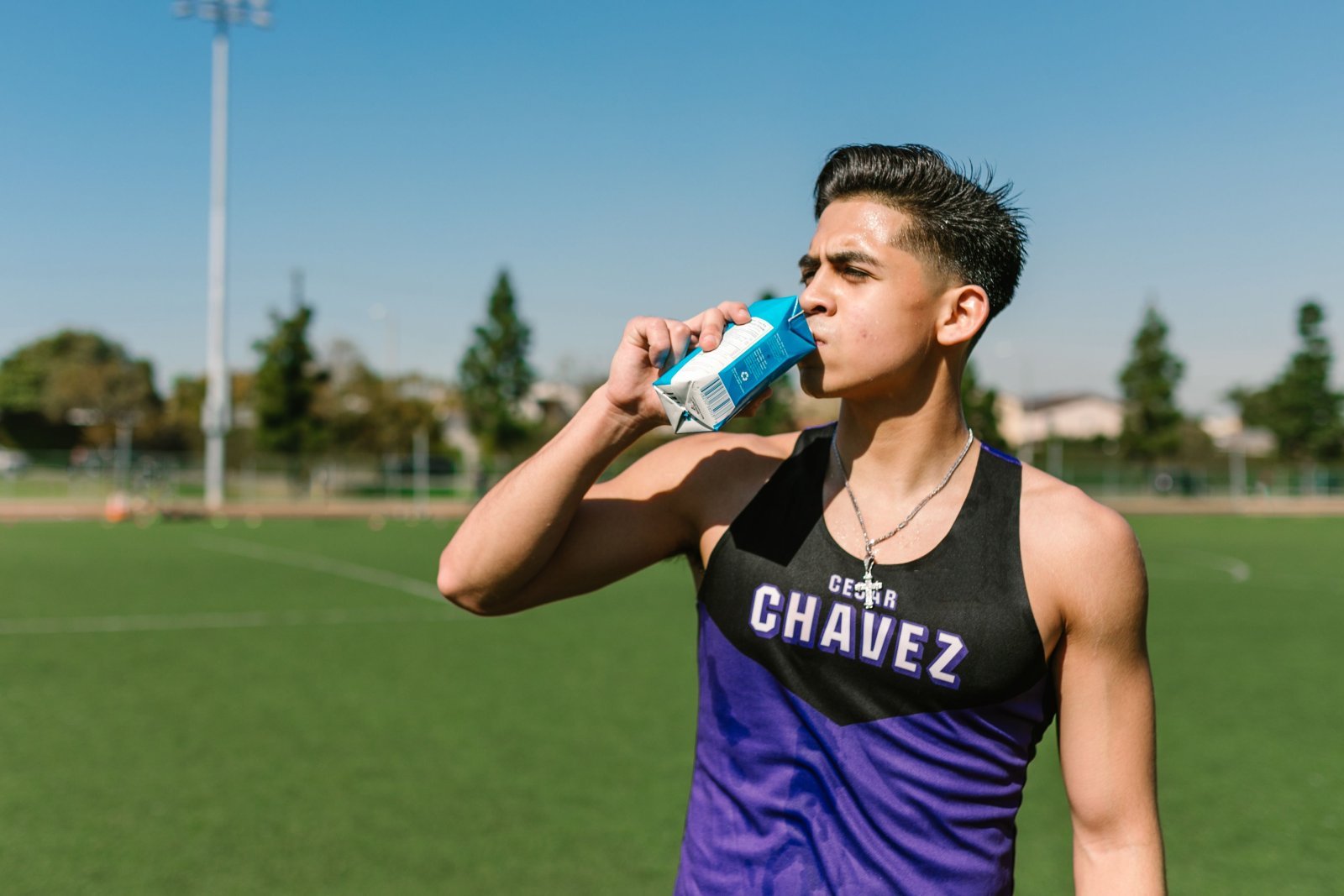
Do You Really Need 1 Gram of Protein Per Pound to Build Muscle
Protein recommendations have a strange tendency to become arguments about how little protein someone can eat and still build muscle. One study suggests 0.7 grams per pound is sufficient, another recommendation lands closer to 0.8, and before long the discussion becomes a search for the lowest number that can technically produce results.
That isn't how we approach protein at FitCalc. If you're serious about building muscle, we recommend aiming for approximately 1 gram of protein per pound of bodyweight every day. A 180-pound person would therefore target roughly 180 grams. Someone weighing 150 pounds would aim for about 150 grams.
Is exactly one gram per pound a biological threshold below which your muscles suddenly stop growing? No. Research clearly shows that people can gain muscle while eating less. But being able to get by on less and choosing a practical target for maximizing your nutrition are two different questions.
The one-gram target is simple, leaves room for individual variation, and provides some insurance against differences in food quality, tracking accuracy, training demands, and protein sources. More importantly, we don't believe all grams of protein should automatically be treated as nutritionally equivalent. Where that protein comes from matters.
How Much Protein Does the Research Say You Need?
One of the most frequently cited analyses of protein intake and muscle growth was published in the British Journal of Sports Medicine. Researchers pooled data from resistance-training studies to examine how protein supplementation affected gains in fat-free mass and strength.
Their analysis estimated a breakpoint around 1.62 grams of protein per kilogram of bodyweight per day, equivalent to roughly 0.73 grams per pound. Beyond that point, the average additional increase in fat-free mass was no longer clearly detectable across the included studies.
If we stopped reading there, recommending 0.7 to 0.8 grams per pound would seem straightforward. But the estimate wasn't nearly as precise as that single number makes it sound. The 95% confidence interval extended as high as 2.20 g/kg per day, which works out almost perfectly to 1 gram per pound. The researchers themselves wrote that approximately 2.2 g/kg could be a prudent recommendation for people seeking to maximize resistance-training-induced gains in fat-free mass.
That distinction is important. Research conducted across groups of people can estimate where benefits appear to level off on average, but it cannot tell an individual lifter that 0.73 grams per pound is his exact personal limit. Protein requirements vary, diets vary, training experience varies, and measurements of both dietary intake and changes in body composition have limitations.
For someone casually exercising, there may be little reason to obsess over the difference. For someone deliberately trying to maximize muscle growth, we would rather aim toward the upper end of the useful range than deliberately sit near its lower boundary.
That is where the one-gram-per-pound recommendation comes from. It isn't magic. It's a practical target with breathing room.
"Enough" Protein and "Optimal" Protein Are Different Questions
Nutrition recommendations often answer different questions without making the distinction clear. The amount of protein required to prevent deficiency is not the amount we would recommend to an athlete. Likewise, the amount capable of supporting muscle growth is not necessarily the amount we would choose when trying to remove nutrition as a limiting factor.
Imagine that research suggests your car can complete a trip with somewhere between 10 and 14 gallons of fuel. If completing that trip actually matters, filling the tank with exactly 10 gallons offers little advantage over giving yourself some margin for error. Protein intake works similarly in practice. There is no prize for finishing each day as close as possible to the minimum amount capable of producing an adaptation.
A higher target also makes sense because real diets are not laboratory diets. People estimate serving sizes incorrectly, nutrition labels have tolerances, restaurant portions vary, and tracking applications are only as accurate as the information entered into them. A person targeting 180 grams might consume 170 grams one day and 190 the next without any meaningful problem. Someone deliberately targeting the lowest plausible threshold has much less room for those normal variations.
Training itself adds another layer. Resistance exercise increases muscle protein turnover, and dietary protein provides the amino acids required to repair and build new tissue. More experienced lifters are often fighting for increasingly small improvements after years of adaptation. When muscle gain is a serious goal, protein is one of the last places we see a reason to cut things unnecessarily close.
Protein Quality Matters, Not Just Protein Quantity
Looking only at the total protein number on a nutrition label ignores what proteins are actually made from.
Proteins are composed of amino acids. Nine amino acids are considered essential because the human body cannot synthesize enough of them and must obtain them through the diet. For muscle growth, both the quantity of protein and the availability of these essential amino acids matter.
Leucine is particularly important because it acts as a major nutritional signal involved in stimulating muscle protein synthesis. Reviews comparing protein sources consistently find that animal proteins tend to provide greater concentrations of essential amino acids and leucine, along with higher digestibility, than many plant proteins. One review reported average leucine concentrations around 8.8% in animal proteins compared with approximately 7.1% in plant proteins, with certain dairy proteins exceeding 10%.
Digestibility matters as well. Protein eaten is not necessarily equivalent to amino acids ultimately made available to the body. Reviews of animal and plant proteins have reported generally higher digestibility for foods such as eggs, dairy, chicken, and other animal proteins. A recent review placed typical animal-protein digestibility around 85–95%, while several legume proteins were considerably lower.
Protein-quality scoring systems reflect these differences. Analyses using the Digestible Indispensable Amino Acid Score, or DIAAS, have placed proteins such as pork, casein, and egg among excellent-quality protein sources, while numerous plant proteins score substantially lower because of differences in digestibility and limiting essential amino acids.
This is why FitCalc does not recommend building a muscle-gain diet around plant protein. If our goal is obtaining highly digestible protein with a strong essential-amino-acid profile, meat, eggs, dairy, fish, and poultry already provide exactly what we're looking for.
Why We Prioritize Animal Protein
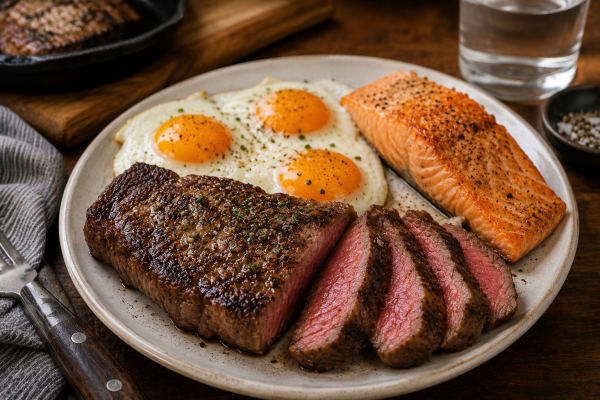
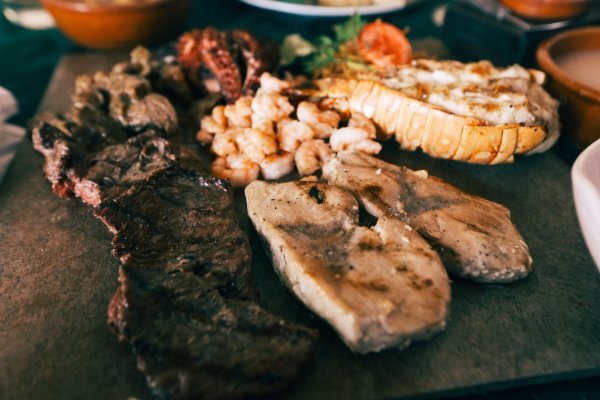
Animal foods make protein intake remarkably straightforward. Eggs, beef, chicken, turkey, fish, milk, Greek yogurt, cottage cheese, and other dairy foods provide substantial amounts of highly digestible protein alongside all of the essential amino acids needed by the body.
They also provide considerably more than protein. Depending on the food, animal products can contribute vitamin B12, highly bioavailable iron, zinc, selenium, choline, calcium, omega-3 fatty acids, and numerous other nutrients. That makes a meal centered around meat, eggs, or dairy nutritionally different from simply adding enough isolated protein powder to make a number in a tracking application increase.
Plant proteins commonly have lower concentrations of one or more essential amino acids, lower leucine density, and reduced digestibility. Plant foods can also contain compounds such as phytates, tannins, and trypsin inhibitors that may interfere with nutrient or protein digestion to varying degrees. Processing can reduce some of these limitations, and manufacturers can combine, isolate, fortify, or increase the quantity of plant proteins to improve their amino-acid delivery.
But from our perspective, that raises an obvious question: why engineer our way around an inferior starting point when high-quality animal protein is already available?
Someone can formulate a diet that compensates for the limitations of plant proteins by eating larger amounts, carefully combining sources, or using processed isolates. That possibility doesn't make it our preferred nutritional strategy. FitCalc favors whole and minimally processed animal foods as the foundation of protein intake because they naturally provide the protein quality we're trying to achieve without requiring those workarounds.
The same philosophy applies to many commercial plant-based protein products. Ingredient lists vary, so it would be inaccurate to claim that every plant protein powder or meat substitute contains the same additives. Many products, however, rely on isolated proteins and may include flavor systems, stabilizers, gums, emulsifiers, sweeteners, or other ingredients to reproduce the texture and taste consumers expect. If the objective is simply to obtain high-quality protein, we'd rather start with actual food.
Should You Count Protein From Bread, Rice, and Other Plant Foods?
Technically, yes. If you eat protein, your body doesn't erase it because it came from a potato or a piece of bread. It still contributes amino acids to your overall diet.
Practically, however, we would not build your 1-gram-per-pound target around incidental plant protein.
Suppose a 180-pound lifter finishes the day with a tracking application showing 180 grams of protein. If 150 grams came from beef, eggs, chicken, dairy, and fish while the remaining 30 grams accumulated from rice, bread, potatoes, vegetables, and other foods, we wouldn't lose sleep over it. The foundation of the diet is clearly composed of high-quality protein.
The situation looks different if someone reaches 180 grams only because a large portion comes from cereal grains, nuts, legumes, or processed plant-protein products. The total displayed by the application may be identical, but the overall essential-amino-acid profile, leucine density, digestibility, and nutritional composition of the diet are not.
A useful way to approach this is to make animal protein the deliberate protein in each meal. Everything else can simply contribute on top of it. Instead of asking how much protein happens to be present in your rice, start by asking where the beef, eggs, chicken, fish, or dairy are.
How Much Protein Should You Eat at Each Meal?
Total daily protein is the first priority, but distributing that protein across several meals is a sensible way to repeatedly provide muscle tissue with essential amino acids throughout the day.
You don't need to eat every two hours or carry a protein shake everywhere you go. For most people, three or four protein-centered meals make the process simple. A 180-pound person targeting 180 grams per day could consume approximately 45 grams across four meals. Someone eating three larger meals might average around 60 grams per meal.
The exact amount doesn't need to be identical each time. A breakfast containing 35 grams followed by meals containing 50, 55, and 40 grams still accomplishes the larger goal. Daily consistency matters more than constructing a mathematically perfect protein schedule.
Whole animal foods make those numbers easier to reach than many people expect. A substantial serving of beef or chicken can provide 40–60 grams of protein by itself. Eggs combined with another animal protein can create a high-protein breakfast, while dairy can add meaningful protein without requiring another full meal.
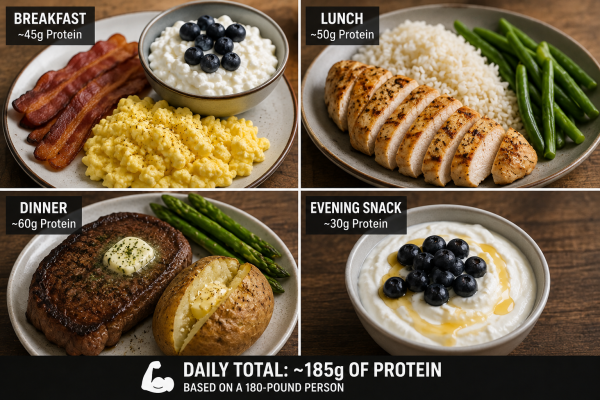
What Does 1 Gram per Pound Actually Look Like?
The recommendation becomes very simple once bodyweight is known.
A 140-pound person would aim for roughly 140 grams per day. A 160-pound person would aim for about 160 grams. At 180 pounds, the target becomes approximately 180 grams, while a 200-pound person would aim for around 200 grams.
There is no need to panic if you miss the number by a few grams. One gram per pound is a target, not a pass-or-fail examination. Consistently landing somewhere around the target is what matters.
Body composition also deserves some common sense. Someone carrying a very large amount of excess body fat does not necessarily need to calculate protein from total scale weight indefinitely. In those situations, goal bodyweight or another individualized target can be more practical. A 300-pound person trying to reduce his weight substantially should not assume he automatically needs 300 grams of protein every day simply because the formula says one gram per pound.
For relatively lean people lifting weights and intentionally trying to gain muscle, however, bodyweight provides an easy and useful starting point.
Protein Matters Even More When Calories Are Low
Protein isn't only important during a muscle-building phase. It becomes particularly valuable when someone is dieting.
A calorie deficit creates the conditions necessary for fat loss, but losing weight does not guarantee that every pound lost comes from body fat. Resistance training and adequate dietary protein help provide the body with a reason and the raw materials to retain lean tissue while weight comes down.
This is another reason we don't like treating the lowest successful protein intake as universally optimal. The amount that works well during a calorie surplus may not be the target someone chooses during aggressive fat loss, particularly for a lean, resistance-trained athlete. Sports-nutrition literature has consequently discussed higher protein intakes during energy restriction as a strategy for supporting lean-mass retention.
For someone simultaneously trying to lose fat and preserve as much muscle as possible, one gram per pound remains an excellent baseline rather than something we would rush to reduce.
Can Eating More Than 1 Gram per Pound Build Even More Muscle?
Probably not in a simple dose-dependent fashion.
Once protein requirements are adequately covered, adding another 100 grams does not mean muscle growth doubles. Muscle growth is ultimately limited by training stimulus, genetics, calories, recovery, hormones, sleep, training experience, and the finite rate at which new tissue can be constructed.
Studies have even examined resistance-trained people consuming extremely high protein intakes. Research using intakes around or above 3 g/kg per day has not demonstrated that protein simply becomes increasingly anabolic without limit.
That is not the argument for one gram per pound.
We aren't recommending 1 g/lb because more protein always equals more muscle. We're recommending it because it comfortably covers the evidence-based range, sits near the upper end of the confidence interval found in major hypertrophy research, accounts for real-world variation, and is extremely easy to remember.
Once you're consistently hitting that target with high-quality food, attention is better spent on progressive resistance training, sufficient calories, sleep, and recovery than on forcing down another chicken breast simply to make the protein number even larger.
The FitCalc Recommendation
If your goal is building muscle and you take your nutrition seriously, aim for approximately 1 gram of protein per pound of bodyweight per day.
Could you build muscle at 0.7 or 0.8 grams per pound? Absolutely. Research indicates that many people can. But our goal isn't to identify the smallest amount of protein that might work. We're interested in providing a straightforward target that comfortably supports the goal while accounting for differences between individuals and the foods they actually eat.
Just as importantly, pay attention to where those grams come from. We recommend building your protein intake around meat, eggs, dairy, fish, and poultry rather than relying on plant protein as the foundation of the diet. Protein quality, digestibility, leucine content, and essential-amino-acid composition matter even if a nutrition-tracking application reduces everything to the same number.
Eat enough protein. Choose high-quality sources. Spread those foods reasonably throughout the day. Then give them a reason to matter by training hard enough to stimulate muscle growth.
The formula doesn't need to be more complicated than that.
Sources
Morton RW, Murphy KT, McKellar SR, et al. A systematic review, meta-analysis and meta-regression of the effect of protein supplementation on resistance training-induced gains in muscle mass and strength in healthy adults. British Journal of Sports Medicine. The analysis estimated a protein-intake breakpoint around 1.62 g/kg/day with a 95% confidence interval extending to 2.20 g/kg/day.
Berrazaga I, Micard V, Gueugneau M, Walrand S. The Role of the Anabolic Properties of Plant- versus Animal-Based Protein Sources in Supporting Muscle Mass Maintenance: A Critical Review. Nutrients. Reviews differences in digestibility, essential amino acids, leucine content, and anabolic properties between protein sources.
Herreman L, Nommensen P, Pennings B, Laus MC. Comprehensive overview of the quality of plant- and animal-sourced proteins based on the Digestible Indispensable Amino Acid Score. Food Science & Nutrition. Compares protein quality using indispensable-amino-acid composition and ileal digestibility.
van Vliet S, Burd NA, van Loon LJC. The Skeletal Muscle Anabolic Response to Plant- versus Animal-Based Protein Consumption. Research reviewed in subsequent analyses of protein source, amino-acid availability, and muscle protein synthesis.
Antonio J, Ellerbroek A, Silver T, et al. Research examining high-protein diets in resistance-trained men and women, including intakes around or above 3 g/kg/day. Journal of the International Society of Sports Nutrition.