GLP-1 Weight Loss and Muscle Loss: Why Protein and Strength Training Matter
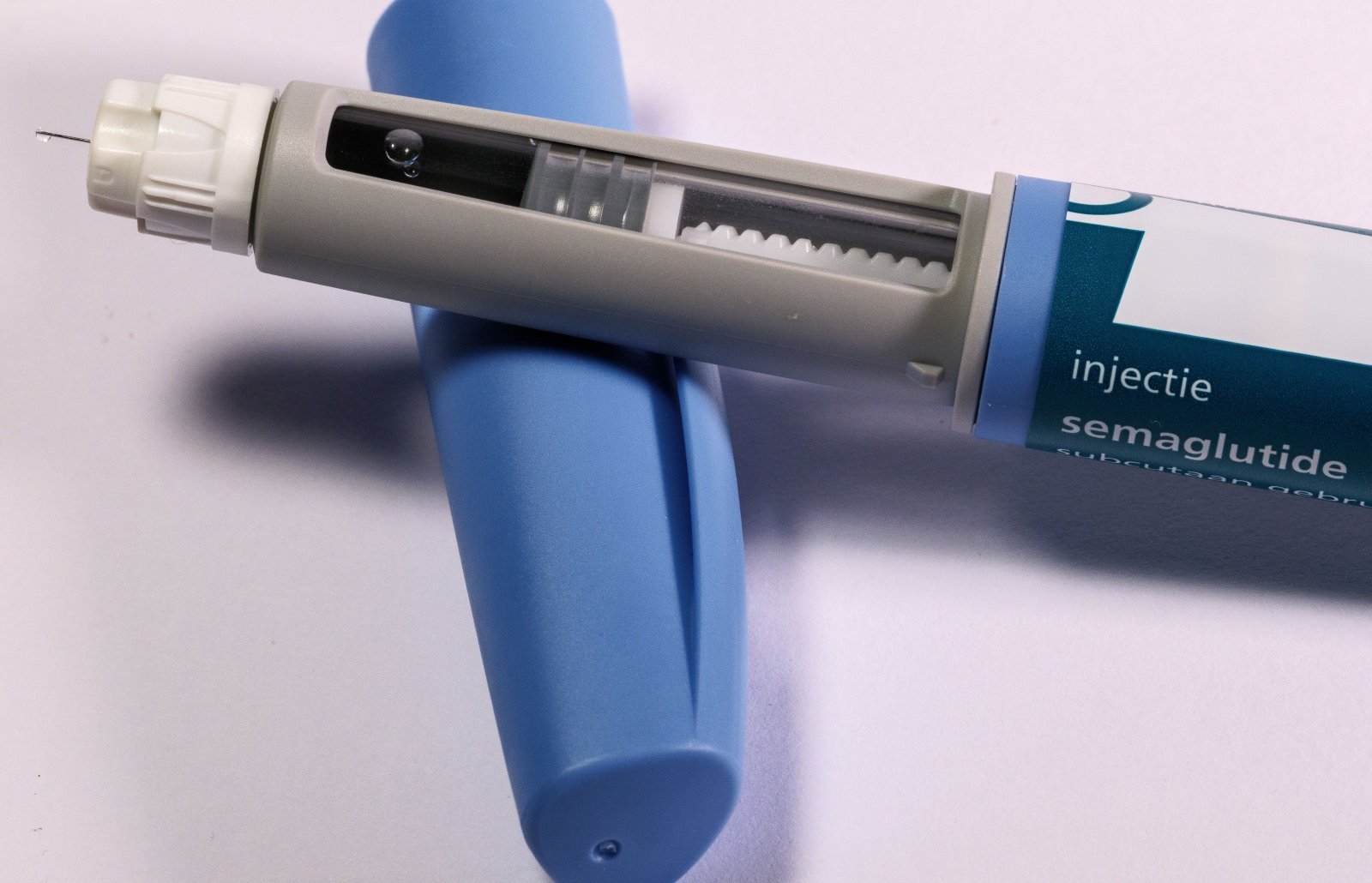
GLP-1 weight-loss medications have become one of the biggest changes in modern weight management. Drugs such as semaglutide can dramatically reduce appetite and food intake, while tirzepatide targets both GIP and GLP-1 receptors and can produce even larger average reductions in bodyweight. For someone struggling with obesity, seeing the scale finally move can understandably feel like a major victory.
FitCalc's position on these medications is more cautious. We do not recommend GLP-1 drugs as our preferred foundation for weight loss in otherwise healthy adults. We would rather see long-term weight management built around food quality, appropriate calorie intake, resistance training, everyday movement, sleep, and sustainable habits instead of depending primarily on pharmacological appetite suppression.
One of our biggest concerns is what happens beyond the number on the scale. Significant weight loss does not consist exclusively of body fat, and research on GLP-1-based treatments shows that meaningful amounts of lean tissue can be lost alongside fat. There is also strong evidence that substantial weight regain is common after treatment is discontinued.
That said, people are already using these medications, including many under the supervision of their physicians. If you're taking one, this article isn't going to tell you to disregard prescribed medical care. Instead, we're going to focus on something that deserves much more attention: how to protect your muscle, nutrition, and long-term habits while your bodyweight is coming down.
Losing Weight Is Not the Same Thing as Losing Only Fat
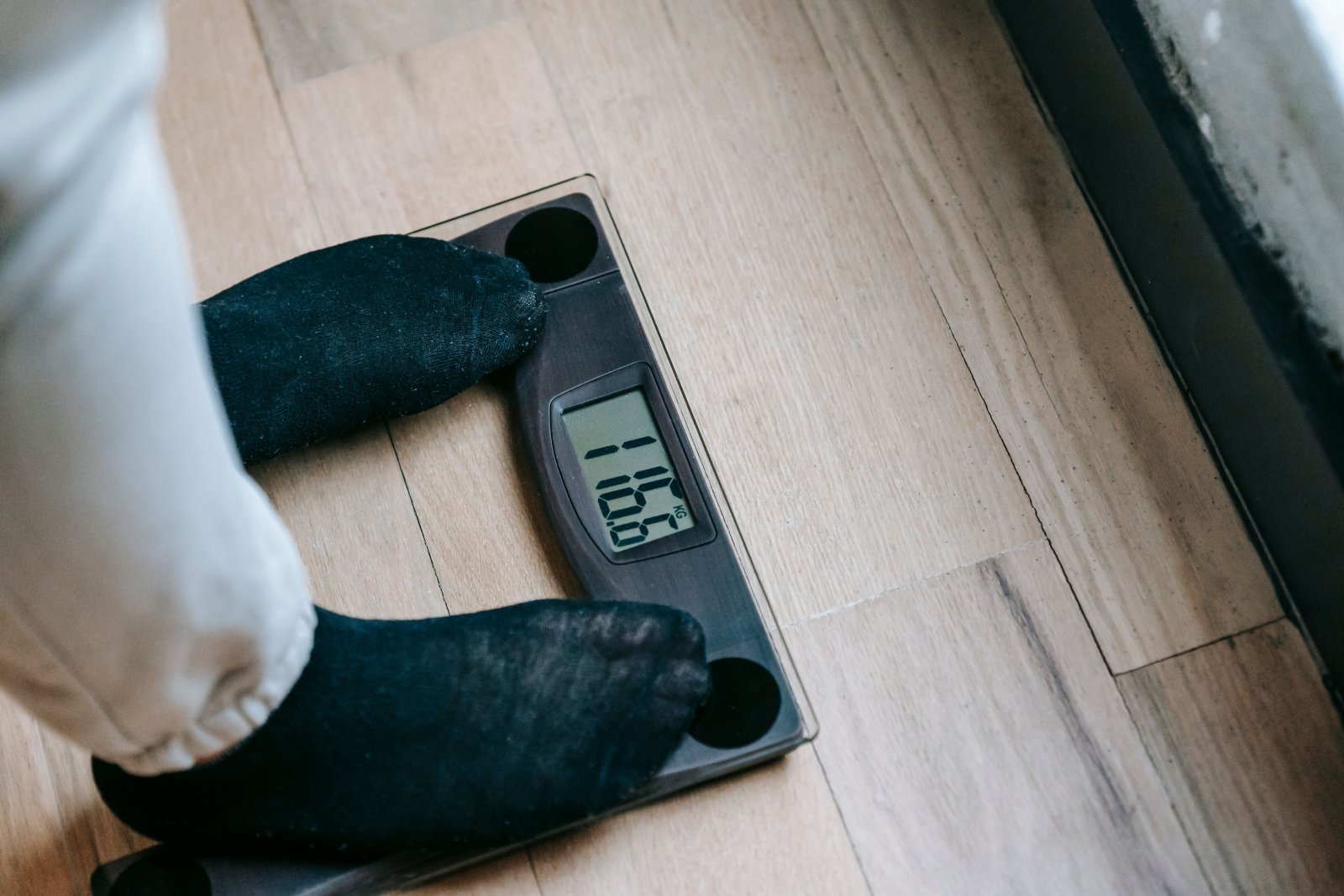
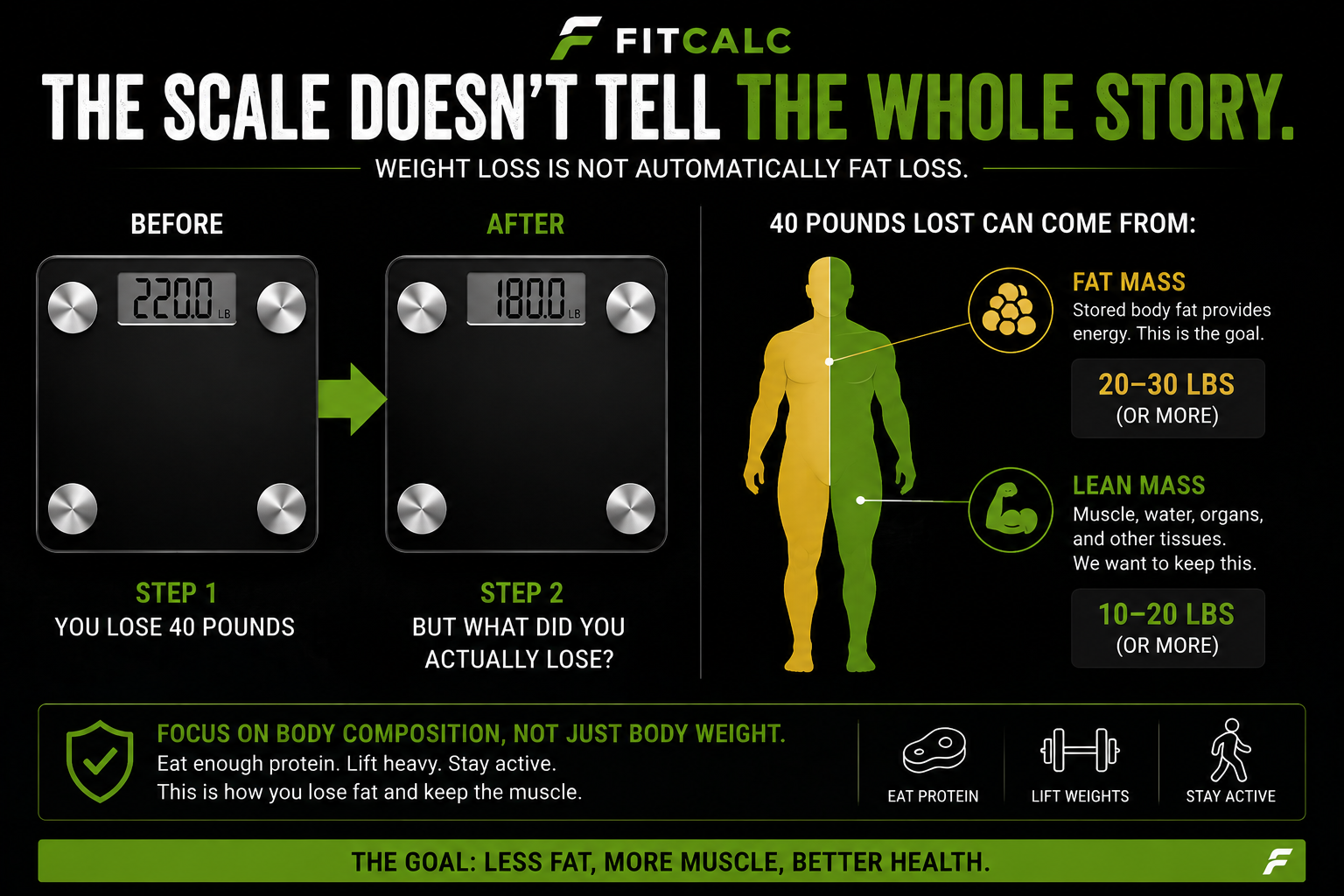
A bathroom scale has one major limitation: it doesn't know what you're losing.
If someone drops 40 pounds, that change can include body fat, water, glycogen, connective tissue, and lean mass. From a body-composition perspective, losing 40 pounds while preserving most of your muscle is a very different outcome from losing the same 40 pounds while sacrificing a substantial amount of lean tissue.
This issue isn't unique to GLP-1 medications. Any significant period of weight loss can reduce lean mass, particularly when calorie intake is low, protein intake is inadequate, and resistance training is absent. What makes GLP-1 treatment particularly relevant is how effectively these medications can suppress appetite and produce substantial weight loss, sometimes while people are eating considerably less food than they were accustomed to eating.
A 2026 systematic review and meta-analysis examined 20 randomized trials involving 15,782 participants. The researchers estimated that lean mass represented approximately 35% of total weight lost with semaglutide and 25% with tirzepatide. Lifestyle-only interventions produced a broadly comparable proportional loss of lean mass, while lifestyle interventions that incorporated resistance training showed the most favorable preservation profile.
There is an important technical distinction here. Lean mass measured by DXA or other body-composition methods is not identical to skeletal muscle. Lean mass includes water and other non-fat tissues, so it would be inaccurate to say that every pound of measured lean mass lost represents a pound of actual muscle tissue. Recent reviews have specifically cautioned against making that assumption.
The practical concern remains, however: when substantial weight is coming off quickly, muscle preservation deserves deliberate attention rather than being treated as an afterthought.
Appetite Suppression Can Make Good Nutrition Harder
The feature that makes GLP-1 drugs effective for weight loss can also create a nutritional challenge.
These medications reduce appetite and spontaneous food intake. Some users also experience gastrointestinal side effects such as nausea, vomiting, or feelings of fullness that make eating even more difficult. If someone previously ate 3,000 calories per day and suddenly struggles to consume half that amount, losing weight isn't surprising.
The question becomes what foods are left when total intake drops.
If appetite is limited, every meal becomes more nutritionally important. Someone who feels full after a small portion cannot afford to have most of that limited food intake coming from nutrient-poor snacks, refined carbohydrates, or ultra-processed foods. Protein, vitamins, minerals, essential fats, and other nutrients still have to come from somewhere.
A 2026 review focused specifically on nutrition during GLP-1 treatment noted that reduced food intake and gastrointestinal symptoms may worsen preexisting micronutrient inadequacies. The review emphasized adequate protein, micronutrient monitoring where appropriate, and progressive resistance training as important components of care during pharmacological weight loss.
This fits directly with the way we already approach weight loss at FitCalc. Eating less food makes food quality more important, not less.
Protein Should Be a Priority From the Beginning
If appetite has dropped substantially, protein should not become whatever happens to fit after everything else has been eaten.
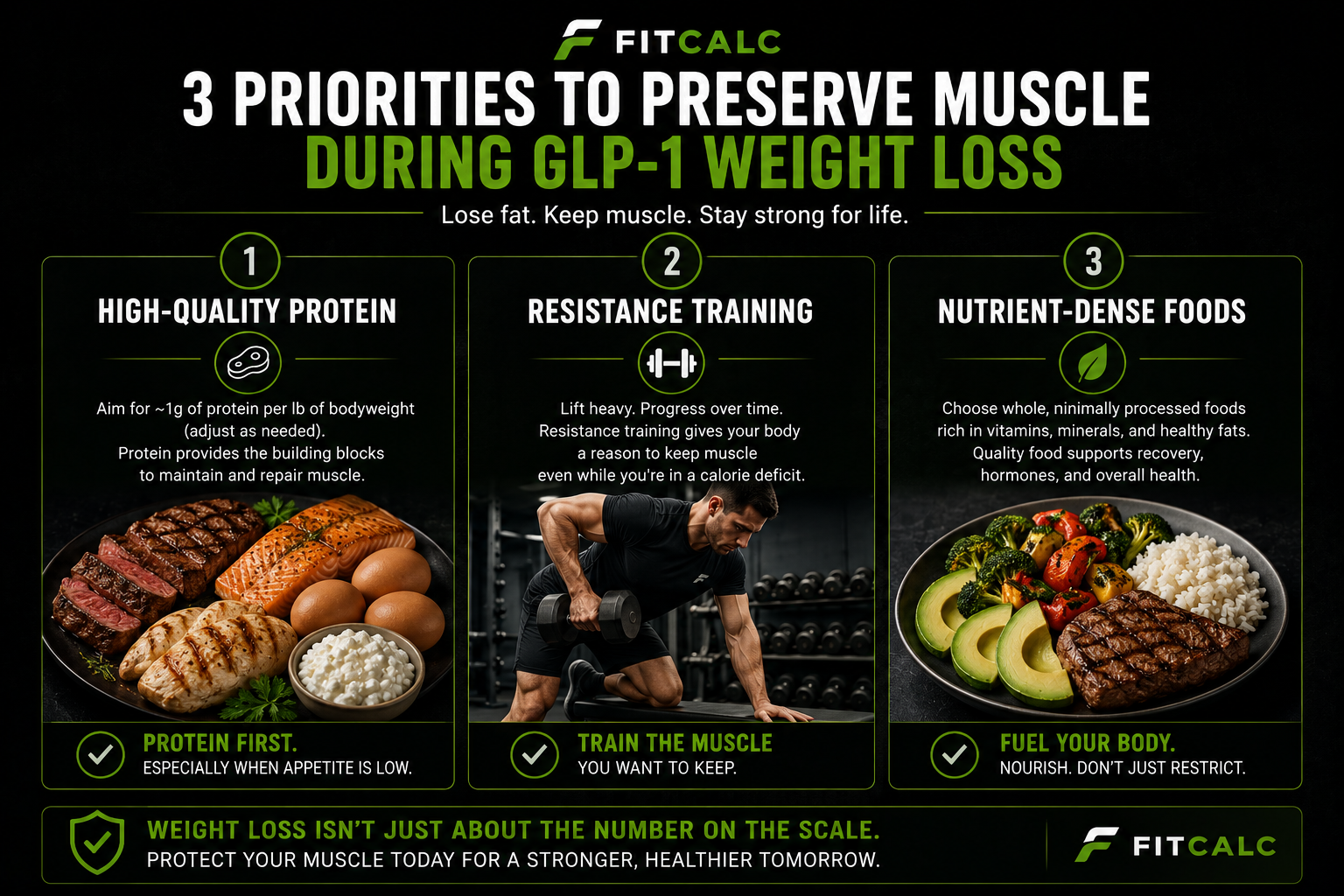
We recommend building meals around high-quality animal protein, including beef, eggs, poultry, fish, and dairy for people who tolerate it. These foods provide highly digestible complete protein alongside essential amino acids and valuable micronutrients.
Protein becomes especially important during weight loss because the body is operating under an energy deficit. Adequate dietary protein provides the amino acids necessary to maintain and repair lean tissue, while also helping with satiety. In the context of GLP-1 treatment, reviews specifically recommend prioritizing high-quality protein as part of strategies designed to minimize muscle loss.
For someone with obesity, simply using current bodyweight and prescribing 1 gram of protein per pound can produce an unnecessarily large target. A 300-pound person does not automatically need 300 grams of protein every day. Goal bodyweight, lean mass, renal health, total energy intake, and individual circumstances all affect what is practical.
Recent clinical nutrition literature discussing GLP-1 treatment has suggested approximately 1.2–1.6 grams of protein per kilogram per day for many appropriate adults, while emphasizing that targets need to account for factors such as kidney function, tolerance, weight reference, and overall diet.
FitCalc's broader philosophy remains that people taking their nutrition seriously should err toward a strong protein intake rather than trying to determine the smallest amount they can get away with. When appetite is suppressed, that means eat the protein first rather than hoping you'll still be hungry enough for it at the end of the meal.
Resistance Training Gives Your Body a Reason to Keep Muscle
Eating protein provides the building material. Resistance training provides the signal.
When muscle is regularly challenged against resistance, the body receives a reason to maintain the tissue even while calories are restricted. This is why strength training is so valuable during virtually any intentional weight-loss phase, regardless of whether medication is involved.
The evidence around GLP-1 treatment increasingly emphasizes the same principle. Reviews examining muscle preservation during incretin-based weight loss recommend structured resistance exercise alongside adequate protein intake, and the 2026 meta-analysis comparing pharmacological and lifestyle interventions found the most favorable lean-mass preservation in lifestyle interventions that included resistance training.
You don't need to become a competitive bodybuilder. Two or more well-designed resistance-training sessions per week can provide a meaningful starting point, although someone already experienced with lifting may train considerably more frequently.
The important part is progression. Squats or leg presses, presses, rows, pulldowns, hinges, and other movements that challenge the major muscle groups should become progressively demanding over time. Machines, free weights, cables, and bodyweight exercises can all work depending on the person's ability and experience.
Simply losing weight does not automatically improve strength. If maintaining muscle matters, train the muscle you're trying to keep.
Don't Let Rapid Weight Loss Become the Only Goal
GLP-1 medications can produce impressive changes on the scale, but faster weight loss should not automatically be treated as better weight loss.
Someone losing weight very rapidly while barely eating, consuming little protein, and performing no resistance training may be pleased with the scale while creating a less favorable body-composition outcome than necessary. Recent GLP-1 research has increasingly emphasized the idea of weight-loss quality: reducing excess fat while protecting muscle, physical function, nutritional adequacy, and long-term metabolic health.
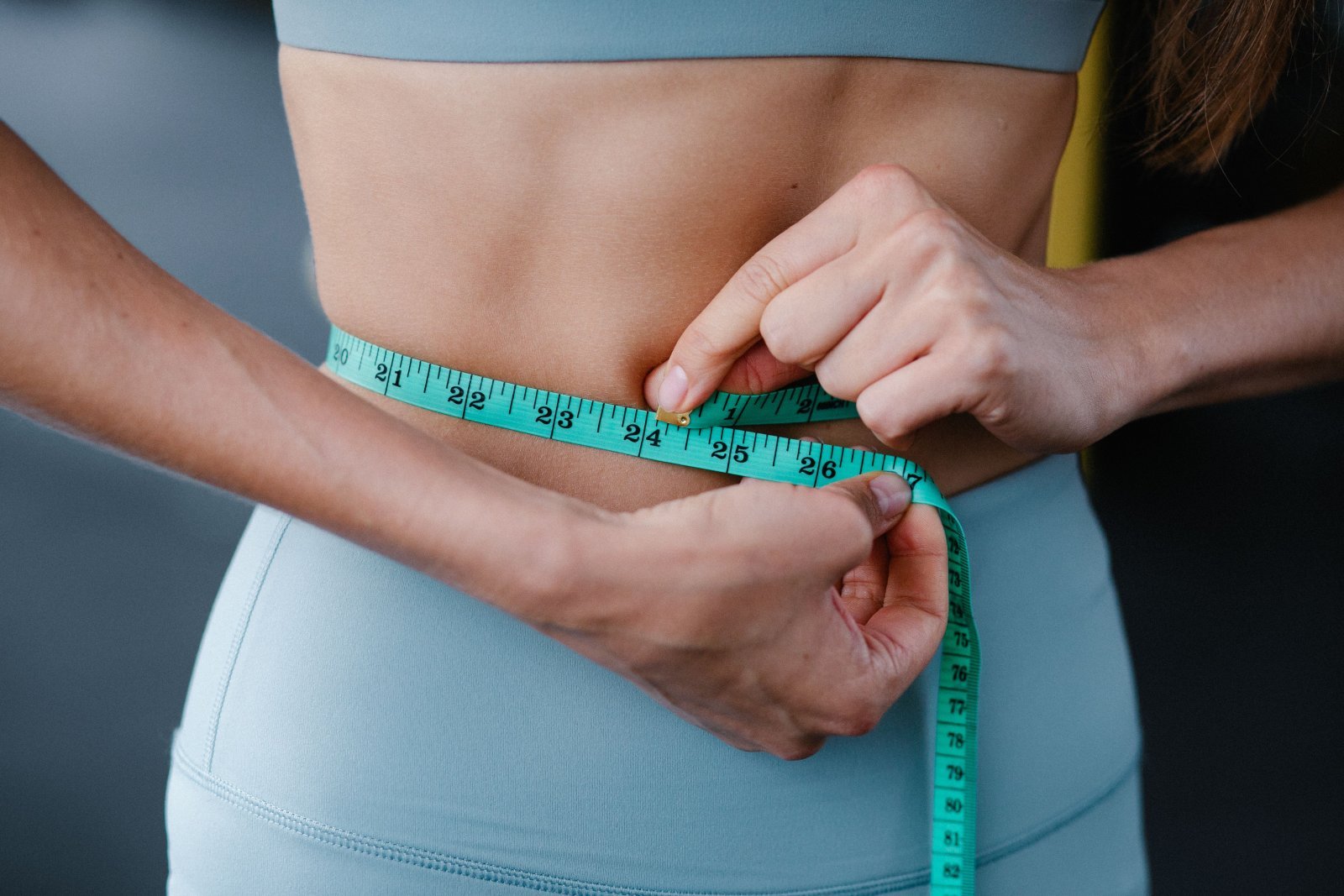
This is also why we don't like using bodyweight as the only progress measurement. Waist circumference, strength in the gym, energy levels, how clothing fits, and body composition when available can provide additional information. If your bodyweight is falling rapidly while your strength collapses and you're struggling to eat adequate protein, that's worth paying attention to.
The goal should not simply be to become a smaller version of yourself. Ideally, you emerge from weight loss with less body fat, preserved muscle, better physical capacity, and dietary habits capable of surviving without constant pharmacological appetite suppression.
What Happens When You Stop Taking a GLP-1?
This is one of the major reasons FitCalc is cautious about relying on these medications as the foundation of weight management.
In the STEP 1 trial extension, participants treated with semaglutide 2.4 mg lost an average of 17.3% of their bodyweight during the initial 68-week treatment period. After treatment was stopped, participants regained an average of 11.6 percentage points during the following year. In practical terms, about two-thirds of the weight they had previously lost returned within one year of stopping treatment. Many of the cardiometabolic improvements observed during treatment also moved back toward baseline.
Tirzepatide withdrawal produced a similar pattern in the SURMOUNT-4 randomized trial. Participants first lost an average of 20.9% of their bodyweight during 36 weeks of treatment. Those subsequently switched to placebo regained approximately 14% of their bodyweight during the following 52 weeks, while participants who continued tirzepatide lost additional weight.
A 2026 follow-up analysis found that most participants who stopped tirzepatide after significant initial weight loss regained at least 25% of the weight they had lost within a year, with greater regain accompanied by greater reversal of several cardiometabolic improvements.
These results don't mean every individual will regain the same amount. They do show that the medication itself does not permanently teach your body or lifestyle how to maintain the lower weight once treatment disappears.
That is precisely why habits matter while you're taking it.
Use the Weight-Loss Period to Build a Lifestyle You Can Keep
If you're already using a GLP-1 medication, one of the worst approaches would be treating the medication as a temporary period where you barely eat, rapidly lose weight, and postpone learning how to live at the new bodyweight until later.
Use the period to build something sustainable.
Learn how to construct meals around meat, eggs, fish, quality dairy, fruit, vegetables, potatoes, rice, and other minimally processed foods. Learn what appropriate portions look like. Strength train consistently. Walk. Find active hobbies. Develop a schedule that makes physical activity normal rather than something you do only while actively trying to lose weight.
You may still experience increased appetite if medication is reduced or discontinued. The withdrawal studies make clear that weight regain is a legitimate concern. But arriving at that point with more muscle, better food habits, greater physical capacity, and an established training routine gives you a much stronger foundation than relying entirely on appetite suppression.
The medication should never be the only thing holding your lifestyle together.
The FitCalc Approach
FitCalc does not recommend GLP-1 medications as our preferred approach to weight loss for otherwise healthy adults. We favor improving food quality, controlling energy intake appropriately, eating adequate protein, resistance training, staying active, sleeping well, and building habits that can remain in place for decades.
We are particularly cautious about treatments where substantial weight regain after discontinuation is well documented. Semaglutide withdrawal research found that participants regained roughly two-thirds of their prior weight loss within a year, while tirzepatide withdrawal has likewise produced substantial regain.
But whether we recommend these drugs or not, people are taking them. If you're already using a prescribed GLP-1 medication, do not make the scale your only measure of success.
Prioritize high-quality animal protein even when appetite is low. Resistance train consistently. Eat nutrient-dense whole foods with the limited appetite you have. Stay physically active, and avoid turning rapid weight loss into a competition. If severe appetite suppression or gastrointestinal symptoms are making adequate nutrition difficult, discuss that with the clinician managing your medication rather than simply accepting chronic undernutrition as the price of losing weight.
Most importantly, build the habits you would want to have even if the medication disappeared tomorrow.
Losing weight is useful.
Losing fat while preserving muscle, strength, nutrition, and control over your own lifestyle is a much better outcome.
Sources
Wilding JPH, Batterham RL, Davies M, et al. Weight regain and cardiometabolic effects after withdrawal of semaglutide: The STEP 1 trial extension. Diabetes, Obesity and Metabolism. 2022. One year after semaglutide withdrawal, participants regained approximately two-thirds of their previous weight loss, while several cardiometabolic improvements moved toward baseline. PubMed
Aronne LJ, Sattar N, Horn DB, et al. Continued Treatment With Tirzepatide for Maintenance of Weight Reduction in Adults With Obesity: The SURMOUNT-4 Randomized Clinical Trial. JAMA. 2024. Participants switched from tirzepatide to placebo regained substantial weight during the following 52 weeks, while continued treatment maintained and increased weight reduction. PubMed
Lean Mass Changes With Incretin Therapy Versus Lifestyle Intervention: A Systematic Review and Meta-Analysis of Randomised Controlled Trials. 2026. Analysis of 20 randomized trials found that lean mass constituted approximately 25–39% of total weight lost with incretin agonists, while lifestyle interventions incorporating resistance training produced the most favorable lean-mass preservation. PubMed
McCarthy D, et al. Strategies for minimizing muscle loss during use of incretin-mimetic drugs for treatment of obesity. Obesity Reviews. 2024. The review emphasizes adequate high-quality protein, micronutrient intake, physical activity, and particularly resistance training to help preserve muscle mass and function during pharmacological weight loss. PubMed
Arslan S. Medical nutrition in the glucagon-like peptide-1 (GLP-1) era: Protein strategies, micronutrient monitoring, and lean mass preservation. Clinical Nutrition ESPEN. 2026. Reviews protein intake, micronutrient adequacy, appetite suppression, gastrointestinal effects, and resistance training during GLP-1-based treatment. PubMed