Are Ultra-Processed Foods Bad Even If the Calories and Macros Are the Same?
Calories matter. Protein matters. Carbohydrates and fats matter. If you're trying to gain weight, lose fat, or build muscle, understanding those numbers can be extremely useful. That's a major reason tools such as calorie and macro tracking work in the first place.
But there is a problem with taking that logic too far: a nutrition label is not a complete measurement of a food's effect on the body.
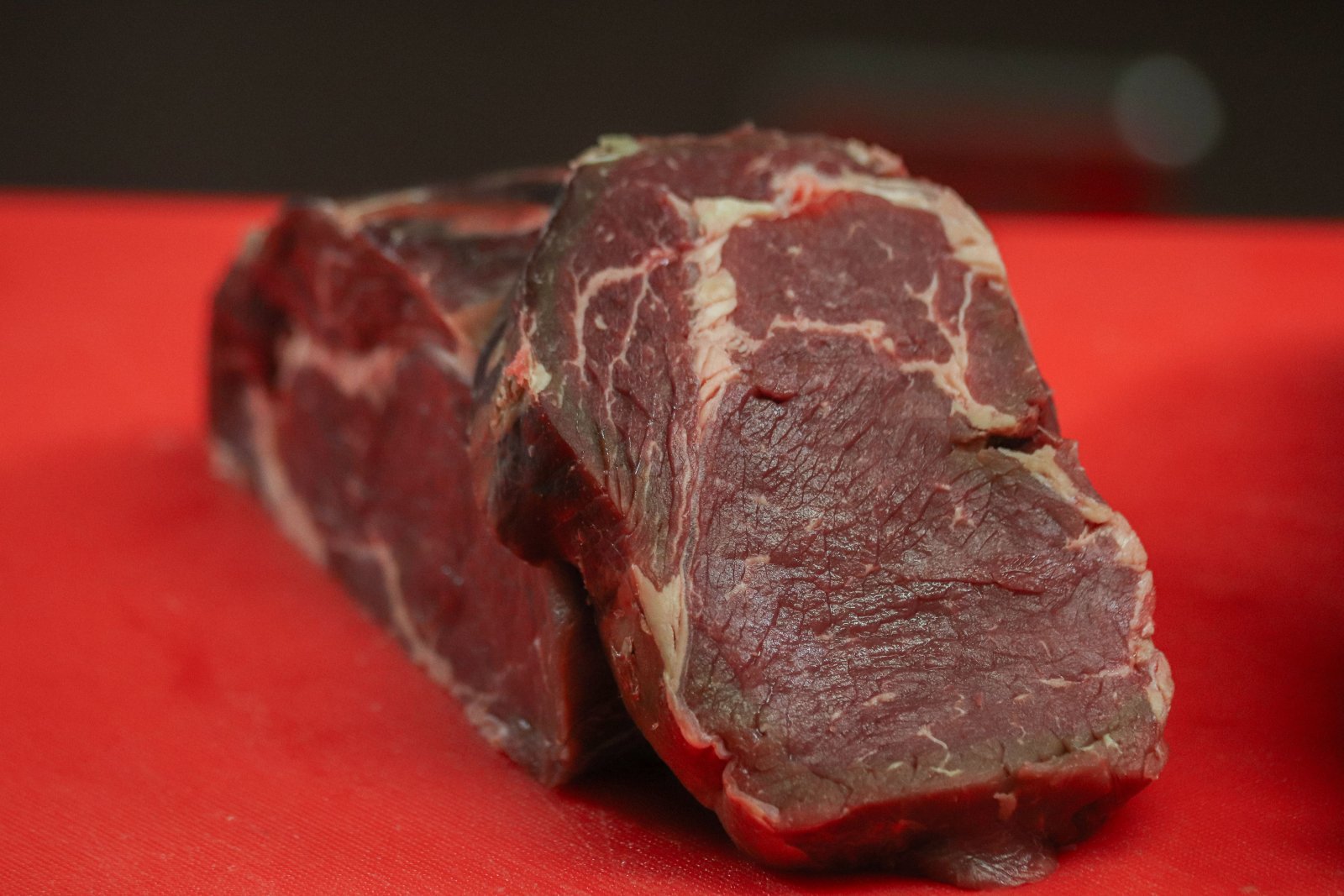
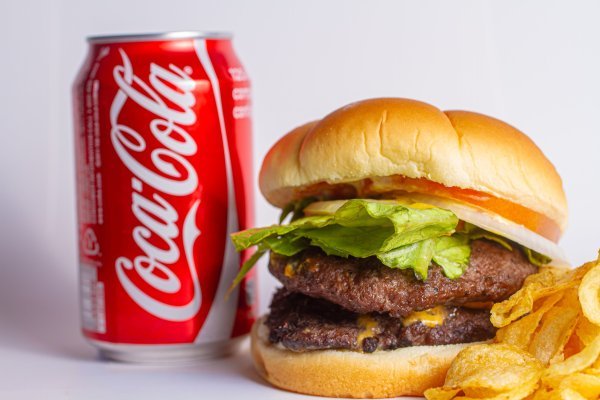
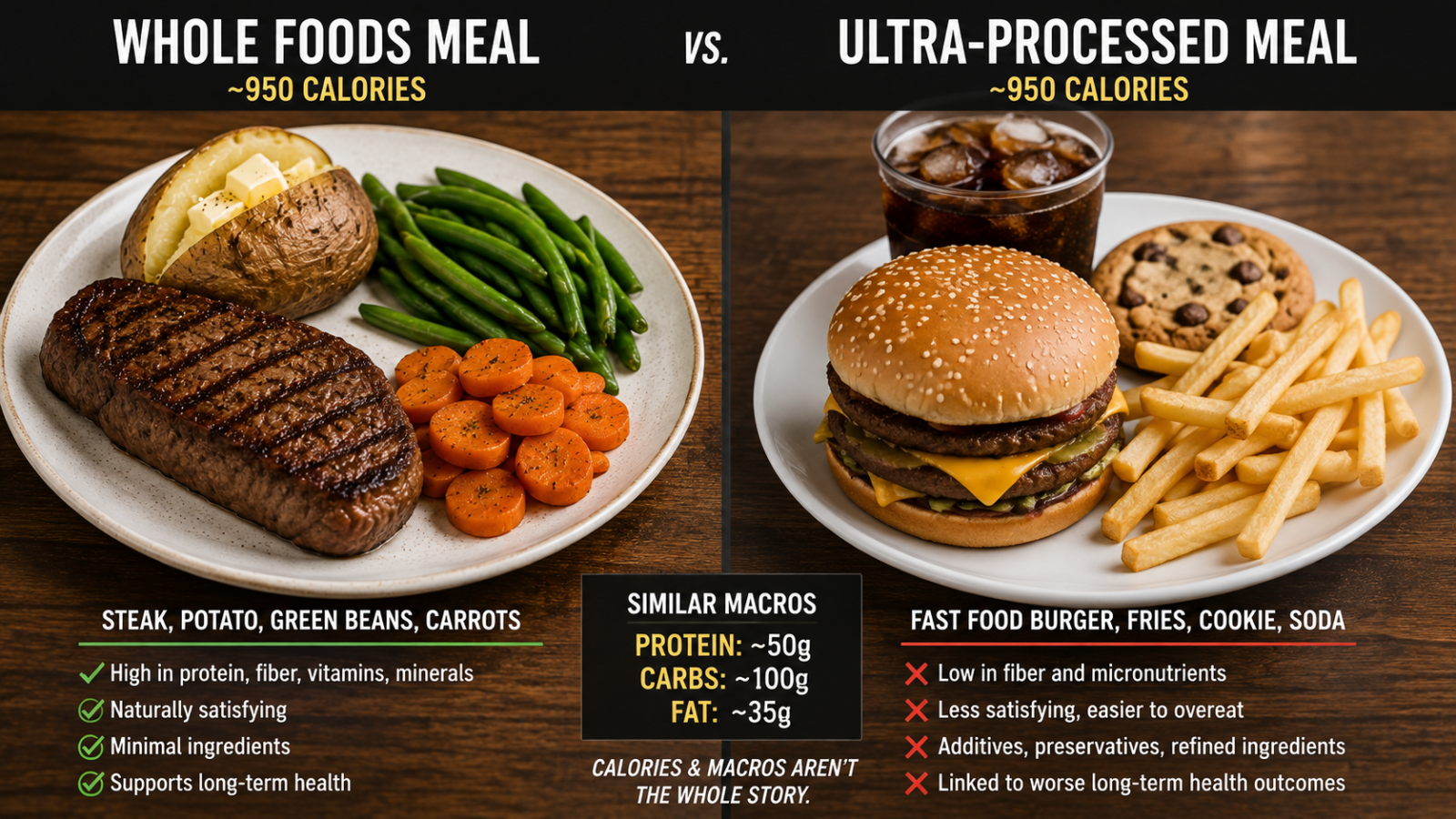
A meal made from beef, potatoes, eggs, fruit, and vegetables could theoretically contain similar calories and macronutrients to a meal assembled from a fast-food burger, fries, soda, and packaged snacks. On paper, you might be able to manipulate portions until the protein, carbohydrate, fat, and calorie totals look surprisingly similar. In practice, these are not nutritionally equivalent meals.
Whole foods bring vitamins, minerals, essential amino acids, fatty acids, naturally occurring food structures, and numerous other compounds along with their calories. Ultra-processed foods are often constructed from refined ingredients and designed to be convenient, palatable, shelf-stable, and easy to consume. They can also contain combinations of emulsifiers, stabilizers, artificial colors and flavors, sweeteners, preservatives, refined starches, added sugars, and other ingredients that simply aren't present in a steak, egg, potato, or piece of fruit.
At FitCalc, we recommend building roughly 80–85% or more of your diet around whole and minimally processed foods, with an emphasis on quality animal foods, fruit, vegetables, and simple carbohydrate sources. That doesn't mean you need to panic over a restaurant meal or refuse a piece of birthday cake. It means food quality should be the foundation of your diet rather than something you consider only after hitting your macros.
Calories Still Matter, but Calories Aren't the Whole Story
It would be equally misleading to swing too far in the opposite direction and claim calories don't matter. Energy balance plays a fundamental role in changes in bodyweight. Consistently consuming more energy than your body expends generally promotes weight gain, while a sustained energy deficit is required for meaningful fat loss.
The mistake is assuming that because calories matter for bodyweight, calories are therefore all that matter for health.
Food affects more than the amount of energy entering your body. It influences hunger, satiety, digestion, micronutrient intake, blood glucose, the gut microbiome, food reward, eating speed, and how easily you consume additional calories. Two foods can therefore contain the same amount of energy while creating very different eating experiences and providing very different nutritional value.
Consider 500 calories of steak and potatoes compared with 500 calories of cookies. The laws of thermodynamics haven't changed. Both contain approximately 500 calories. But one provides substantial high-quality protein, essential amino acids, iron, zinc, potassium, and other nutrients while requiring considerably more chewing and producing a completely different level of satiety. The other can be consumed rapidly while providing relatively little protein or micronutrient density.
The calorie count tells you how much energy is present. It does not tell you the quality of the food carrying that energy.
A Controlled Trial Put Ultra-Processed and Unprocessed Diets Head-to-Head
One of the most useful studies on this subject came from researchers at the National Institutes of Health. Instead of simply asking people what they normally ate and following them for years, researchers brought participants into an inpatient research facility and controlled the foods available to them.
Twenty adults consumed an ultra-processed diet for two weeks and an unprocessed diet for another two weeks in random order. Importantly, the diets presented to participants were designed to be matched for several nutritional characteristics, including presented calories, energy density, macronutrients, sugar, sodium, and fiber. Participants were allowed to eat as much or as little of the provided food as they wanted.
The result was difficult to dismiss.
During the ultra-processed phase, participants consumed approximately 500 additional calories per day compared with the unprocessed phase. They gained about 0.9 kilograms, or roughly two pounds, during the ultra-processed diet and lost approximately the same amount during the unprocessed diet. The differences occurred over only two weeks on each diet.
This study doesn't prove that every ultra-processed food independently causes weight gain. It demonstrates something more useful: the characteristics of food can influence how much people naturally choose to eat even when researchers attempt to match many of the nutrients printed on a label.
That matters tremendously in the real world. Telling someone that weight loss is simply a matter of eating fewer calories might be technically correct, but it leaves out the obvious question of what kind of diet makes eating an appropriate number of calories easier.
A diet based primarily on whole foods can make calorie control considerably more natural because the foods themselves tend to be more filling and less easy to consume in enormous quantities.
Ultra-Processed Foods Are Designed Differently
The term
processed food
is often used too broadly. Almost everything we eat undergoes some degree of processing. Ground beef has been ground. Milk is pasteurized. Frozen berries have been washed, frozen, packaged, and transported. Olive oil has been extracted from olives. Canned tomatoes have been cooked and sealed.
None of that automatically makes those foods unhealthy.
Ultra-processing goes considerably further. The NOVA classification system commonly used in research describes ultra-processed foods as industrial formulations typically produced using refined food substances, modified ingredients, and additives, often with little intact whole food remaining.
Think soft drinks, packaged snack cakes, many candies, certain frozen meals, instant noodles, highly processed breakfast cereals, packaged desserts, and numerous fast-food products. Ingredient lists commonly contain substances that would rarely appear in a home kitchen.
The distinction isn't about being afraid of technology. It is about recognizing that reconstructing food from refined ingredients is not nutritionally identical to eating the original food.
An apple contains sugar, but it also contains water, fiber, micronutrients, and an intact cellular structure that affects how quickly it can be eaten and digested. Apple-flavored candy can contain similar carbohydrate calories while sharing almost none of those characteristics. Calling both products "carbs" may be technically correct, but it isn't particularly informative.
Micronutrients Are One of the Biggest Things Macros Miss
A macro tracker usually focuses on four numbers: calories, protein, carbohydrates, and fat. Some applications track fiber and a handful of vitamins and minerals as well, but the basic macro system says very little about the micronutrient density of the diet.
That creates an obvious blind spot.
Beef provides nutrients such as vitamin B12, zinc, selenium, iron, and highly digestible protein. Eggs provide choline, selenium, B vitamins, fat-soluble nutrients, and complete protein. Fruit contributes potassium, vitamin C, polyphenols, and other compounds depending on the fruit. Potatoes provide potassium, vitamin C, vitamin B6, and other nutrients alongside their carbohydrate content.
Those nutrients don't disappear simply because an app categorizes both potatoes and candy primarily as carbohydrates.
A person can theoretically hit a calorie and macro target while eating a remarkably poor diet. Protein powders and processed protein products can push the protein number upward. Refined starches and sugar can provide the desired carbohydrate total. Added oils can complete the fat target. A multivitamin could even be added in an attempt to patch some of the nutritional holes.
We don't consider that equivalent to eating actual food.
Macros are useful targets inside a healthy diet. They should not be used as a substitute for one.
Food Structure and Satiety Matter
Whole foods generally require more work to eat. They need to be chewed, their cellular structures need to be broken down, and their combinations of protein, water, fiber, and other components influence how quickly they leave the stomach and how full someone feels afterward.
Ultra-processed foods can remove many of those natural barriers to consumption. Foods can be milled, refined, softened, emulsified, sweetened, flavored, and combined in ways that make calories extremely easy to consume.
Eating speed appears to be one part of the equation. In the NIH controlled trial, participants ate the ultra-processed meals faster and consumed calories at a higher rate. When hundreds of calories can be eaten before the body's normal satiety signals have had much opportunity to catch up, overeating becomes considerably easier.
This doesn't require believing that food companies have discovered a mysterious way around energy balance. The calories still count. Ultra-processed foods can simply make consuming too many of those calories remarkably easy.
Anyone who has eaten a large bag of chips understands this intuitively. Finishing 1,000 calories of chips while watching television isn't particularly difficult. Eating the same number of calories from steak, potatoes, eggs, and fruit is an entirely different physical experience.
What About Preservatives, Emulsifiers, Gums, and Other Additives?
This is where the discussion becomes more complicated than calories and appetite.
Ultra-processed foods can contain additives used to improve shelf life, texture, appearance, sweetness, stability, and flavor. These include emulsifiers, thickeners, artificial or nonnutritive sweeteners, colorants, preservatives, and other compounds.
Not every additive has the same biological effect, and it would be scientifically irresponsible to declare every approved food additive poisonous. However, there are legitimate reasons to investigate what chronic exposure to certain additives may do to the gut environment, particularly when people consume them repeatedly across multiple foods every day.
A major 2024 review in Nature Reviews Gastroenterology & Hepatology examined ultra-processed foods and additives in relation to gut health. The authors reported evidence that certain emulsifiers, sweeteners, colors, microparticles, and nanoparticles can affect outcomes involving the gut microbiome, intestinal permeability, and intestinal inflammation. They also emphasized an important limitation: much of the additive-specific evidence still comes from animal or laboratory studies, with fewer controlled human intervention trials available.
That uncertainty doesn't make the issue irrelevant. It means the research is developing.
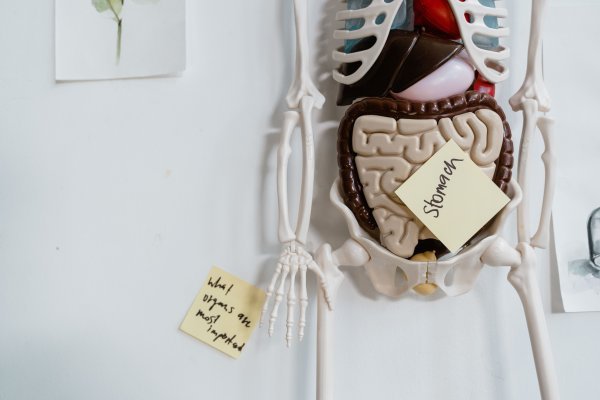
The Gut Barrier, Immune System, and Autoimmune Disease
The intestinal lining performs an extraordinary job. It must allow nutrients and other necessary substances to pass from the digestive tract into the body while maintaining a barrier against inappropriate entry of microbes, microbial products, and other substances.
That barrier also interacts constantly with the immune system and the trillions of microorganisms living in the gastrointestinal tract.
Researchers have consequently become increasingly interested in whether certain features of modern ultra-processed diets can alter the microbiome, affect intestinal permeability, and promote inflammatory signaling. These mechanisms are particularly relevant to autoimmune and inflammatory disease because abnormal immune activation and altered barrier function are implicated in several such conditions.
A 2026 review examining food additives, emulsifiers, microplastics, and ultra-processed foods in rheumatic disease noted that population research has associated higher ultra-processed-food consumption with increased rheumatoid arthritis risk even after adjustment for obesity and lifestyle factors. Experimental and translational research has also suggested that substances commonly encountered in ultra-processed diets, including certain emulsifiers, thickeners, synthetic colorants, added sugars, excess sodium, and some nonnutritive sweeteners, can potentially alter gut-barrier integrity, reshape the microbiome, and promote low-grade inflammation.
This does not mean eating a packaged snack causes rheumatoid arthritis. Autoimmune diseases are complex disorders involving genetics, environmental exposures, immune regulation, and numerous other factors. Current evidence cannot tell an individual that a particular additive caused his or her autoimmune condition.
What it does tell us is that dismissing food additives as biologically irrelevant simply because they contribute few or no calories is far too simplistic. Something does not need to contain calories to interact with your physiology.
From the FitCalc perspective, that provides another reason to keep the majority of the diet simple. If you can obtain the nutrition you need from beef, eggs, dairy, fruit, vegetables, potatoes, rice, and other recognizable foods, there is little reason to deliberately build your diet around industrial formulations containing ingredients whose long-term interactions with the gut are still being investigated.
Long-Term Research Doesn't Look Good for Ultra-Processed Diets
Controlled feeding studies are extremely useful, but keeping thousands of people inside metabolic wards for decades is obviously impossible. Long-term health research therefore relies heavily on observational studies.
Those studies cannot establish cause and effect as cleanly as randomized trials because people who eat large amounts of ultra-processed food can differ from people who don't in many other ways. Researchers attempt to adjust for smoking, exercise, bodyweight, income, and other factors, but residual confounding can never be completely eliminated.
Even with that limitation, the overall pattern deserves attention.
A 2024 umbrella review published in The BMJ examined 45 pooled analyses involving almost 9.9 million participants. Greater exposure to ultra-processed food was associated with higher risk across 32 of the 45 health outcomes examined. Stronger associations included cardiovascular-disease-related mortality, type 2 diabetes, all-cause mortality, obesity, and several mental-health outcomes.
The quality of evidence was not uniformly high. Much of it was graded low or very low using the GRADE framework, which is important to acknowledge when interpreting observational nutrition research. But when controlled feeding evidence shows that ultra-processed diets can encourage substantially greater calorie consumption, mechanistic research raises legitimate questions about food additives and gut health, and large observational datasets repeatedly associate high consumption with worse outcomes, we don't see a compelling reason to make these foods the foundation of a diet.
You don't need absolute proof that every ingredient causes a specific disease before choosing steak, eggs, potatoes, and fruit instead.
Why Matching the Macros Doesn't Make the Diets Equal
This brings us back to the original question.
Imagine two people eating 2,500 calories per day. Both consume 170 grams of protein, 250 grams of carbohydrate, and roughly the same amount of fat. Their tracking applications display nearly identical numbers.
Person A obtains most of those calories from beef, eggs, chicken, fish, dairy, fruit, potatoes, rice, and vegetables.
Person B obtains much of the diet from packaged protein products, refined breakfast foods, fast food, sweetened drinks, snack foods, desserts, refined oils, and other ultra-processed products.
Those diets are not equivalent simply because four numbers match.
The first diet naturally provides a broad spectrum of nutrients through actual food. Its protein comes predominantly from high-quality animal sources. Its carbohydrates remain attached to foods that bring water, minerals, fiber, or other beneficial compounds. Its ingredient lists are short because many of the foods don't need ingredient lists at all.
The second diet can be engineered to reproduce the same macronutrient totals while delivering an entirely different food environment. The eating rate can differ. Satiety can differ. Micronutrient density can differ. Food structure can differ. Additive exposure can differ. Gut effects may differ. And the long-term epidemiological patterns associated with high ultra-processed-food consumption are consistently concerning.
Macros are important. They simply aren't capable of measuring all of that.
Why We Don't Recommend Trying to Eat Perfectly
After everything we've just said, it would be easy to take the argument too far.
Someone cleans up his diet, starts reading every ingredient label, and eventually becomes afraid to eat anything he didn't personally prepare. A dinner with friends becomes stressful. Vacation becomes a nutritional emergency. One cookie turns into a reason to declare the entire week ruined.
That isn't the goal.
At FitCalc, we'd rather see someone eat exceptionally well 80–85% of the time for the next twenty years than eat perfectly for three weeks and become so exhausted by the rules that he gives up entirely.
The majority of your grocery cart should be boring in the best possible way: meat, eggs, quality dairy if you tolerate it, fruit, vegetables, potatoes, rice, and other simple foods that fit your needs. Cook meals at home when possible. Use traditional cooking fats. Choose foods whose ingredients you recognize.
Then live your life.
If you eat pizza with friends on Saturday, nothing catastrophic happened. If you're traveling and the only realistic meal isn't perfect, eat it. If your grandmother makes dessert at Christmas, you don't need to interrogate her about every ingredient before taking a bite.
Flexibility should make a healthy diet sustainable, not become an excuse for an unhealthy diet to remain unchanged.
There is a major difference between eating ultra-processed food occasionally and constructing most of your daily nutrition around it.

The FitCalc Approach
None of this means you need to eat perfectly every day. In fact, trying to maintain a flawless diet can make healthy eating harder than it needs to be. One restaurant meal, dessert, or packaged food does not undo an otherwise nutrient-dense diet, just as one healthy dinner cannot compensate for months of poor eating. What you eat consistently matters far more than what you eat occasionally.
For most people, we think a reasonable goal is to build roughly 80–85% of the diet around whole and minimally processed foods. Meat, eggs, quality dairy for those who tolerate it, fruit, vegetables, potatoes, rice, and other simple foods should make up the foundation. These foods provide protein, essential fats, vitamins, minerals, and other nutrients without requiring an ingredient list full of substances designed to alter flavor, texture, appearance, or shelf life.
The remaining portion provides some flexibility for real life. You can have dinner with friends, enjoy something on vacation, or occasionally eat a food that doesn't perfectly fit your normal diet without treating the day as a failure. The goal isn't to become afraid of food or obsess over every ingredient. It is to make ultra-processed food the exception rather than the foundation of your diet.
This distinction matters because health is built through patterns repeated over months and years. If most of your meals consist of whole foods, you're naturally creating a very different nutritional environment than someone whose diet is dominated by packaged snacks, fast food, refined desserts, sugary drinks, and ready-to-eat meals. Even when calories or individual macronutrients look similar on paper, the overall diets are not nutritionally equivalent.
Calories matter. Macros matter. But food quality matters too. Use calories and macronutrients as useful tools, not as permission to ignore everything else about the food you're eating. At FitCalc, we'd rather see someone consistently eat a nutrient-dense whole-food diet that's 85% excellent than spend two weeks trying to eat "perfectly," become miserable, and abandon the entire approach.