Protein is usually associated with building muscle, but its role in the human body goes far beyond the gym. Protein provides the amino acids needed to build and repair tissues and contributes to enzymes, hormones, immune proteins, transport proteins, and countless other structures involved in normal human physiology.
How much protein you should eat is where things become less straightforward. The standard adult RDA is approximately 0.8 grams per kilogram of bodyweight per day, while recommendations for people who exercise are commonly higher. Research on resistance training, dieting, aging, and body composition has produced a range of useful targets rather than one universally optimal number.
FitCalc takes a deliberately simple approach. For healthy adults who are serious about building muscle, preserving muscle during fat loss, training regularly, or improving body composition, we generally recommend approximately 1 gram of protein per pound of bodyweight per day. That works out to about 2.2 g/kg.
This is a planning preference, not a universal requirement or a guarantee of extra muscle growth. Many people can meet their needs at lower intakes. We choose it for its simplicity and generous margin, provided it fits the person's health, appetite, budget and overall calorie needs.
This guide will explain both sides clearly: what protein research tells us and what FitCalc recommends in practice.
This guide is for generally healthy adults. Children, pregnancy, breastfeeding, kidney disease and other circumstances that alter nutrition needs call for individualized guidance rather than automatically using a fitness protein target.
What Protein Does and Why It Matters
Protein is one of the three primary macronutrients, alongside carbohydrate and fat, but it has a particularly important structural role in the body. Muscle tissue contains large amounts of protein, but protein is also present throughout your organs, skin, connective tissues, enzymes, antibodies, transport proteins, and many other structures.
Unlike body fat, which primarily serves as a large energy reserve, the body's protein-containing tissues perform essential functional and structural jobs. That is one reason adequate protein intake matters whether someone is trying to become more muscular or simply maintain their health and physical function.
Dietary protein also supplies essential amino acids, which the body cannot synthesize in sufficient quantities on its own. Those amino acids have to come from the diet. Protein quality therefore matters alongside total quantity, something we'll address in more detail later in this guide. MedlinePlus: Protein in diet
Protein, Amino Acids and Muscle Protein Synthesis
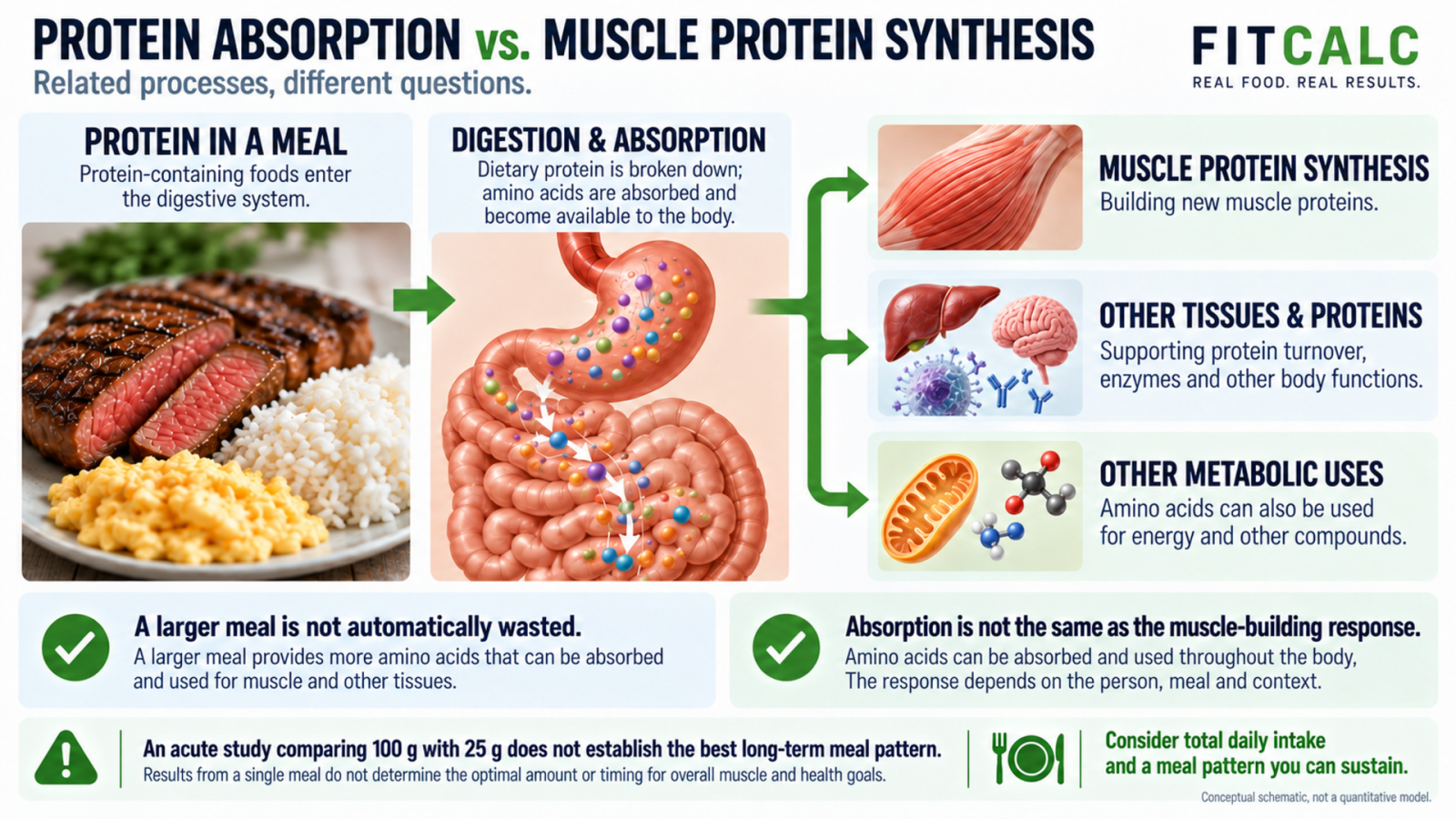
When you eat a protein-containing food such as beef, eggs, chicken, or salmon, your digestive system does not absorb the protein intact and send a piece of steak directly to your biceps. Digestion breaks dietary proteins down into smaller peptides and individual amino acids, which can then be absorbed through the intestine and made available to tissues throughout the body.
There are 20 amino acids commonly used to build human proteins. Nine are considered essential amino acids because adults cannot produce them in sufficient amounts and therefore need to obtain them from food. The others can generally be synthesized by the body, although their metabolic importance is no less real.
Once absorbed, amino acids contribute to the body's constantly changing pool of proteins. Human tissues are not static. Proteins are continuously being broken down and rebuilt through protein turnover, allowing damaged proteins to be replaced and tissues to adapt to changing demands.
In skeletal muscle, the creation of new muscle proteins is called muscle protein synthesis (MPS). Resistance training provides a powerful stimulus for MPS, while eating high-quality protein supplies essential amino acids and further stimulates the process. Research consistently shows that resistance exercise and protein feeding work together to create a stronger anabolic response than either factor alone. ISSN position stand on protein and exercise (2017)
The amino acid leucine plays a particularly important signaling role in stimulating muscle protein synthesis. This is one reason protein quality matters: foods differ in their essential amino acid and leucine content, digestibility, and the amount of usable protein they provide.
Muscle growth ultimately occurs when muscle-building processes exceed muscle breakdown sufficiently over time. One high-protein meal will not build a noticeably larger muscle by itself, just as one workout will not transform your physique. The result comes from repeatedly providing the body with a training stimulus, adequate protein, sufficient nutrition, and recovery.

Protein for Muscle, Fat Loss and General Health
Protein requirements become especially relevant when the goal is building muscle. Resistance training creates the stimulus for adaptation, but the body still needs amino acids to construct and repair muscle proteins. Consuming adequate protein across the day helps ensure those materials remain available as the body recovers from training.
A large meta-analysis of resistance-training studies found that increasing protein intake enhanced gains in muscle size and strength associated with resistance training, although the additional benefit eventually showed diminishing returns as total intake increased. Protein is therefore important, but simply doubling an already adequate intake does not mean you will build muscle twice as fast. Training quality, calories, sleep, genetics, and recovery remain important parts of the equation. Morton et al. (2018)
Protein becomes just as valuable during fat loss, although for a somewhat different reason. A calorie deficit creates an environment where bodyweight is being lost, and the goal should generally be to have as much of that loss as reasonably possible come from body fat rather than muscle. Adequate protein combined with resistance training helps create a better environment for preserving lean tissue while calories are restricted.
Controlled research supports paying attention to protein during dieting. In a 21-day energy-deficit trial, adults consuming 1.6 or 2.4 g/kg/day lost a smaller proportion of weight as fat-free mass than those consuming 0.8 g/kg/day. That does not establish one ideal intake for every dieter, but it supports keeping protein adequate when calories fall. Pasiakos et al. (2013)
Protein can also help make a calorie deficit easier to follow. A short controlled feeding study found greater satiety and diet-induced thermogenesis with a higher-protein diet. Appetite responses vary, and these effects do not override energy balance. Lejeune et al. (2006)
Outside body-composition goals, protein remains necessary for normal tissue maintenance, enzymes, transport proteins, immune function, and numerous other physiological processes. Muscle itself also becomes increasingly important for maintaining physical function as people age. Protein is therefore not a nutrient reserved for bodybuilders.
The practical takeaway is that protein serves different goals through the same underlying biology. During muscle gain, it supplies material for growth and recovery. During fat loss, it helps protect lean tissue. During maintenance, it continues supporting normal tissue turnover and physical function.
For the rest of the fat-loss plan, see our complete guide to losing weight.
Why Protein Is Different From Carbohydrates and Fat
Protein, carbohydrate, and dietary fat all contribute energy, but they are not interchangeable.
Protein and carbohydrate each provide approximately 4 calories per gram, while fat provides approximately 9 calories per gram. That similarity between protein and carbohydrate on a calorie label does not mean they perform the same physiological roles. FAO: Food energy conversion factors
Carbohydrates are particularly useful as an energy source and help replenish glycogen used during demanding activity. Dietary fats provide concentrated energy, essential fatty acids, and support numerous physiological functions. Protein's defining contribution is its amino acids, including the essential amino acids your body cannot make in adequate quantities.
Your body can use amino acids for energy when necessary, but FitCalc does not view that as protein's primary purpose in a well-designed diet. We would rather provide adequate protein for structural and functional needs while using quality carbohydrates and fats to supply much of the body's energy.
Processing food uses energy, and a higher-protein diet can increase that cost compared with a lower-protein diet. The exact effect depends on the diet and person; it is not a fixed calorie discount to subtract from a food label. Protein calories still count. Lejeune et al. (2006)
A balanced diet therefore isn't about asking which macronutrient is universally "best." They perform different jobs. For someone pursuing strength, muscle, fat loss, or improved body composition, however, protein is the macronutrient we want to establish deliberately rather than simply hoping enough happens to appear in the diet.
That leads directly to the biggest practical question in this guide: how much protein should you actually eat?
How Much Protein Should You Actually Eat?
Once someone decides to prioritize protein, the obvious question is how much they actually need. This is also where protein advice becomes unnecessarily confusing. One source points to the adult RDA, another recommends an amount based on kilograms of bodyweight, and bodybuilding advice often defaults to 1 gram per pound.
These numbers are not necessarily contradictory because they are often trying to answer different questions. An intake intended to meet the basic needs of the general population is not automatically the same intake we would choose for someone trying to maximize muscle growth, preserve lean mass through months of dieting, recover from frequent training, and consistently build meals around high-quality protein.
FitCalc's position is straightforward. We want readers to understand what the research says, but our practical recommendation for healthy adults seriously pursuing training and body-composition goals is approximately 1 gram of protein per pound of bodyweight per day.
What the Research Says About Protein Intake
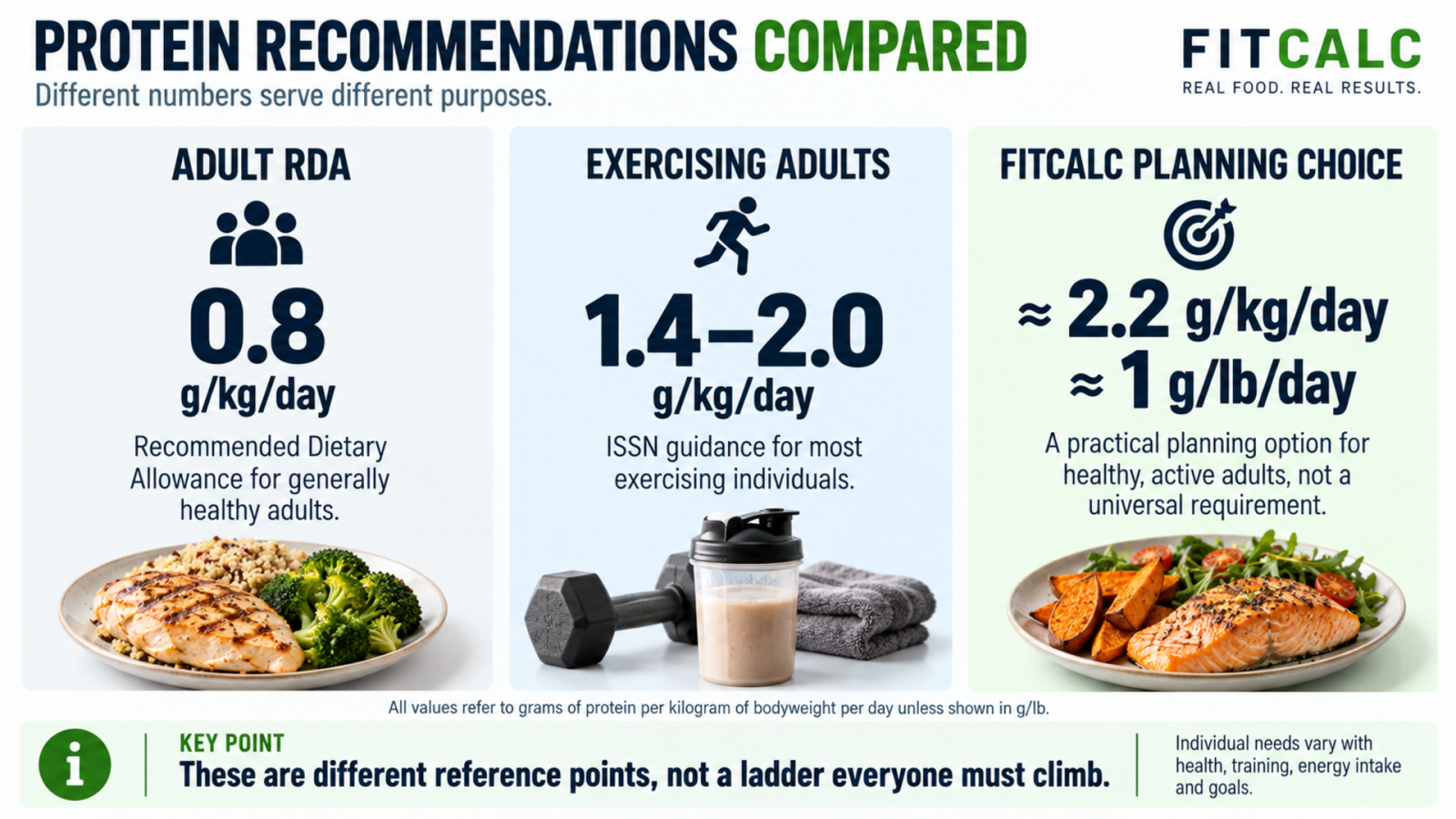
The adult Recommended Dietary Allowance for protein in the United States is approximately 0.8 g/kg of bodyweight per day, equivalent to about 0.36 g/lb. The RDA is intended to cover the needs of nearly all healthy adults in the general population. It should not be interpreted as a target specifically designed to maximize hypertrophy or optimize body composition in people who resistance train. National Academies: Protein requirements
Sports-nutrition recommendations are higher. The International Society of Sports Nutrition has stated that approximately 1.4–2.0 g/kg/day is sufficient for building and maintaining muscle for most exercising individuals, while higher intakes may be useful during periods of calorie restriction. ISSN position stand on protein and exercise (2017)
Resistance-training research gives us additional context. A meta-analysis of 49 trials involving 1,863 participants found small additional gains in fat-free mass and strength with protein supplementation. Its model estimated a fat-free-mass breakpoint near 1.62 g/kg/day, about 0.73 g/lb, with a 95% confidence interval of 1.03–2.20 g/kg/day. This is an uncertain population estimate, not a precise ceiling for every person or proof that 2.2 g/kg beats 1.6 g/kg for everyone. Morton et al. (2018)
Dieting can change the situation further. In the controlled trial described above, 1.6 and 2.4 g/kg/day both better protected fat-free mass than the RDA-level intake during a substantial short-term deficit. A higher number was not automatically better on every outcome. The severity of the deficit, training, body composition and tolerability all matter. Pasiakos et al. (2013)
So rather than producing one universal number, the literature gives us a useful range that changes with context.
These numbers should not be interpreted as competing rules where one must be correct and the others wrong. They describe different standards, populations, and goals.
Why FitCalc Recommends 1 Gram Per Pound
After looking at those ranges, FitCalc still recommends approximately 1 gram per pound of bodyweight, or about 2.2 g/kg/day, for healthy people seriously pursuing muscle growth, fat loss with muscle preservation, strength training, or improved body composition.
The first reason is simplicity. A 160-pound person aims for roughly 160 grams. A 190-pound person aims for approximately 190 grams. There is no need to convert pounds to kilograms and then decide whether to multiply by 1.6, 1.8, or 2.0. A nutrition recommendation becomes more useful when people can remember and apply it without repeatedly looking it up.
The second reason is planning margin. We prefer a memorable target that leaves room for normal day-to-day variation. That is a practical choice, not evidence that a lower adequate intake is inferior. If a lower target already supports training and fits the diet better, there is no need to force extra protein simply to reach a round number.
The aim is to make consistent eating easier.
At 1 g/lb, intake is about 2.2 g/kg/day: above the ISSN's general 1.4–2.0 g/kg range for most exercising adults. It can be a workable choice for healthy active adults, but it is not the minimum needed to build muscle. Adequate carbohydrate, dietary fat, fruit, vegetables and total energy still need space in the diet.
The recommendation becomes especially useful during fat loss. We would rather maintain a consistently high protein intake while calories decrease than begin cutting protein to make room for an unnecessarily low target. Adequate protein, resistance training, and a reasonable calorie deficit work together to improve the odds that more of the weight being lost comes from body fat rather than lean tissue.
There are practical dietary advantages as well. Protein tends to be satiating and has a substantially higher thermic effect than carbohydrate or fat. A high-protein target also encourages people to make foods such as beef, eggs, chicken, fish, and quality dairy when tolerated a meaningful part of their meals rather than discovering at the end of the day that they have eaten very little protein.
None of this requires us to claim that eating 180 grams instead of 150 grams will automatically produce additional muscle growth in every 180-pound person. FitCalc's 1 g/lb target is a practical recommendation, not a claim that 0.9 g/lb suddenly becomes inadequate.
Use the target as a tool, then choose portions you can sustain.
When 1 Gram Per Pound Needs Context
A simple rule still needs common sense.
For someone at a relatively normal bodyweight who trains and wants to improve body composition, 1 g/lb is easy to apply. If that person weighs 175 pounds, roughly 175 grams of protein gives them a clear daily target.
The calculation becomes less useful when current bodyweight includes a very large amount of excess body fat. A 350-pound person trying to lose substantial weight does not necessarily need to force themselves to consume 350 grams of protein every day simply because FitCalc uses a 1 g/lb rule. Fat tissue does not create the same protein requirement as metabolically active lean tissue.
In those situations, an appropriate goal-weight or lean-mass-based approach may be more useful, ideally chosen with a registered dietitian. For illustration, using a 200-pound reference weight would produce a 200-gram target at 1 g/lb, even if current weight were 300 pounds. This is an example of the calculation, not a prescription for every person at that weight. A lean-mass-based formula uses a different denominator and should not be substituted into a bodyweight formula without explanation.
Age can also affect the response to protein. Laboratory data in healthy older and younger men suggest older muscle can be less responsive to a small protein serving. That supports paying attention to protein-rich meals and resistance training with age, without assuming every older adult needs 1 g/lb. Moore et al. (2015)
At the opposite end, a sedentary person with no interest in maximizing muscle, athletic performance, or body composition does not suddenly become deficient because they consume less than FitCalc's 1 g/lb target. Our recommendation is intentionally designed around the kinds of goals this Guide is meant to support.
Medical circumstances require additional context. A small one-year crossover study in 14 healthy resistance-trained men found no harmful changes in the measured kidney or liver markers while comparing already-high habitual protein with a higher intake. It does not establish lifelong safety for every person or apply to people with kidney disease. If you have kidney disease or another condition affecting protein needs, use individualized medical nutrition guidance. Antonio et al. (2016); NIDDK: Healthy eating with chronic kidney disease
The purpose of the 1 g/lb rule is to make protein easier, not to turn it into another rigid number people become afraid to miss. If your target is 180 grams and you eat 172 one day or 190 the next, nothing meaningful has gone wrong. What matters is consistently building a diet that provides plenty of high-quality protein over time.
That gives us the protein quantity. The next question is equally important: where should that protein come from, and does it matter how you distribute it across the day?
Protein Quality, Food Sources and Meal Distribution
Reaching your daily protein target is the first priority, but the source of that protein still matters. Different foods provide different amino-acid profiles, digestibility, leucine content, and accompanying nutrients. Getting 40 grams of protein from a steak is not nutritionally identical to getting 40 grams from a highly processed food formulated to contain the same amount of protein.
FitCalc's preference is clear: build the majority of your protein intake around high-quality animal foods. Beef, eggs, poultry, fish, and dairy for people who tolerate it provide complete protein alongside valuable micronutrients. Plant foods can contribute protein and properly constructed plant-based diets can support muscle growth, but that does not make every protein source nutritionally equivalent or change what FitCalc recommends as the foundation of the diet.
How you distribute protein matters somewhat too, but this is an area where fitness advice often becomes unnecessarily rigid. There is no need to eat protein every two hours or panic because dinner contains more than 30 grams. Total daily intake comes first, followed by reasonable distribution across the meals that fit your lifestyle.
Why FitCalc Prioritizes Animal Protein
Protein quality is influenced partly by the amount and proportion of essential amino acids a food provides and how effectively that protein can be digested and utilized. Animal proteins generally provide all nine essential amino acids in proportions well suited to human needs, which is why foods such as meat, eggs, fish, and dairy are commonly described as complete proteins.
Leucine is particularly relevant to muscle because of its role in signaling muscle protein synthesis. Animal proteins tend to provide substantial leucine alongside the other essential amino acids needed to actually construct new proteins. Research examining protein quality and resistance exercise supports considering amino-acid composition, digestibility, and leucine content rather than evaluating protein sources only by the number of grams printed on a nutrition label.
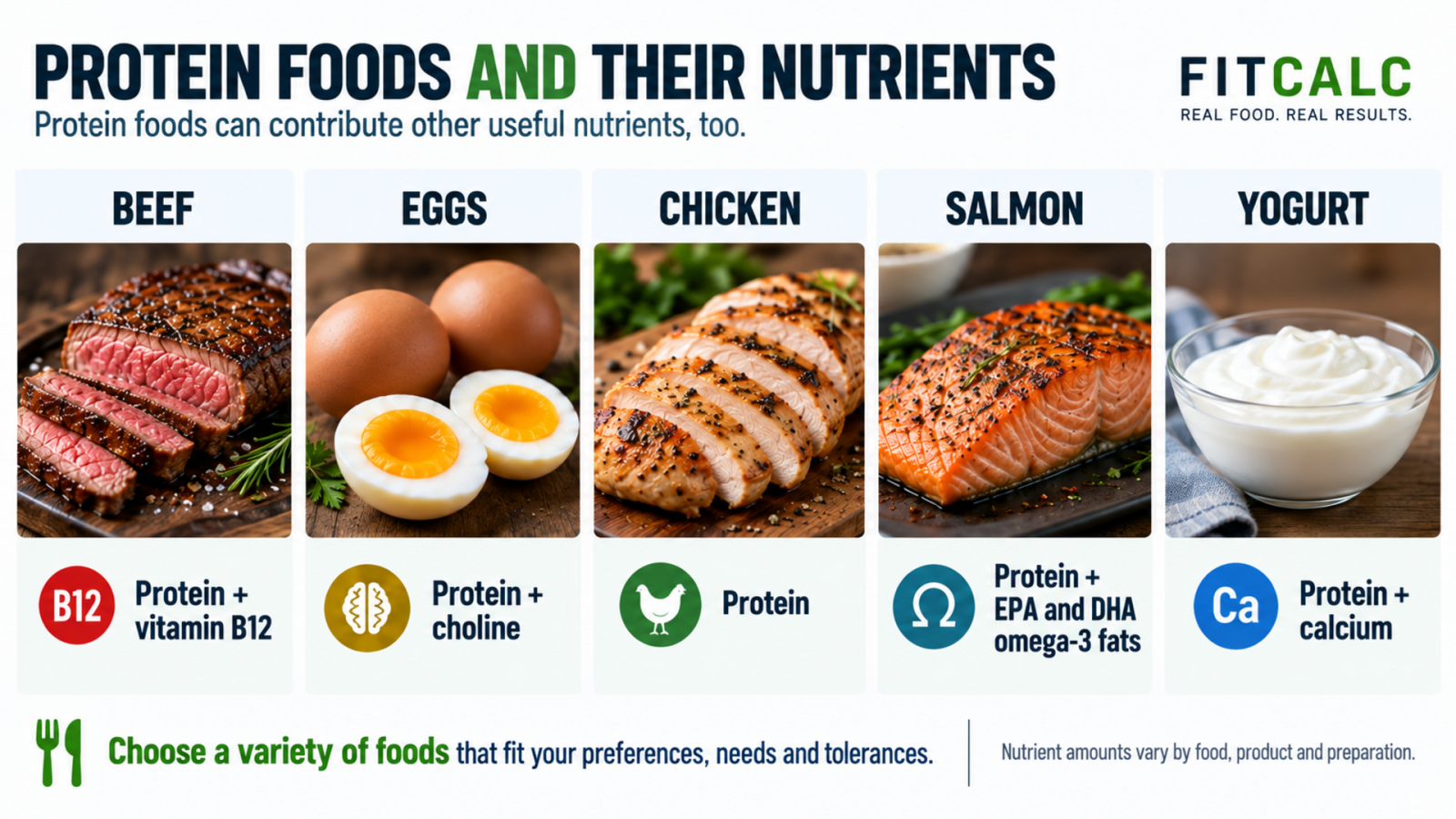
FitCalc also cares about what comes with the protein. Beef provides vitamin B12, eggs are a useful source of choline, and salmon supplies the long-chain omega-3 fats EPA and DHA. These foods offer different nutrients, so variety matters alongside the protein number. NIH ODS: Vitamin B12; NIH ODS: Choline; NIH ODS: Omega-3 fatty acids
This is one reason we would rather see someone eat a substantial serving of beef than choose a food simply because the package has been modified to advertise "20g protein" across the front.
Plant foods can still contribute meaningful protein, and their grams count toward the daily total. In a 12-week study of previously untrained young men, protein-matched vegan and omnivorous diets at about 1.6 g/kg/day supported similar gains in muscle and strength. Both groups used supplements to reach the target, so the result should not be generalized to every low-protein diet. Hevia-Larraín et al. (2021)
FitCalc's preference remains to build meals around meat, eggs, fish and tolerated dairy because they make a substantial protein serving straightforward. That is our dietary approach, not a claim that animal foods are the only way to meet protein needs.
For most FitCalc readers, the practical protein foundation is simple: beef and other red meat, eggs, poultry, fish and seafood, plus quality dairy for people who digest and tolerate it well.
How Much Protein Can Your Body Use in One Meal?
One of the most persistent protein myths is that your body can only absorb approximately 20–30 grams at a time and anything beyond that is wasted.
That is not how digestion works.
When you eat a large protein-containing meal, your digestive system breaks that protein down and absorbs the resulting amino acids over time. There is no mechanism that reaches 30 grams and suddenly stops absorbing the rest. Larger meals can simply take longer to digest, and the absorbed amino acids can be used throughout the body for numerous purposes.
The confusion comes largely from research on muscle protein synthesis. Studies have shown that relatively moderate servings of high-quality protein can strongly stimulate MPS, with diminishing additional stimulation as protein intake increases. That observation is very different from saying the body cannot absorb or use additional protein.
Amino acids are not exclusively used to build skeletal muscle immediately after a meal. They contribute to protein turnover throughout the body and can be used in enzymes, connective tissues, transport proteins, immune proteins, and many other structures. Some amino acids can also be oxidized or used through other metabolic pathways. The fact that every additional gram does not create an equal increase in acute MPS does not mean those grams disappear unused.
A controlled 2023 study in healthy young men compared 0, 25 and 100 grams of milk protein after exercise. The 100-gram serving produced a larger, more prolonged protein-synthesis response over the 12-hour measurement period than 25 grams. This is evidence against a rigid 30-gram absorption limit; it is not a long-term trial showing that one huge meal builds more muscle than several balanced meals. Trommelen et al. (2023)
That study does not mean FitCalc recommends eating 100 grams of protein at every meal. It demonstrates something more useful: the body's response to a large protein meal can extend over a longer period rather than all protein above an arbitrary threshold simply being wasted.
For many adults, approximately 30–50+ grams of high-quality protein per meal is a useful practical range. Larger people, people eating fewer meals, and those with higher daily targets may reasonably eat considerably more.
If a 180-pound person eats 60 grams of protein at dinner, there is no reason to believe the extra protein beyond 30 grams has somehow been thrown away.
For a closer look, read how much protein your body can use in one meal.
Protein Timing and Distribution
If the body can handle larger protein meals, does distribution matter at all? Probably, but it should be treated as an optimization rather than the foundation of the diet.
Your first priority is consistently reaching an appropriate total daily intake. Someone eating only 90 grams of protein when their target is 180 should focus on fixing the missing 90 grams before worrying about whether breakfast and lunch are separated by exactly three hours.
Once daily intake is established, spreading protein across several meals is a practical way to supply amino acids repeatedly. In an acute study of trained men, 20 grams of whey every three hours stimulated more muscle protein synthesis over 12 hours than the same total split into smaller, more frequent or larger, less frequent servings. That supports reasonable distribution, without proving one schedule is best for every mixed-food diet. Areta et al. (2013)
There is no need to make that schedule rigid. A person targeting 180 grams per day could plan four meals of 45 grams, or three meals of 60 grams. Both examples add to 180 grams; they are portion-planning options, not fixed physiological requirements.
Protein around resistance training is useful because exercise sensitizes muscle to amino acids, but the traditional idea of a tiny post-workout "anabolic window" has been exaggerated. The anabolic response to resistance exercise persists far longer than 30 minutes, and what you ate before training also influences amino-acid availability afterward. You do not need to sprint to the locker room and drink a shake before your muscles somehow stop responding. ISSN position stand on protein and exercise (2017)
Pre-sleep protein is another optional strategy. In a controlled experiment, 40 grams of casein before bed increased overnight protein synthesis after evening exercise in healthy young men. This does not mean everyone needs an extra shake on top of an adequate evening meal and daily intake. Res et al. (2012)
FitCalc's hierarchy is therefore straightforward: hit the daily protein target, prioritize high-quality protein sources, distribute them reasonably across your meals, and then optimize timing if it fits naturally into your routine.
Protein nutrition should make your diet more effective, not force your entire day to revolve around a stopwatch.
Building a High-Protein Diet in Real Life
Knowing your protein target is useful only if you can consistently reach it with actual food. Someone aiming for 180 grams per day does not need to obsess over protein every waking hour, but they do need meals substantial enough to make that target realistic.
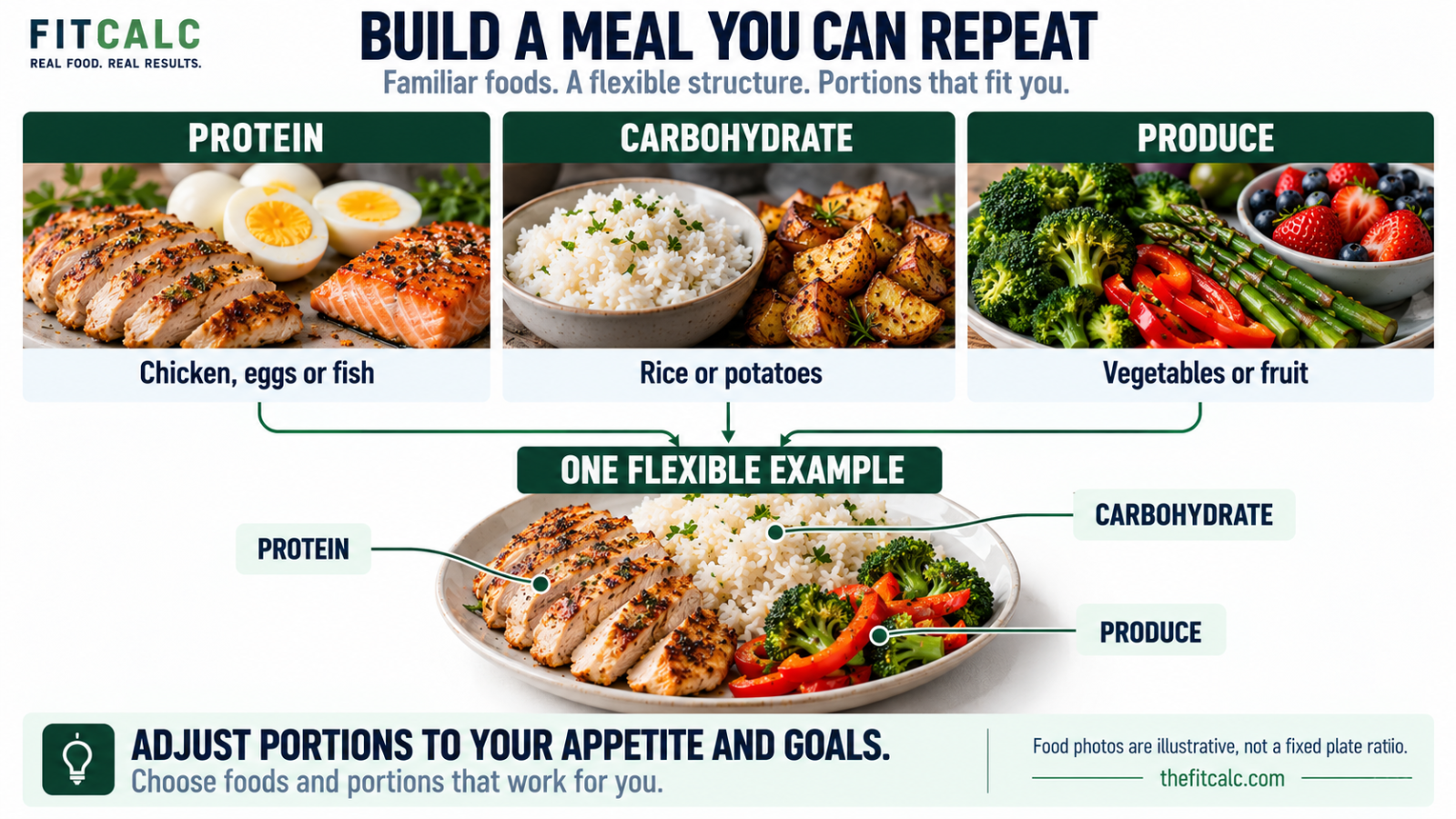
FitCalc's preferred approach is to build meals around protein rather than adding protein as an afterthought. Choose the primary animal protein first, then build the rest of the meal around it with quality carbohydrates, fruit or vegetables, and dietary fat according to your calorie needs and preferences.
This also makes a high-protein diet surprisingly simple once you establish a handful of meals you enjoy. You do not need a different menu every day, perfectly equal protein servings, or shelves full of products marketed as "high protein." You need enough quality food, in appropriate portions, repeated consistently.
Build Your Meals Around Protein
A common reason people struggle to reach a high protein target is that they construct meals backward. Breakfast might consist primarily of toast or cereal, lunch might be a small sandwich, and dinner becomes the first substantial serving of meat. By evening, they discover they still need another 80 grams of protein.
Starting with the protein source largely solves this problem.
If breakfast contains four eggs plus another substantial animal protein, you already have a meaningful amount toward the day's target. Lunch might center around chicken, beef, or fish. Dinner can include another generous serving of meat or seafood. Once those anchors are established, rice, potatoes, fruit, vegetables, olive oil, avocado, or other foods can be added according to your calorie and carbohydrate needs.
Serving size matters because foods that are considered "protein foods" do not necessarily contain the same amount. A single egg contains only around 6 grams of protein, so two eggs provide useful nutrition but are not a particularly high-protein meal by themselves. A substantial serving of meat or fish can provide 40–60 grams or more much more easily.
This is another reason FitCalc starts with a substantial protein anchor. Count the protein in rice, potatoes, bread, nuts and vegetables too; those grams are not invalid. The practical point is that a deliberate serving of meat, fish, eggs or tolerated dairy makes the target easier to plan than relying on incidental amounts alone.
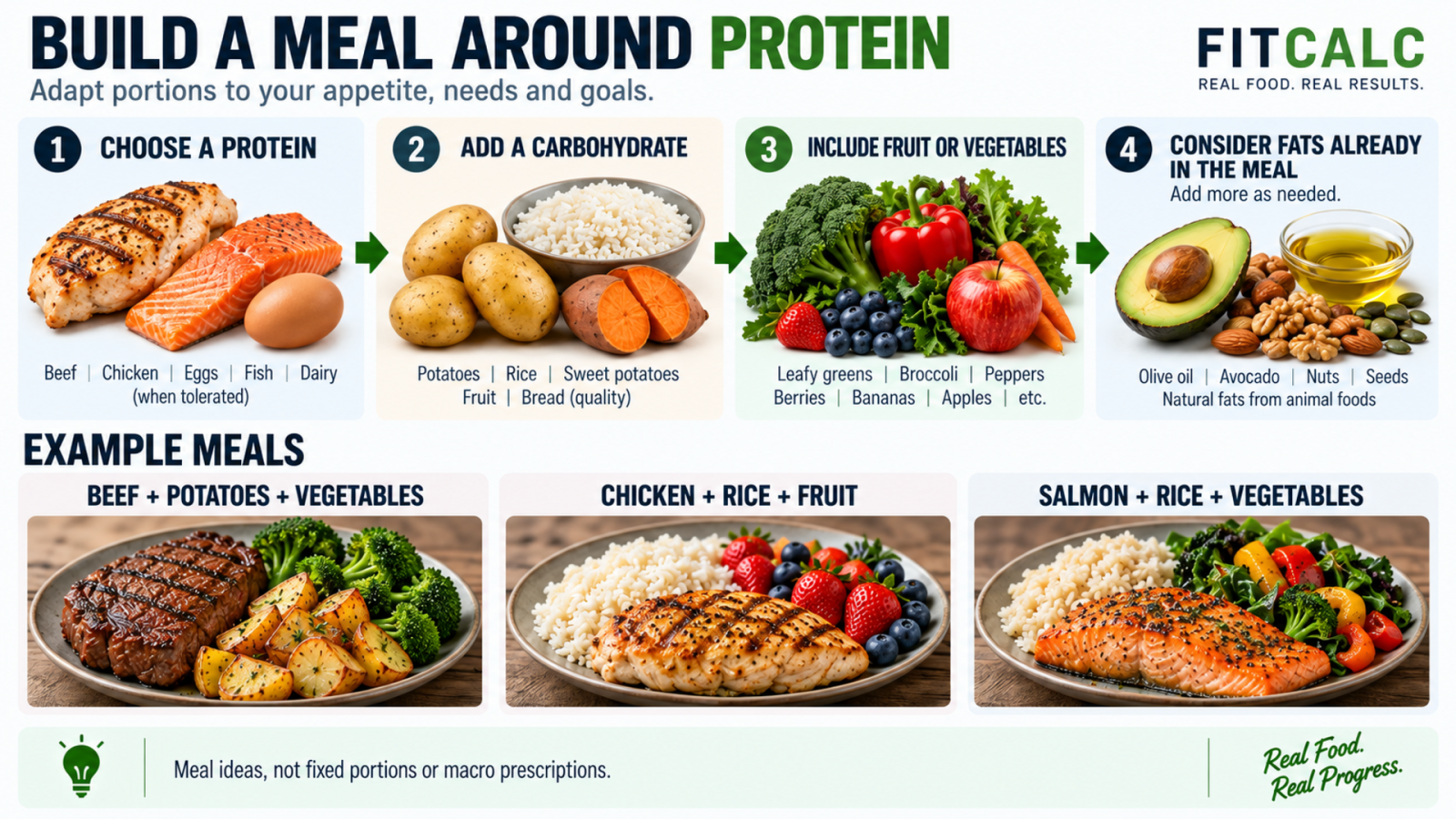
For someone eating in a calorie deficit, leaner protein foods can make the target easier to reach without using most of the calorie budget. Chicken breast, lean beef, white fish and lower-fat dairy when tolerated are useful options. Whole eggs and salmon also fit many diets; their fat contributes calories as well as changing the nutrient profile. Choose portions and a mix of foods that fit your needs rather than treating all fatty foods or all lean foods as equivalent.
The diet should match the goal. The protein target can remain relatively stable while carbohydrate and fat portions change as total calorie needs change.
Hitting Your Daily Target Without Overcomplicating It
Consider a 180-pound adult using FitCalc's recommendation of approximately 180 grams of protein per day. There is no requirement to divide that into six perfectly equal servings.
An illustrative day could allocate 40 grams to an egg-and-yogurt breakfast, 50 grams to a chicken-and-rice lunch, 55 grams to a beef-and-potato dinner, and 35 grams to another meal or a dairy snack. Those planned amounts add to 180 grams. They describe each meal's total protein, not the protein in one ingredient or a fixed serving size.
Use the food label or a reliable food-composition entry to choose actual portions. Weigh meat consistently as raw or cooked and use the matching entry; cooking changes water content, so 100 grams raw is not interchangeable with 100 grams cooked. Include protein from the rest of the meal too.
Another person could reach the same total with three larger meals of approximately 60 grams each. Someone who prefers five meals could spread the intake more widely. As discussed earlier, reasonable distribution is useful, but the daily target remains the priority.
Tracking protein for a period of time can be extremely helpful because most people are not naturally good at estimating grams of protein by looking at food. After several weeks of weighing or measuring familiar foods and reading nutrition information, the process becomes much easier. You begin to know roughly how much protein is in your usual steak, chicken breast, eggs, salmon portion, or other staple foods without having to research every meal.
Accuracy does not need to become obsessive. If your target is 180 grams, there is no meaningful difference between finishing one day at 176 and another at 185. Protein recommendations themselves are estimates, food labels contain normal variation, and portion measurements are never perfectly exact.
Consistency matters far more than precision to the gram.
It can also help to think about protein earlier in the day. Someone who reaches dinner having consumed only 35 grams has created a much harder problem than someone who has already eaten 100–120 grams. A substantial breakfast and lunch prevent the daily target from turning into a massive evening meal.
As your calorie goal changes, you can keep protein relatively consistent while adjusting other parts of the diet. During weight loss, that might mean reducing added fats or carbohydrate portions while maintaining the meat, eggs, or fish at the center of the meal. During a muscle-gaining phase, additional rice, potatoes, fruit, or other quality carbohydrates can increase calories without requiring protein to climb endlessly.
Whole Foods vs. Protein Supplements
Protein powder can be useful. It is also optional.
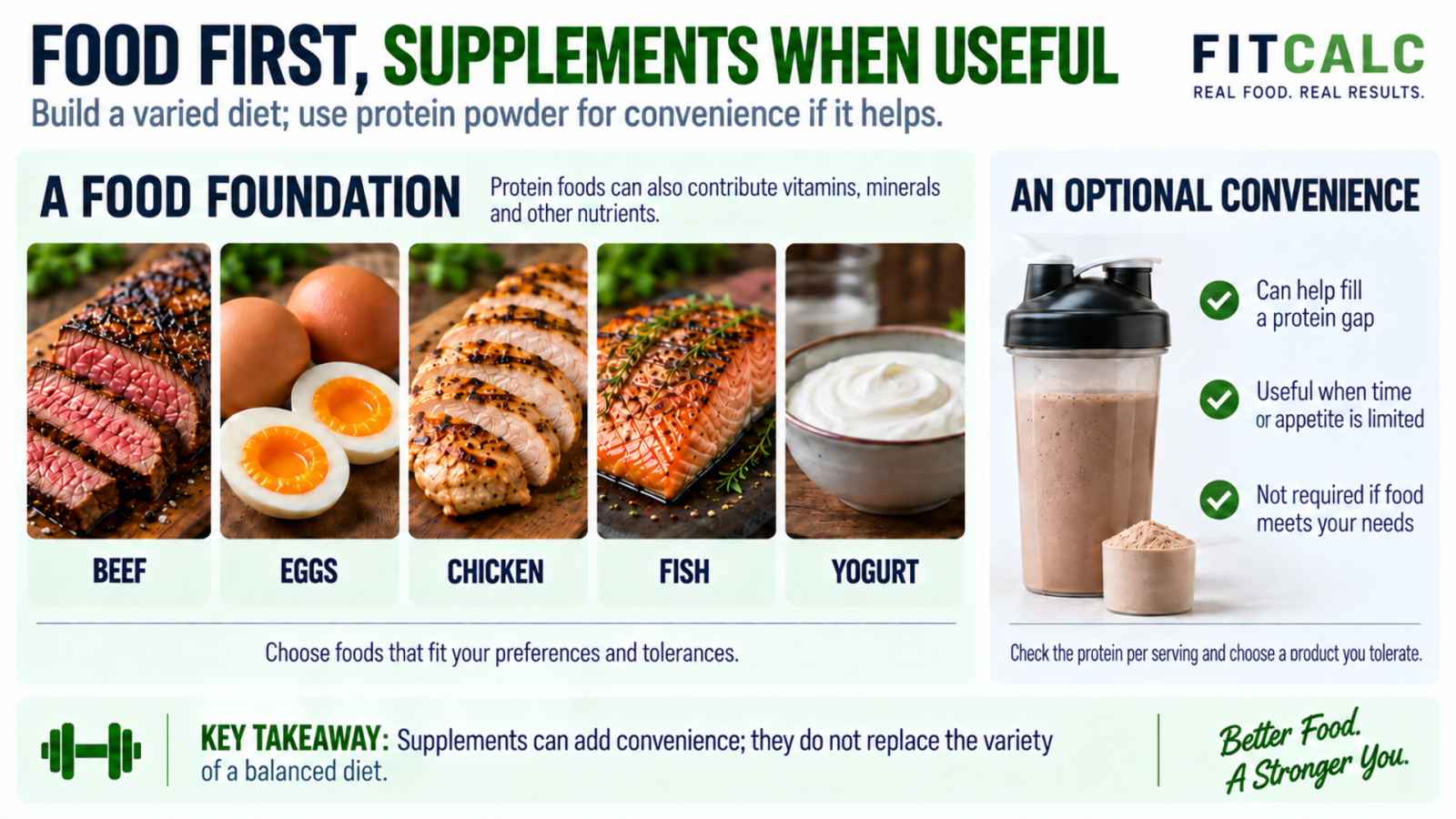
FitCalc recommends making whole-food meals the foundation because protein is only one part of nutrition. Beef, eggs, poultry, fish and tolerated dairy provide different combinations of protein and accompanying nutrients. Rotate foods you enjoy and include produce and other foods that round out the diet.
A protein powder primarily solves a convenience problem. Someone who needs 180 grams per day but finishes their normal meals at 155 grams might find a simple protein shake useful. An athlete with limited time between work and training may appreciate a convenient protein source. Someone with a very high calorie or protein requirement may also find supplementation makes the diet easier.
That is very different from designing the diet around shakes.
If someone consumes a protein shake at breakfast, a protein bar mid-morning, another shake after training, and a heavily processed "high-protein" snack later in the day, they may technically reach their protein number while missing the broader nutritional value that comes from eating quality meals.
For people who use protein powder, choose a product you tolerate, check the actual protein per serving, and consider independent quality testing, especially for tested sport. A short ingredient list alone does not establish safety or purity. Whey and casein are complete dairy proteins; other options can fill the same convenience role when dairy does not suit you. NIH ODS: Exercise and athletic performance supplements
Supplements should make a good diet more convenient, not compensate for the absence of one.
If you can comfortably reach your target through beef, eggs, chicken, fish, dairy when tolerated, and other whole foods, there is no requirement to use protein powder at all.
Practical Takeaways
Protein is essential for far more than muscle growth. It provides amino acids needed throughout the body and becomes particularly important when resistance training, building muscle, or trying to preserve lean tissue during weight loss.
Research supports a range of intakes depending on population and goal. The adult RDA and sports-nutrition targets answer different questions. FitCalc uses approximately 1 gram per pound as a simple, generous planning target for healthy adults focused on training and body composition, not a universal minimum or a promise of better results than every lower intake.
Protein quality matters as well. FitCalc prioritizes beef, eggs, poultry, fish, and dairy when tolerated because these foods provide complete essential amino acids alongside valuable nutrients. Total daily intake should come before obsessing over timing, and there is no 20–30 gram absorption ceiling that makes larger protein meals useless.
In practice, reaching a high protein target becomes much easier when meals are built around a substantial protein source first. Supplements can help when convenience demands it, but they are not necessary for someone who can reach their target through quality food.
Conclusion
Protein does not need to be complicated.
Start with a clear daily target. FitCalc's 1 gram per pound approach can be a useful starting point for the healthy, active adults this guide is designed for. Adjust it when health, body size, calorie needs, appetite or preferences make another target more appropriate.
Build most of that intake around high-quality animal foods. Spread those foods reasonably across your normal meals, resistance train consistently, and use supplements only when they genuinely make your diet easier.
The research does not tell us that exactly 1 gram per pound is a magical threshold. Someone eating slightly less does not suddenly stop building muscle, and someone eating more does not automatically build it faster. We choose the target because it is simple, generous, practical, and removes much of the uncertainty from protein planning.
That is ultimately what a useful nutrition recommendation should do. Give you a strong target, explain why it exists, and make it simple enough to follow consistently.
Bring protein together with training and recovery in our complete guide to building muscle.
Sources
Jäger et al. (2017). International Society of Sports Nutrition Position Stand: protein and exercise.
FAO: Food energy conversion factors
National Academies: Protein requirements
NIDDK: Healthy eating with chronic kidney disease
Res et al. (2012). Protein ingestion before sleep improves postexercise overnight recovery.