How Much Protein Can Your Body Actually Use in One Meal?
You've probably heard some version of this rule before:
Your body can only absorb 20 or 30 grams of protein at once. Anything more than that is wasted.
It sounds believable enough that people build entire diets around it. Someone trying to eat 180 grams of protein per day may force themselves into six separate meals because they're worried that eating 50 or 60 grams at dinner means half of it will somehow pass through the body unused.
That's not how protein digestion works.
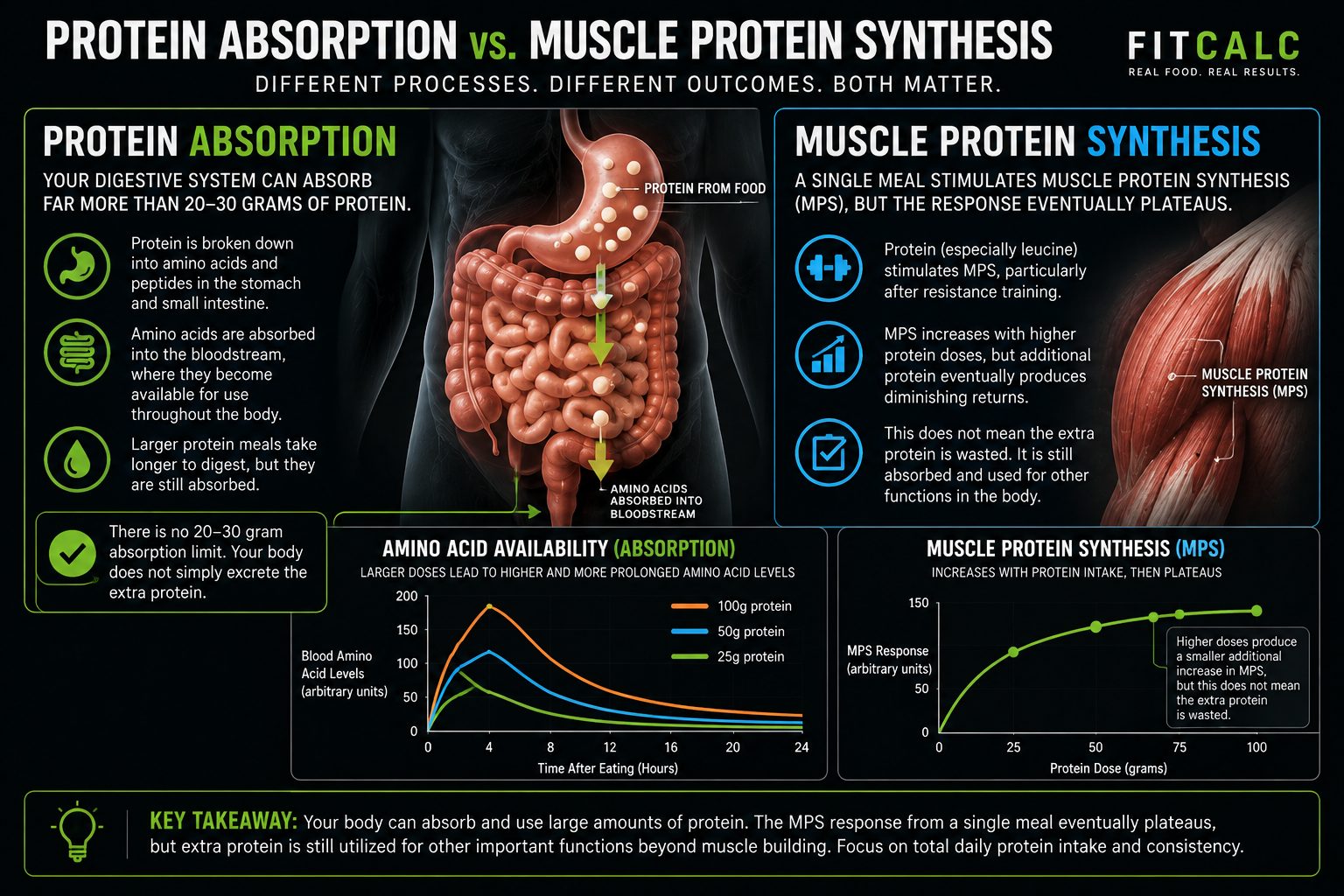
Your body can digest and absorb far more than 20–30 grams of protein from a meal. The confusion comes from mixing up protein absorption with the amount of protein required to maximally stimulate muscle protein synthesis (MPS) over a particular period.
Those are not the same thing.
Research does suggest that moderate servings of high-quality protein can produce a strong MPS response, which is one reason distributing protein throughout the day remains a sensible strategy. But newer research also shows that much larger protein servings can produce a greater and substantially longer anabolic response than previously assumed.
At FitCalc, our recommendation is straightforward: hit your total daily protein target first, prioritize high-quality animal protein, and distribute it reasonably across your meals without worrying about an imaginary absorption ceiling.
For many adults, meals containing roughly 30–50+ grams of high-quality protein work extremely well. Larger servings aren't automatically wasted.
Protein Absorption Is Not the Same as Muscle Protein Synthesis
This distinction clears up most of the confusion.
When you eat steak, eggs, chicken, fish, or another protein-containing food, digestion breaks the proteins down into peptides and amino acids. Those amino acids are absorbed through the small intestine and enter circulation, where they become available for use throughout the body.
Your digestive system doesn't reach 30 grams, close the doors, and send everything else away.
If you eat a large serving of protein, digestion and absorption can simply occur across a longer period. Meal composition matters too. Whole foods and mixed meals containing fat, carbohydrates, and fiber generally behave differently from consuming an isolated, rapidly digested protein by itself.
A 2018 review specifically addressing the supposed per-meal protein limit pointed out that much of the older research supporting a 20–25 gram threshold involved fast-digesting protein consumed without other macronutrients. Larger or slower-digesting mixed meals can prolong amino-acid availability.
So where did the 20–30 gram idea come from?
Mostly from studies measuring acute muscle protein synthesis.
Researchers found that moderate doses of high-quality protein after resistance exercise could produce a strong MPS response. Eventually, adding more protein appeared to produce diminishing additional stimulation over the measurement period.
That observation gradually became distorted into:
"Your body can only absorb 30 grams."
Those statements mean completely different things.
What Is Muscle Protein Synthesis?
Your skeletal muscle is constantly undergoing turnover.
Old or damaged proteins are broken down while new proteins are synthesized. Muscle protein synthesis describes the process of building new muscle proteins from amino acids.
Resistance training strongly stimulates this process. Eating protein provides essential amino acids, including leucine, that further stimulate MPS and provide the raw materials necessary for building and repairing tissue.
This is why resistance training and protein work so well together.
The International Society of Sports Nutrition has historically recommended approximately 20–40 grams of high-quality protein per serving, or around 0.25 grams per kilogram of bodyweight, as a general amount capable of strongly stimulating MPS in exercising adults. It also notes that the optimal amount depends on factors such as age and the resistance-training stimulus.
Another influential review proposed approximately 0.4 g/kg per meal across at least four meals as a useful target for maximizing anabolism while reaching an effective daily protein intake. At higher daily protein intakes around 2.2 g/kg, that could increase toward roughly 0.55 g/kg per meal when distributed across four meals.
For a 180-pound person, 0.4 g/kg works out to roughly 33 grams per meal.
But again, that does not mean gram 34 is wasted.
It means we're discussing a practical amount for producing a strong acute muscle-building response, not establishing the maximum quantity the human body is capable of using.
What Happens If You Eat 60 Grams of Protein?
Your body digests it.
Amino acids enter circulation and can be used for many different purposes. Some contribute to skeletal-muscle protein synthesis. Others support protein synthesis elsewhere in the body. Amino acids are involved in enzymes, transport proteins, structural proteins, hormones, immune components, and countless other physiological processes.
Some amino acids can also be oxidized for energy or have their carbon skeletons used through other metabolic pathways.
That last point is sometimes used to argue that protein above a particular dose is "wasted." But oxidation does not mean the protein was never absorbed, nor does it prove that everything above a specific meal size becomes useless.
The 2018 review examining per-meal protein utilization concluded that although larger doses can increase amino-acid oxidation, this is not the fate of all additional amino acids. Some continue being used for tissue-building purposes.
And newer research has challenged the idea of a relatively small, rigid anabolic ceiling even further.
The 100-Gram Protein Study Changed the Conversation
One of the most interesting studies on this subject was published in Cell Reports Medicine in 2023.
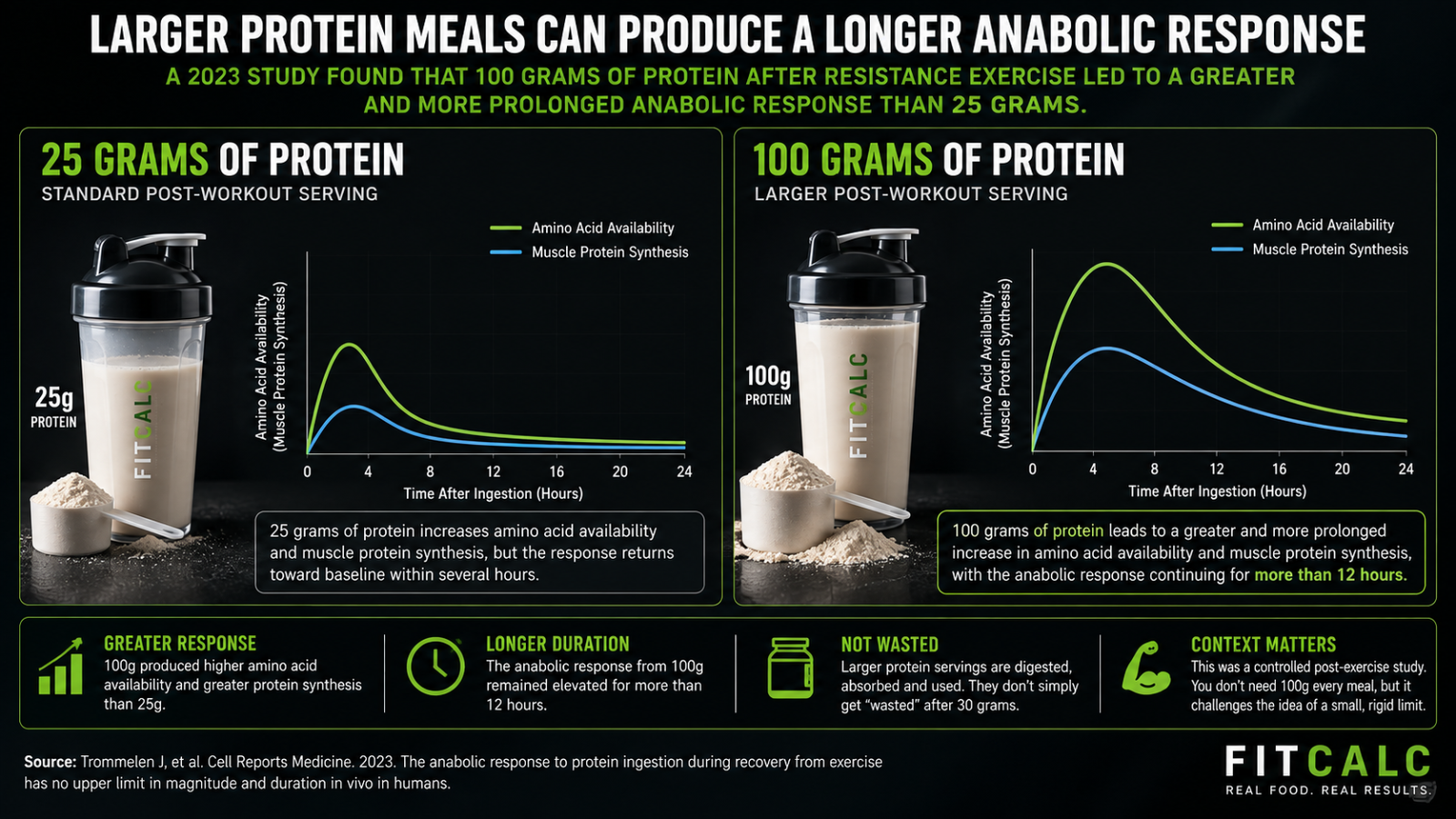
Researchers had participants perform resistance exercise and then consume either 25 grams of protein, 100 grams of protein, or a placebo. Using an extensive isotope-tracer methodology, they followed what happened to the ingested protein over a prolonged recovery period.
The results did not support the idea that the larger protein serving simply went to waste.
The 100-gram dose produced a greater and more prolonged anabolic response than 25 grams, with elevated amino-acid availability and increased incorporation of dietary amino acids into muscle protein. The larger dose increased whole-body protein balance as well as mixed-muscle, myofibrillar, connective-tissue, and plasma protein synthesis. The anabolic response continued for more than 12 hours.
The researchers also reported that protein ingestion had only a negligible effect on whole-body amino-acid oxidation under the conditions studied.
That's an important finding.
It doesn't mean everyone should immediately begin eating 100 grams of protein at every meal. The study examined an acute post-exercise response, not years of muscle growth from eating enormous protein servings.
But it strongly challenges the simplistic claim that the body reaches a small protein threshold and then discards everything else.
A larger meal may produce an anabolic response that lasts longer rather than simply producing a larger short-lived spike.
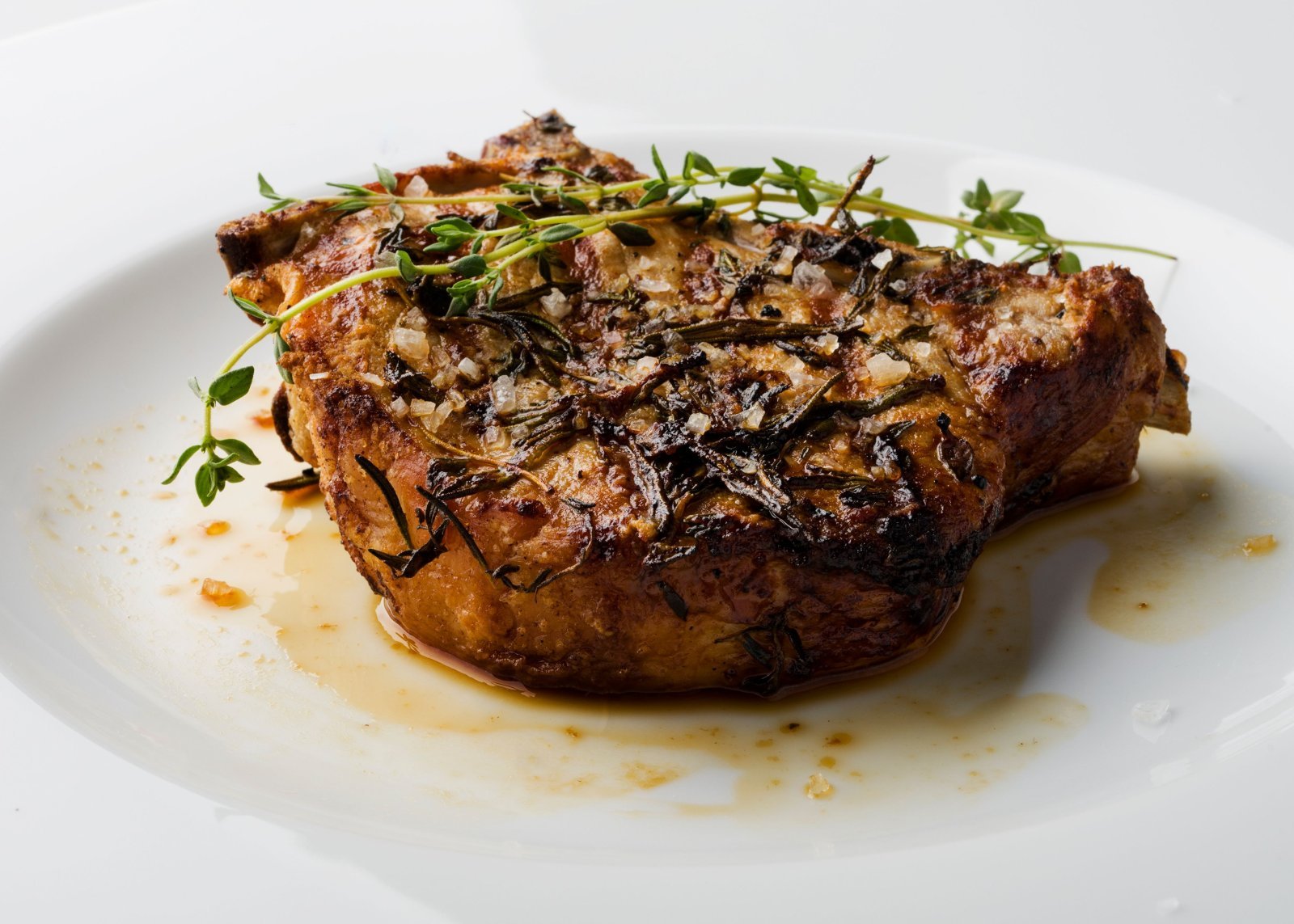
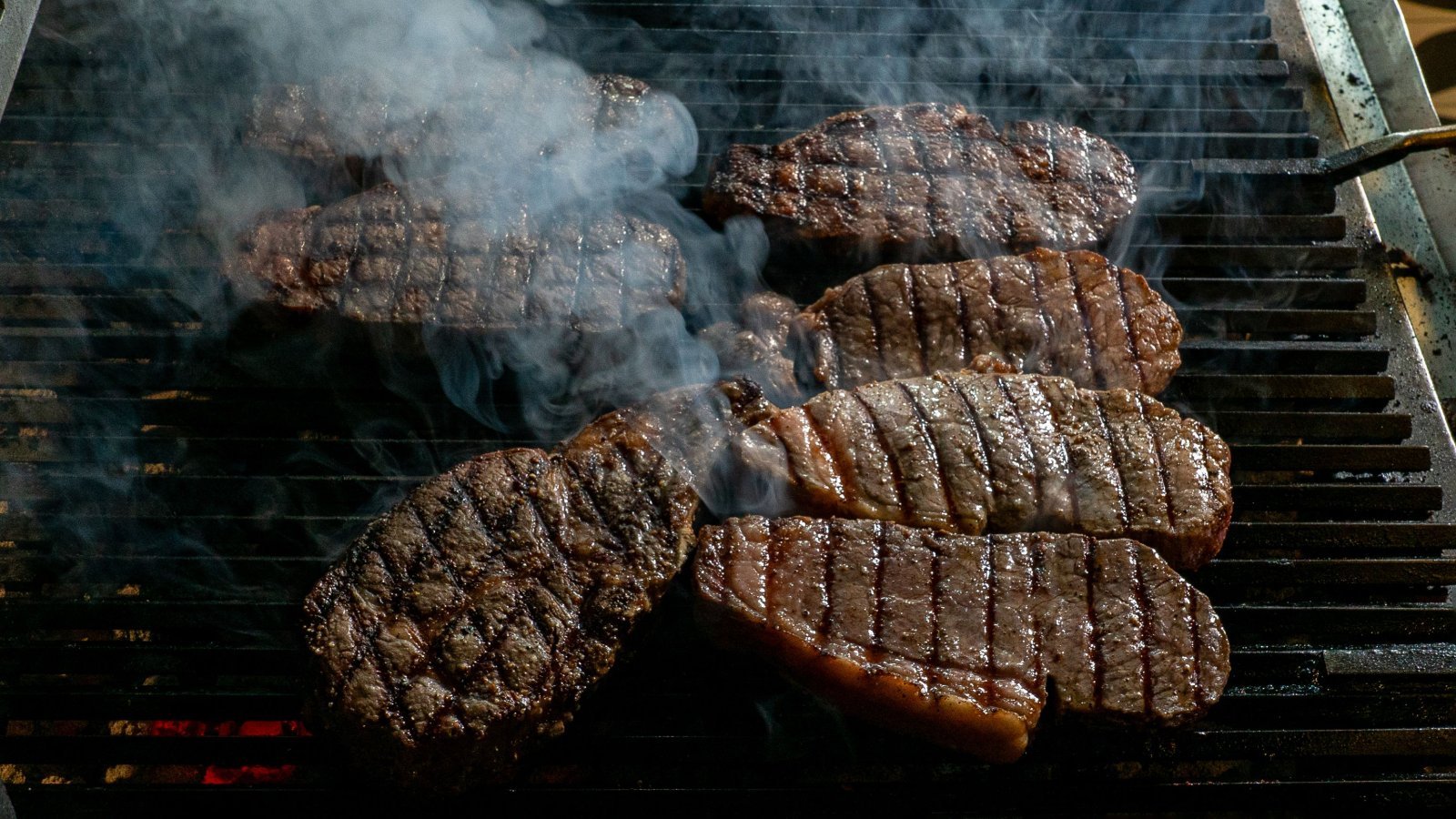
That makes intuitive sense when we consider how humans actually eat. A large steak dinner doesn't need to be completely digested and utilized within two hours simply because that's how a laboratory study happened to measure MPS.
Does That Mean Protein Distribution Doesn't Matter?
Not necessarily.
There is still a reasonable argument for distributing protein across the day rather than intentionally eating nearly all of it in one sitting.
If you need 180 grams of protein, eating 15 grams at breakfast, 20 at lunch, and 145 at dinner probably isn't the way we'd design the diet for maximizing muscle growth.
Multiple protein-containing meals give you repeated opportunities to provide essential amino acids and stimulate MPS. Position stands have traditionally recommended spreading high-quality protein feedings approximately every three to four hours, and research has investigated whether a more even distribution may support muscle outcomes.
But the long-term evidence isn't strong enough to turn meal distribution into a rigid law. A systematic review examining even versus skewed protein intake found some evidence associating more even distribution with greater muscle mass, but concluded that evidence was insufficient to establish clear benefits for muscle strength or protein turnover.
That puts protein timing in the proper hierarchy.
Daily protein intake matters more than creating a mathematically perfect protein distribution.
Once daily intake is handled, distributing protein reasonably is a useful optimization.
How Much Protein Should You Eat Per Meal?
For many healthy adults who resistance train, we think roughly 30–50+ grams of high-quality protein per meal is an excellent practical range.
But it isn't a universal prescription.
Your appropriate meal size depends heavily on your daily protein target and how often you eat.
Suppose three people each follow FitCalc's general recommendation of approximately 1 gram of protein per pound of bodyweight per day.
A 140-pound person eating four meals could average around:
35 g + 35 g + 35 g + 35 g = 140 g
A 180-pound person eating four meals could average:
45 g + 45 g + 45 g + 45 g = 180 g
A 200-pound person who prefers three larger meals might eat:
65 g + 65 g + 70 g = 200 g
We would not tell the third person that they're wasting half their protein because their meals exceed 30 grams. Could that person divide the intake across four meals instead? Absolutely. It may be convenient and could provide a more even distribution of protein feedings.
But three substantial protein-rich meals can still be a perfectly reasonable way to reach the daily target.
Your diet needs to work outside a laboratory.
Protein Quality Matters Too
Protein grams aren't the only consideration.
The MPS response depends partly on the essential amino acids supplied by the meal, particularly leucine. Protein sources also differ in digestibility and amino-acid composition.
This is one reason FitCalc recommends building protein intake primarily around high-quality animal foods such as beef, eggs, poultry, fish, and dairy for people who tolerate it.
These foods provide complete essential-amino-acid profiles alongside other valuable nutrients.
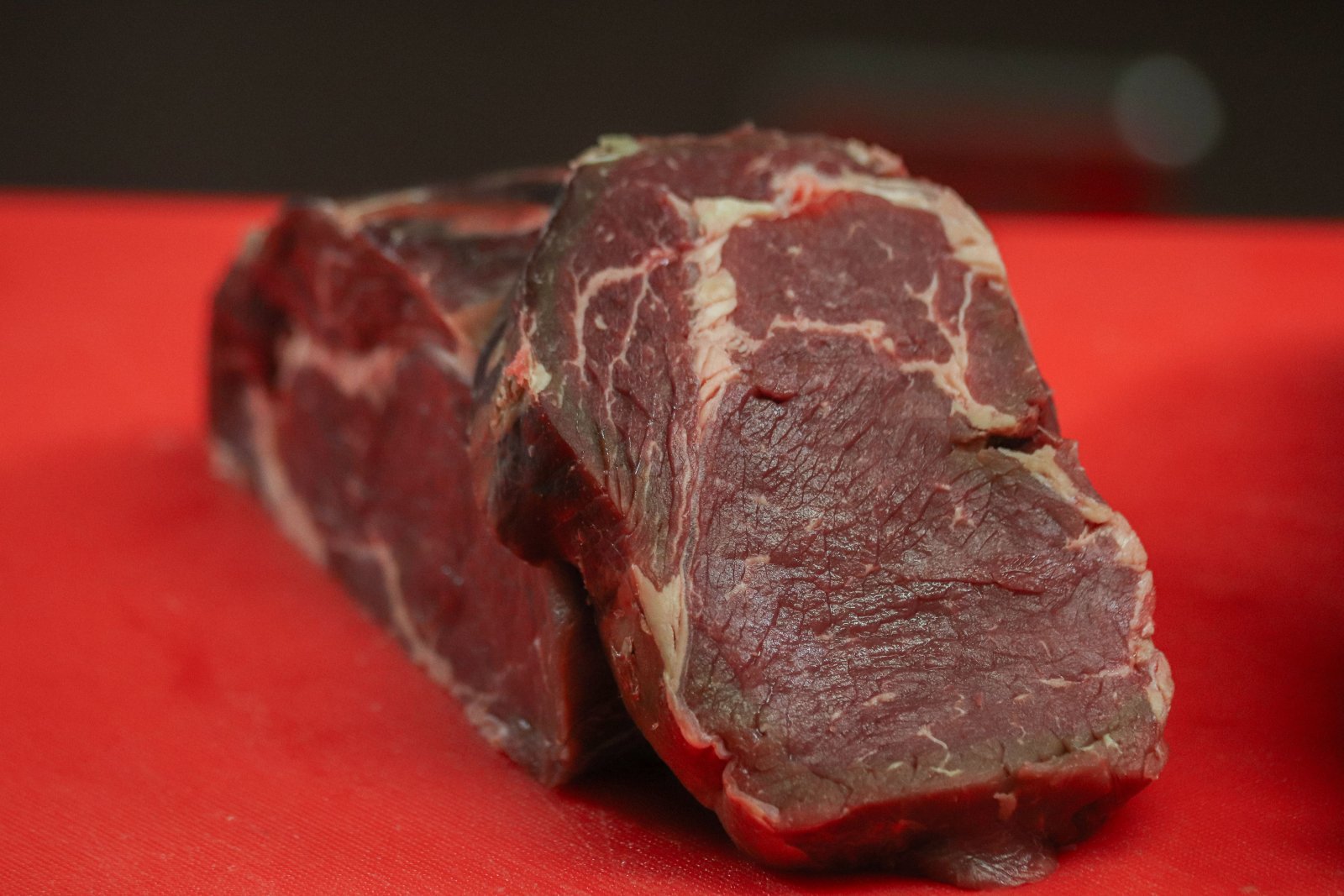
A substantial serving of beef might provide 40–60 grams of protein alongside vitamin B12, heme iron, zinc, creatine, and other nutrients. Eggs provide complete protein alongside choline and numerous micronutrients. Salmon supplies high-quality protein together with long-chain omega-3 fatty acids.
We would rather see someone build meals around actual nutrient-dense animal foods than become obsessed with hitting exactly 32 grams of protein using highly processed products.
The number matters.
The food providing the number matters too.
Total Daily Protein Still Comes First
If you're trying to build muscle, the biggest mistake would be obsessing over whether breakfast contains 35 or 42 grams while consistently failing to eat enough protein across the entire day.
Long-term resistance-training research supports the importance of total protein intake. A large systematic review and meta-analysis found that protein supplementation enhanced resistance-training-induced gains in muscle size and strength, with the benefits tending to level off around a total intake of approximately 1.6 g/kg/day in the analyzed data, although individual needs and goals vary.
FitCalc deliberately recommends a somewhat simpler and more generous practical target:
Aim for roughly 1 gram of protein per pound of bodyweight per day when appropriate for someone seriously pursuing muscle growth and nutrition.
You can build muscle on less. We're not claiming 0.99 grams per pound suddenly stops working.
The recommendation gives people a simple target, provides plenty of high-quality protein, and avoids designing the diet around the smallest amount someone can technically get away with.
Once you've consistently hit that target, then worry about optimizing distribution.
Do You Need Protein Every Two Hours?
No.
The belief that lifters need to carry food everywhere because muscle will disappear if three hours pass without protein is another unnecessary extreme.
Protein digestion takes time, particularly when you're eating whole foods as part of mixed meals. The anabolic response to resistance exercise also persists much longer than the old idea of a tiny 30-minute "anabolic window" suggested.
ISSN guidance emphasizes meeting total daily protein intake first and generally distributing feedings every three to four hours, rather than continuously eating protein throughout the day.
For most people, three to five protein-rich meals across a normal waking day is more than practical enough.
If you prefer breakfast, lunch, dinner, and an evening meal, great.
If you prefer three larger meals, that's also workable.
If you're a large bodybuilder trying to consume 220 grams of protein, five meals may simply be more comfortable than trying to eat 75 grams three times per day.
Meal frequency should help you reach your nutritional goals. It shouldn't become another fitness rule you're afraid to break.
The FitCalc Approach
Your body does not stop absorbing protein once a meal reaches 20, 25, or 30 grams.
That myth comes largely from confusing maximum acute stimulation of muscle protein synthesis with maximum protein absorption and utilization.
Moderate servings of high-quality protein clearly produce a strong MPS response, which is why spreading protein reasonably throughout the day remains a good strategy. But larger meals continue to be digested and absorbed, and newer research shows that very large protein servings can produce a greater and substantially longer anabolic response than previously assumed.
So don't make protein harder than it needs to be.
Hit your total daily target first.
Prioritize meat, eggs, fish, poultry, and quality dairy when tolerated. For many adults, build meals around roughly 30–50+ grams of high-quality protein, adjusting upward or downward according to body size, daily protein requirements, appetite, and meal frequency.
Distribute those meals reasonably throughout the day.
Then stop worrying because dinner contained 58 grams instead of 40.
Your body can use it.
The goal isn't to hit a magical amount of protein every three hours. The goal is to consistently provide your body with enough high-quality protein, enough calories, and enough resistance-training stimulus to support the muscle you're trying to build.
Sources
Trommelen J, van Lieshout GAA, Nyakayiru J, et al. The anabolic response to protein ingestion during recovery from exercise has no upper limit in magnitude and duration in vivo in humans. Cell Reports Medicine. 2023. A 100-gram protein serving produced a greater and more prolonged anabolic response than 25 grams following resistance exercise, with increased amino-acid availability and protein synthesis continuing beyond 12 hours. PubMed
Schoenfeld BJ, Aragon AA. How much protein can the body use in a single meal for muscle-building? Implications for daily protein distribution. Journal of the International Society of Sports Nutrition. 2018. Reviews acute and long-term evidence concerning per-meal protein utilization and proposes approximately 0.4 g/kg per meal across four meals as a practical anabolic target rather than an absorption ceiling. PubMed
Jäger R, Kerksick CM, Campbell BI, et al. International Society of Sports Nutrition Position Stand: protein and exercise. Journal of the International Society of Sports Nutrition. 2017. Reviews daily protein requirements, protein quality, meal dosing, leucine, timing, and resistance exercise. PubMed
Kerksick CM, Arent S, Schoenfeld BJ, et al. International Society of Sports Nutrition position stand: nutrient timing. Journal of the International Society of Sports Nutrition. 2017. Recommends prioritizing total daily protein intake and describes 20–40 gram high-quality protein feedings approximately every three to four hours as a practical strategy for exercising adults. PubMed
Morton RW, Murphy KT, McKellar SR, et al. A systematic review, meta-analysis and meta-regression of the effect of protein supplementation on resistance training-induced gains in muscle mass and strength in healthy adults. British Journal of Sports Medicine. 2018. Examined protein intake and resistance-training adaptations across 49 studies involving 1,863 participants. PubMed