Fiber on a High-Protein Diet: How to Hit Your Target Comfortably
You can finish a day with plenty of protein and still have a fairly limited diet. Eggs at breakfast, chicken and white rice at lunch, Greek yogurt after training, and beef at dinner may make the protein number easy to reach. If fruit, vegetables, potatoes, oats, and other fiber-containing foods barely appear, another useful part of the diet can get squeezed out.
The solution is usually straightforward: keep the protein meals that work, then give fiber-containing foods a regular place alongside them. You don’t need a complete menu overhaul or an enormous salad every evening.
For most everyday lifters, the practical challenge is finding an amount and mix of foods they can eat consistently and comfortably. Someone dieting may appreciate a more filling meal. Someone trying to gain weight may already struggle to finish enough food. Both can make room for fiber without turning every meal into a competition to eat the most.
Protein Is One Part of a Complete Meal
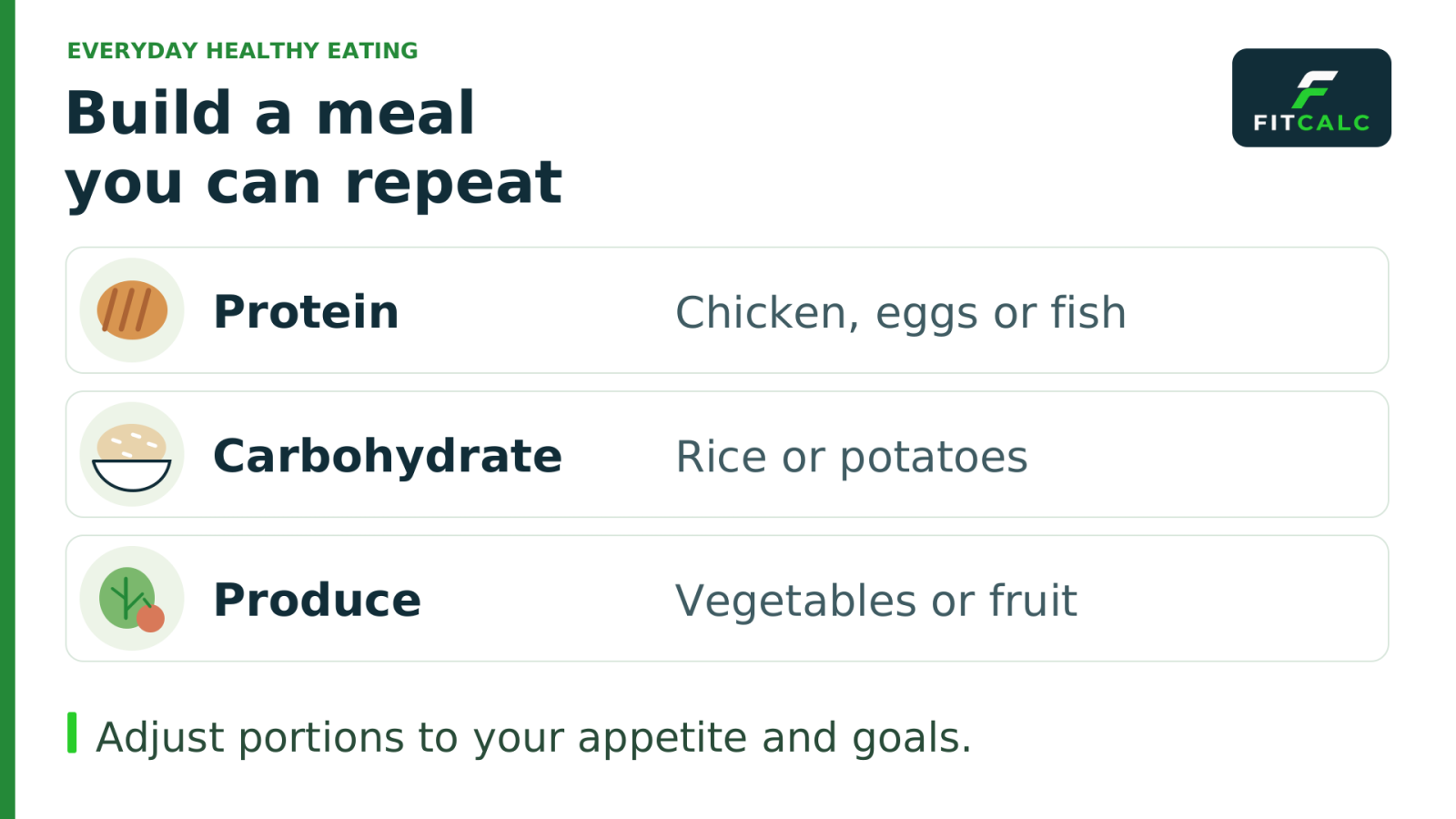
At FitCalc, we recommend building meals around recognizable foods: meat, fish, eggs, dairy if tolerated, fruit, vegetables, potatoes, rice, beans, lentils, and other useful staples. Protein gives those meals a clear starting point. It doesn’t need to determine everything else on the plate.
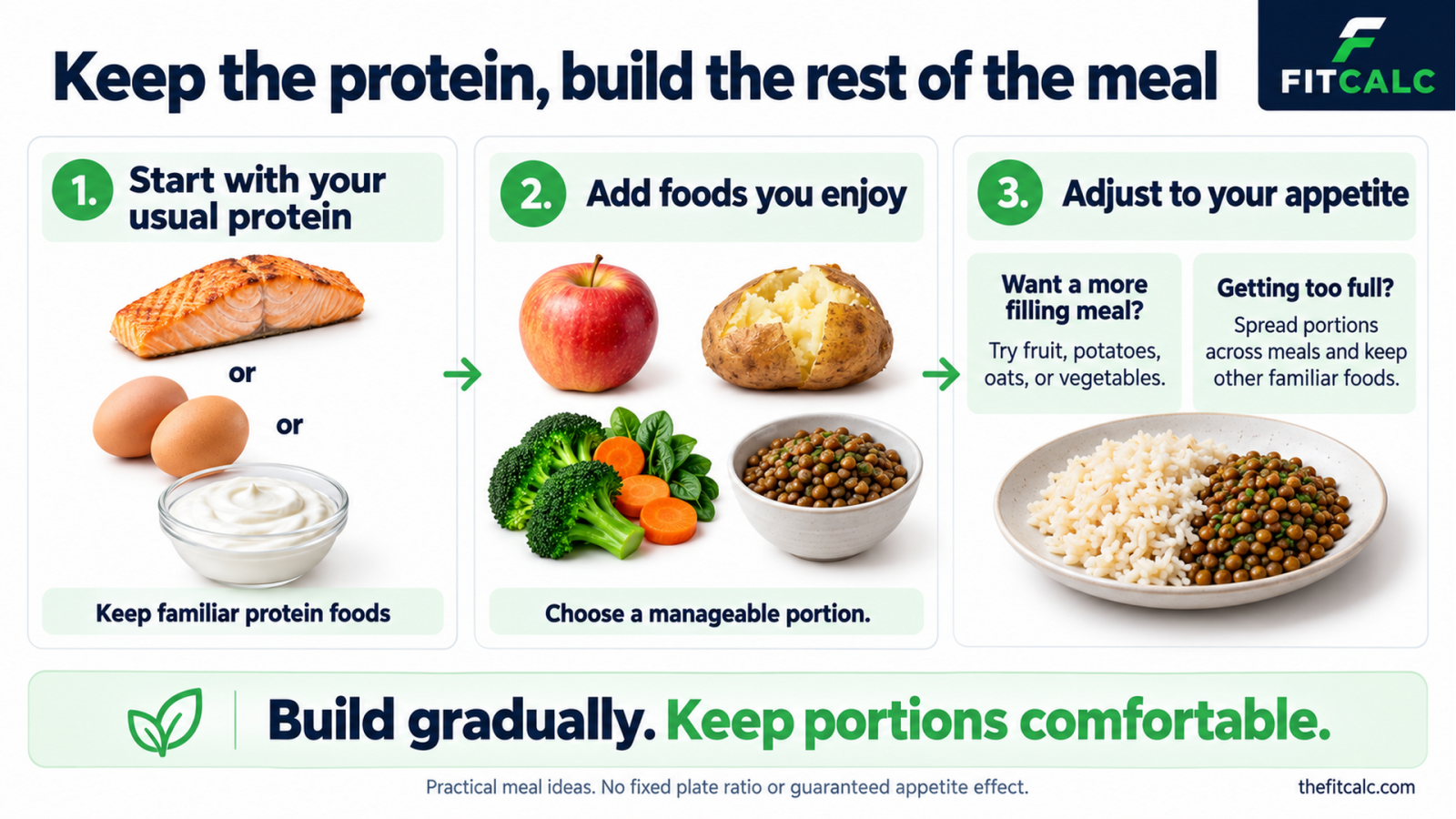
If your usual lunch is chicken and rice, you can keep both and add vegetables. If breakfast is Greek yogurt, fruit can go in the same bowl. A baked potato with its skin can sit next to fish just as easily as another serving of rice.
This distinction matters when people blame a high-protein diet for every digestive change. A protein-focused eating pattern can look very different from one person to another. Look at the foods, portions, and fluids across your actual day before assuming that protein itself explains a problem. Persistent symptoms deserve individual attention rather than a diagnosis based on your macro split.
The FitCalc Protein Calculator can help estimate a protein target. Once that’s in place, leave room to build the rest of the meal.
What Fiber Adds to the Diet
Dietary fiber includes components of plant foods that your digestive enzymes don’t fully break down. Familiar sources include fruit, vegetables, whole grains, beans, lentils, nuts, and seeds. Fiber can support bowel regularity, although people and fiber sources differ. MedlinePlus explains the basics.
For a lifter, the immediate application is broader food variety. A diet built around a small handful of protein foods can meet one target while leaving other useful foods out. Choosing several fiber-containing foods gives them a consistent place in your routine, whether you’re working on muscle gain, fat loss, or maintaining your weight.
Use a Sensible Reference Point
The World Health Organization recommends at least 25 grams of naturally occurring dietary fiber per day for adults. That is a useful general reference, but other guidelines give more detail by age and sex.
The U.S.–Canadian Dietary Reference Intakes set an Adequate Intake of 25 grams a day for women aged 19–50 and 38 grams for men aged 19–50. From age 51, the figures are 21 grams for women and 30 grams for men. Pregnancy and breastfeeding have separate reference values of 28 and 29 grams, respectively. These are population reference values, not exact requirements established for each person. See the official reference table.
Those age-and-sex values were derived using 14 grams per 1,000 calories and typical energy intakes for each group. At that fiber density, a 2,000-calorie diet would supply 28 grams. This explains the energy context; it does not establish a special fiber dose for lifters or a reason to force very high intakes during a bulk.
Use the references to assess your usual pattern rather than treating 25 grams as everyone’s exact target or an upper limit. First, look at what you already eat. You may find that fruit, potatoes, vegetables, and nuts contribute more than expected, or that several meals have almost no fiber source. If your intake is low, build up gradually instead of trying to close the entire gap tomorrow.
Find Foods You’ll Actually Keep Eating
Choose a few fiber-containing foods that fit your tastes, budget, preparation time, and digestion, then make them easy to repeat. Whole fruit works at breakfast, lunch, or as a snack. Apples, pears, oranges, and berries give you several familiar options.
Add vegetables you enjoy to meals you already cook. Use potatoes with the skin when that suits the meal, or include oats and other whole grains you like. Nuts, seeds, and avocado are useful additions too; adjust their portions to your overall eating plan.
Beans and lentils contribute both protein and fiber. Try a modest portion in soup, a rice bowl, or alongside your usual meat or fish. They can also be part of a meat-free meal. You don’t need a specialty protein product to give these foods a place in your diet.
Convenience matters. Frozen vegetables, canned beans, and fruit you can take to work may be easier to repeat than a recipe requiring extra preparation every morning. Pick a breakfast addition, something for lunch or dinner, and an easy backup. Berries for yogurt, potatoes for evening meals, and apples for days when lunch comes from somewhere else make a practical starting set.
Build Fiber Around Your Existing Protein Meals
Start with the meal that needs the least effort to improve. If you already eat eggs in the morning, add fruit or a serving of oats. If you prefer Greek yogurt, stir in berries and have any other foods you need alongside it. There’s no requirement to force the same breakfast on every training day.
At lunch or dinner, chicken, beef, fish, or another protein food you enjoy can remain the starting point. Serve it with a skin-on potato and vegetables, or keep your rice and add a portion of lentils or beans. You can adjust these portions to appetite rather than doubling every side dish at once.
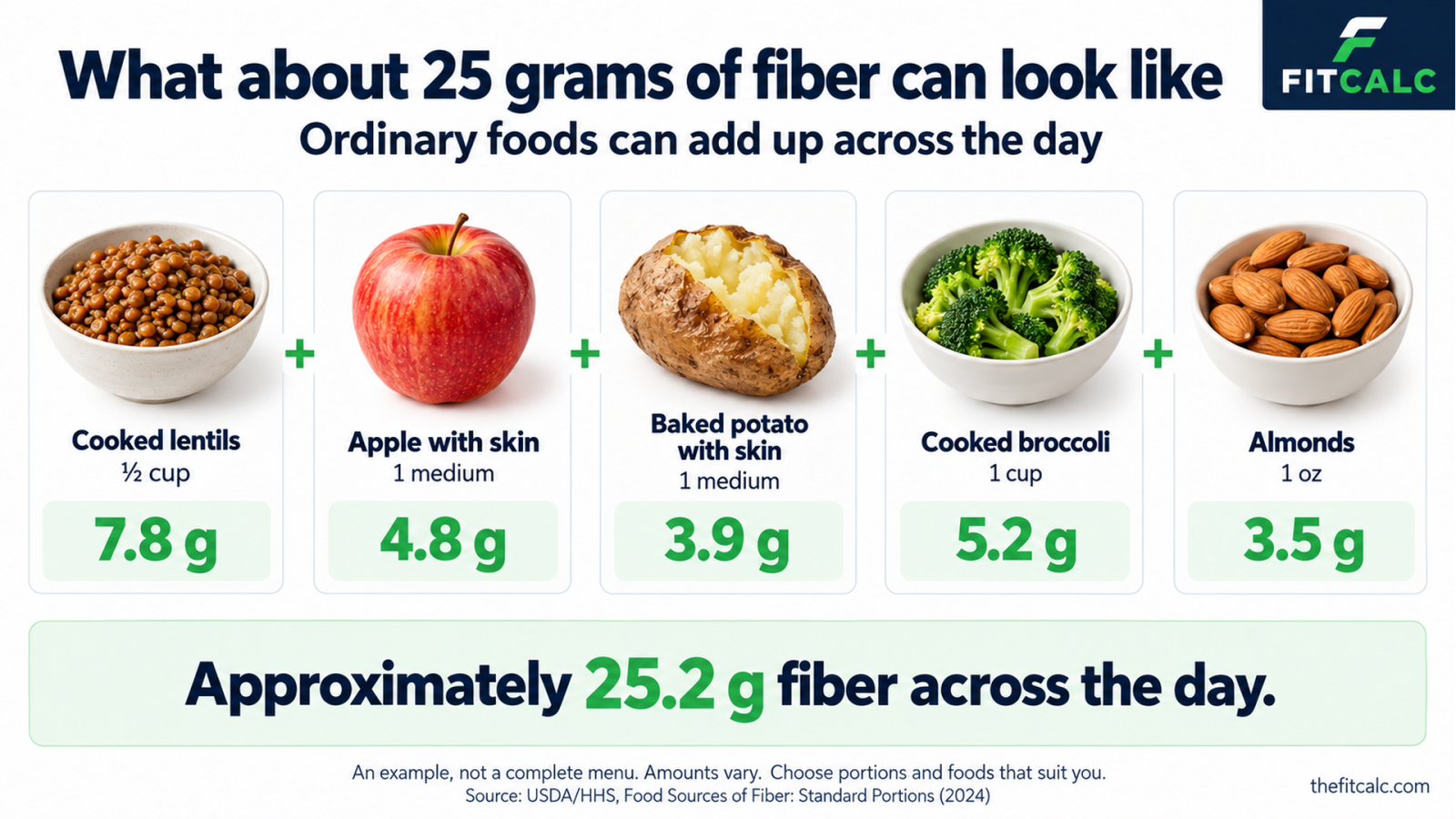
Here’s a fiber-only example to show how ordinary foods can add up across a day:
Half a cup of cooked lentils: approximately 7.8 grams
One medium apple with skin: approximately 4.8 grams
One medium baked potato with skin: approximately 3.9 grams
One cup of cooked broccoli: approximately 5.2 grams
One ounce of almonds: approximately 3.5 grams
Together, those portions provide about 25.2 grams of fiber. These are estimates from the USDA/HHS standard-portion list; actual amounts vary with variety, portion size, and preparation. Use cooked entries for cooked portions, and check the label for a canned or packaged version rather than treating dry and cooked weights as interchangeable.
This is an illustration, rather than a complete menu or a required combination. It doesn’t specify your protein or calorie intake, and other foods would contribute too. The portions could be spread among several meals. If you don’t like almonds or lentils, choose other foods rather than treating this list as an assignment.
Fiber Grams Don’t Explain All of Fullness
Fiber-rich foods can be useful when hunger makes eating plans difficult, but the fiber number alone doesn’t tell you how filling a food will be. Food form, portion size, water, and the rest of the meal all deserve attention.
In one randomized crossover study involving 58 adults, apple segments produced greater fullness before lunch and lower total lunch intake than applesauce or apple-juice conditions. Adding pectin to juice to match the fiber content didn’t reproduce the whole-apple result. Importantly, the apple segments were peeled, so the result cannot be credited to apple skin. Flood-Obbagy and Rolls, 2009.
Another small crossover study compared oatmeal with an equal-calorie cornflakes breakfast in 36 adults. Participants reported more fullness after oatmeal and ate less at lunch three hours later. The breakfasts differed in more than fiber, so this doesn’t establish that fiber alone caused the effect. Geliebter and colleagues, 2015.
Both were short-term meal studies. They don’t demonstrate long-term fat loss or tell you how much muscle a particular breakfast will help you gain. The useful practical lesson is to pay attention to the whole food and your own experience of the meal, rather than treating equal fiber totals as interchangeable. Our article on whole fruit and added sugar explores the broader food context.
Adjust Fullness to Your Goal
During fat loss, a meal that feels substantial can be easier to live with than one that leaves you searching for something else immediately afterward. You might find that fruit with breakfast, potatoes and vegetables at dinner, or oats alongside a protein food make your usual calorie target more manageable.
Use that information when choosing meals. If a particular combination leaves you satisfied and is easy to prepare, repeat it. If an enormous vegetable portion makes dinner unpleasant, forcing it down doesn’t improve the plan. You can choose different foods, smaller portions, or another meal for some of your fiber.
During muscle gain, the same fullness can sometimes become inconvenient. If you’re repeatedly too full to finish the amount of food you planned, review how much volume you’re putting into each meal. You can retain fruit and vegetables while spreading them through the day and using familiar foods such as rice or dairy alongside them.
For example, there’s no need to replace all the rice in a meal with beans simply because beans contain more fiber. A smaller bean portion alongside rice may fit your appetite better. Likewise, a modest vegetable side may work better than making the largest possible salad the centerpiece of every dinner.
These are practical adjustments, not a special fiber strategy proven to improve muscle growth. For more help when appetite limits eating, see calorie-dense whole foods for gaining weight.
Increase Gradually and Keep Comfort in View
When your current intake is low, give yourself room to change it gradually. NIDDK advises adding fiber a little at a time and getting enough fluids. Fluid needs depend on body size, activity, health, and environment. If you have been prescribed a fluid limit, follow that guidance rather than automatically drinking more.
A practical way to begin is to change one portion or meal at a time. Add fruit to breakfast or a vegetable side to dinner, and see how it fits before making several more changes. If gas or bloating increases, ease back on the latest addition and try a smaller portion. There’s no universal grams-per-week schedule you need to follow.
Meal timing can be flexible too. If a large bean portion or bulky meal feels uncomfortable close to training, try a smaller portion or put it at another meal. Keeping most of your routine familiar makes it easier to notice which food, portion, or timing seems to suit you.
Constipation has several possible causes. If it persists despite self-care, speak with a healthcare professional instead of continually adding more fiber. Seek medical attention promptly for constipation with blood in the stool or rectal bleeding, constant abdominal pain, inability to pass gas, vomiting, fever, or unexplained weight loss. NIDDK lists the warning signs.
Anyone with a diagnosed digestive condition or a prescribed restricted-fiber diet should follow individualized guidance. The foods and amounts that work comfortably for one person may need adjusting for another.
Check Your Routine Over the Next Week
You don’t need to turn this into permanent tracking of another number. Over the next seven days, look at a few representative eating days and identify the main fiber sources. Include an ordinary workday and a day when your routine is different.
Choose the easiest gap to fill, then pay attention to digestive comfort, hunger, and whether your calorie and protein goals still feel workable. If you want food ideas, the FitCalc Nutrition tool offers food recommendations and per-100-gram nutrition estimates. Use it to explore options; it isn’t a fiber-intake tracker.
The FitCalc Plan can provide the wider calorie and macronutrient starting point. The meals you build around that starting point still need to suit your life.
The FitCalc Takeaway
Keep protein a priority and make space for several fiber-containing whole foods you enjoy. Start with your existing meals, use the general fiber recommendation as a reference, and increase gradually if your intake is low.
Let appetite, digestion, and your overall goal guide portions. You can build a varied, practical diet around ordinary food without chasing the highest possible fiber total or buying a specialty product.
Sources
World Health Organization. Healthy diet. Updated January 26, 2026. General adult fiber reference. The underlying 2023 carbohydrate guideline is population guidance, not a lifter-specific dose study.
Health Canada. Dietary reference intakes tables: Reference values for macronutrients. Official age- and sex-specific Adequate Intakes for total fiber, including the 14 g per 1,000 kcal basis. These are U.S.–Canadian reference values for generally healthy people, not athlete-specific targets.
MedlinePlus. High-fiber foods. Plain-language fiber definition and digestive-health context.
USDA/HHS. Food Sources of Fiber: Standard Portions. August 2024. Food-composition estimates. Listed portions are standard reference amounts, not necessarily recommended servings.
Flood-Obbagy JE, Rolls BJ. The effect of fruit in different forms on energy intake and satiety at a meal. Appetite. 2009. Acute randomized crossover meal experiment; 58 adults. Participants trying to change weight and athletes in training were excluded. No long-term body-composition conclusion.
Geliebter A, et al. Effects of oatmeal and corn flakes cereal breakfasts on satiety, gastric emptying, glucose, and appetite-related hormones. Annals of Nutrition and Metabolism. 2015. Small acute crossover study; no long-term weight-loss or hypertrophy outcome.
NIDDK. Eating, Diet, & Nutrition for Constipation. Patient education supporting gradual increases and sufficient fluids. Not an athlete trial or a fixed escalation protocol.
NIDDK. Symptoms & Causes of Constipation. When self-care is insufficient and symptoms that require prompt medical attention.
Sources checked October 15, 2026. This article provides general nutrition information, not a diagnosis or an individualized treatment plan.