Simple Ways to Eat Healthier Every Day
Eating healthier often becomes difficult at the same point each day: you need food, you are busy, and nothing useful is ready. Knowing more about nutrition does not automatically solve that problem. Having a breakfast you enjoy, a few reliable groceries, and something easy to assemble for dinner often does.
For someone who lifts weights or wants to improve body composition, the aim is to build meals that provide protein, enough energy for the goal, and a useful variety of foods. That can fit into ordinary workdays without requiring a new recipe every night or perfect tracking at every meal.
Start with the meal that causes you the most trouble. Make it easier to repeat, then improve another part of your routine. The following habits give you a practical way to do that.
Build a few meals you can repeat
Choose two breakfasts, two lunches, and two dinners that you would willingly eat again next week. Familiar meals make shopping simpler because you know what to buy and how you will use it. You can still change seasonings, swap vegetables, or eat something different when you want to.
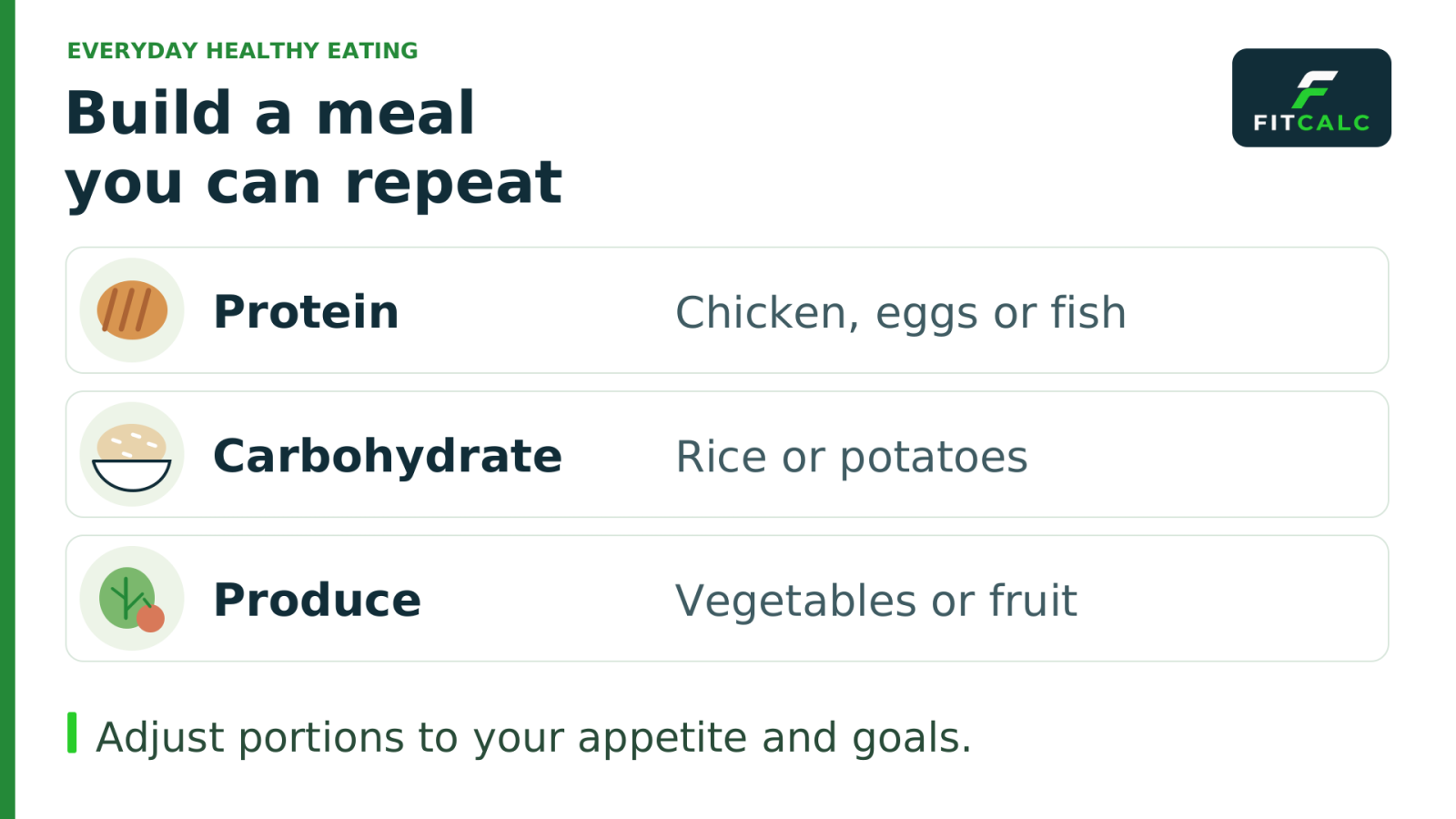
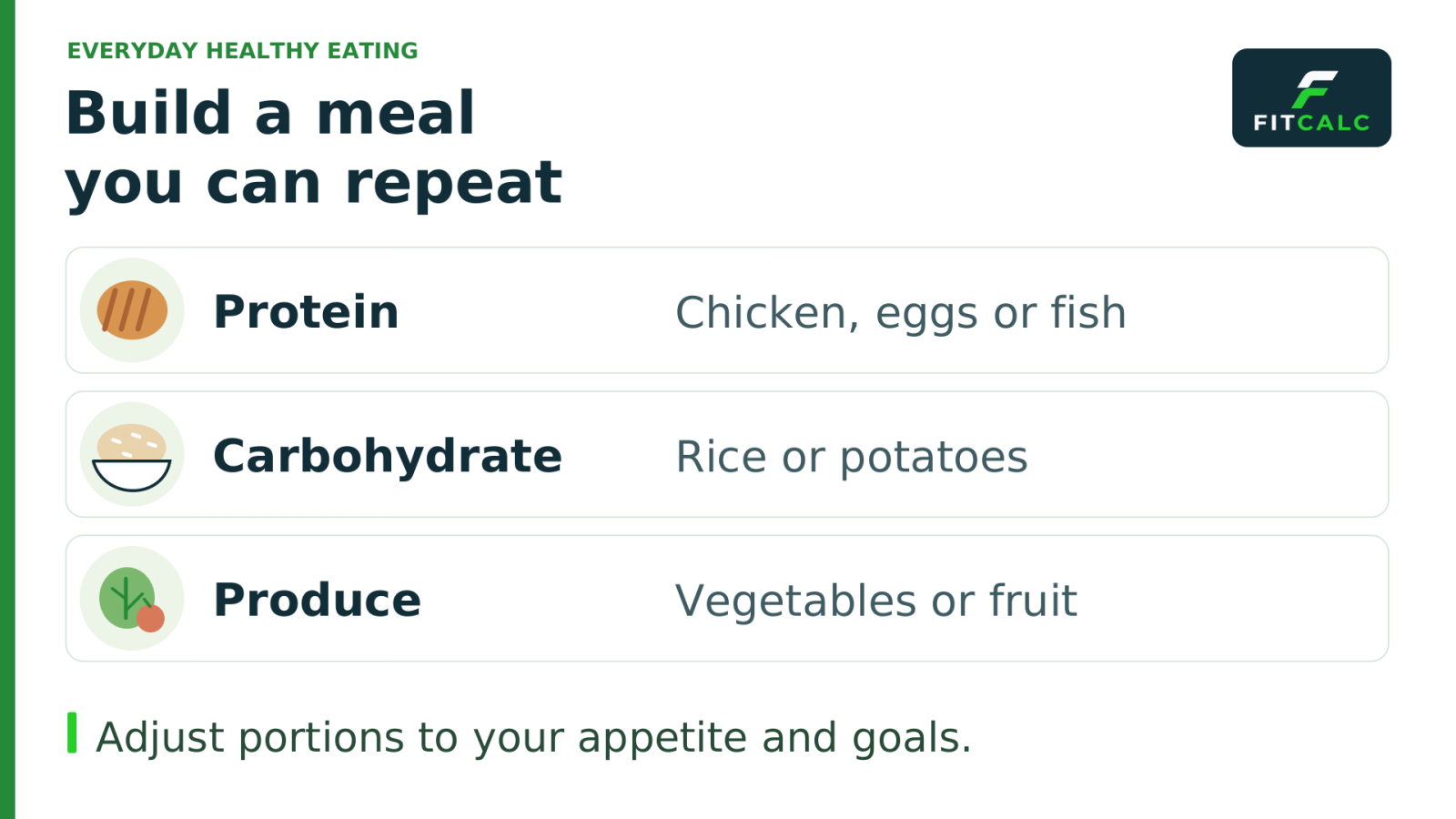
A useful starting structure is an obvious protein source, a carbohydrate food, and some fruit or vegetables. Include a suitable amount of fat from the ingredients or additions you enjoy. These parts can share one bowl, become a sandwich, or sit separately on a plate. They do not need to occupy exact fractions of it.
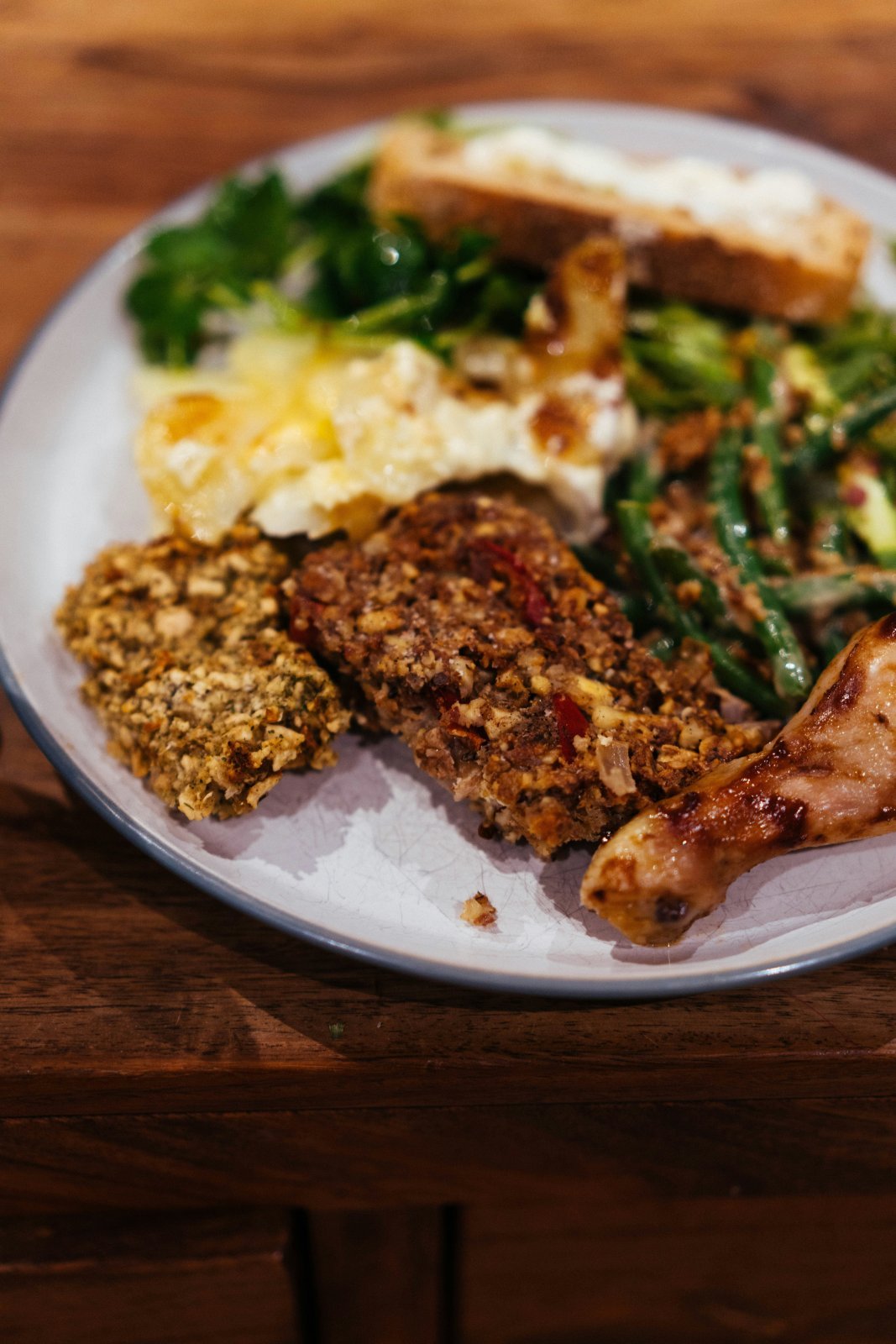
Breakfast might be eggs with whole-grain toast and fruit. Lunch could be chicken, rice, and vegetables. Dinner could be fish or lean beef with potatoes and green beans. If you enjoy and tolerate dairy, plain Greek yogurt with fruit offers another convenient option. Use portions that fit your appetite and goals rather than treating those examples as prescribed meals.
Keep a no-cook option
Give at least one repeatable meal a version that needs almost no preparation. Canned salmon with microwave rice and salad, or ready-to-eat cooked chicken with bread and fruit, can fill that role. Cottage cheese is another option if you enjoy and tolerate dairy. Follow package instructions and choose foods that suit your dietary needs.
Write the ingredients on your shopping list before the week starts. A backup only works when it is actually available. If you routinely get home late on Thursdays, plan for that evening specifically rather than assuming you will suddenly feel like cooking.
Make protein an obvious part of your meals
For lifters, it helps to decide on the main protein food before adding the rest of the meal. Eggs, fish, poultry, and lean beef are familiar options. Yogurt and cottage cheese can also fit if you tolerate dairy. Readers who enjoy beans, lentils, or other plant proteins can include them, with portions and combinations adjusted to their overall needs.
In a four-week trial in young men, a higher-protein diet produced better body-composition outcomes during substantial calorie restriction and intense exercise than a lower-protein diet. The result supports paying attention to protein, but does not establish one ideal intake for everyone or justify copying that aggressive program. Longland and colleagues, 2016.
The everyday step is simpler: look at your usual meals and identify where protein is missing. If lunch is normally crackers and coffee, adding a proper protein food and turning it into a meal is a useful place to start. If dinner already contains plenty, there is little reason to keep increasing it while neglecting everything else.
For the fuller discussion of protein, appetite, calorie intake, and muscle retention, read why high-protein diets can make weight loss easier.
Give fruit, vegetables, and fiber a regular place
Buying produce with no plan for eating it is an easy way to fill the refrigerator and still miss it at meals. Assign it a job: berries with breakfast, an apple packed with lunch, frozen vegetables with dinner. Choose varieties you enjoy and can realistically finish.
WHO recommends at least 400 grams of fruit and vegetables daily for adults and at least 25 grams of naturally occurring dietary fiber. These are general public-health reference points, not a personalized meal prescription. Fresh, frozen, and suitable canned options can all contribute. WHO healthy-diet guidance.
You do not have to weigh every piece of produce to get started. First make it a consistent part of meals, then check whether your overall intake looks reasonable. Someone currently eating almost none has an obvious first step without needing a complicated food score.
Fiber also comes from oats, whole-grain bread, beans, lentils, nuts, and other foods. Try adding one source you already like rather than buying a supplement to compensate for meals you do not enjoy. Increase fiber gradually and drink enough fluids; a sudden large increase can be uncomfortable. NIDDK advises making the change a little at a time. NIDDK fiber and fluid guidance.
If a medical condition affects which foods or how much fiber you can tolerate, follow individualized advice. A general recommendation should not override your treatment plan.
Choose drinks deliberately
Take a look at what you drink during a normal workday, including the milk, cream, sugar, or syrup you add yourself. A drink can be useful, enjoyable, or both. The important question is whether it serves a purpose you actually want it to serve.
Water is a straightforward everyday default. Unsweetened tea or coffee may also fit your routine. Milk, if you tolerate it, or a protein shake suited to your dietary needs can be a planned source of nutrition when convenience matters. You do not need to remove every drink containing calories; account for it as part of what you eat and drink.
If fat loss is your goal and you regularly have several sweetened drinks, replacing one with water is a manageable experiment. If you struggle to eat enough while gaining weight, the same replacement may be unhelpful. Match the change to your situation.
Whole fruit is a useful default when choosing between fruit and juice because it retains fiber and its intact food structure. Juice can fit, but its portion still matters, and WHO classifies sugars in juice and honey as free sugars. For more context, see our article on fruit and added sugar. WHO healthy-diet guidance.
Use convenience foods to make better meals easier
A whole-food approach can include a freezer, a tin opener, and a microwave. Plain frozen vegetables, canned fish, ready-cooked rice, and cooked chicken can all help you assemble a meal when cooking from scratch is unrealistic. Beans or lentils can be useful additions if you enjoy them, and plain yogurt can fit if you tolerate dairy.
Look at the product you are buying rather than judging it solely by its packaging. Compare similar options for protein, fiber, sodium, and added sugars where those are relevant to your needs. Check the serving size, too. A package may contain more than the single serving shown on its label.
For a quick supermarket dinner, you might combine cooked chicken, a microwave potato, and bagged salad. Another quick combination is canned fish, ready-cooked rice, and frozen vegetables. Add seasonings or a sauce you enjoy. These are meal-building ideas, not claims that every product in those categories is nutritionally identical.
The broader question of processing deserves more detail than a shopping checklist. Our ultra-processed-food article covers that discussion. Here, the practical aim is to keep convenient ingredients available so that a busy evening still has a workable meal.
Prepare one component ahead of time
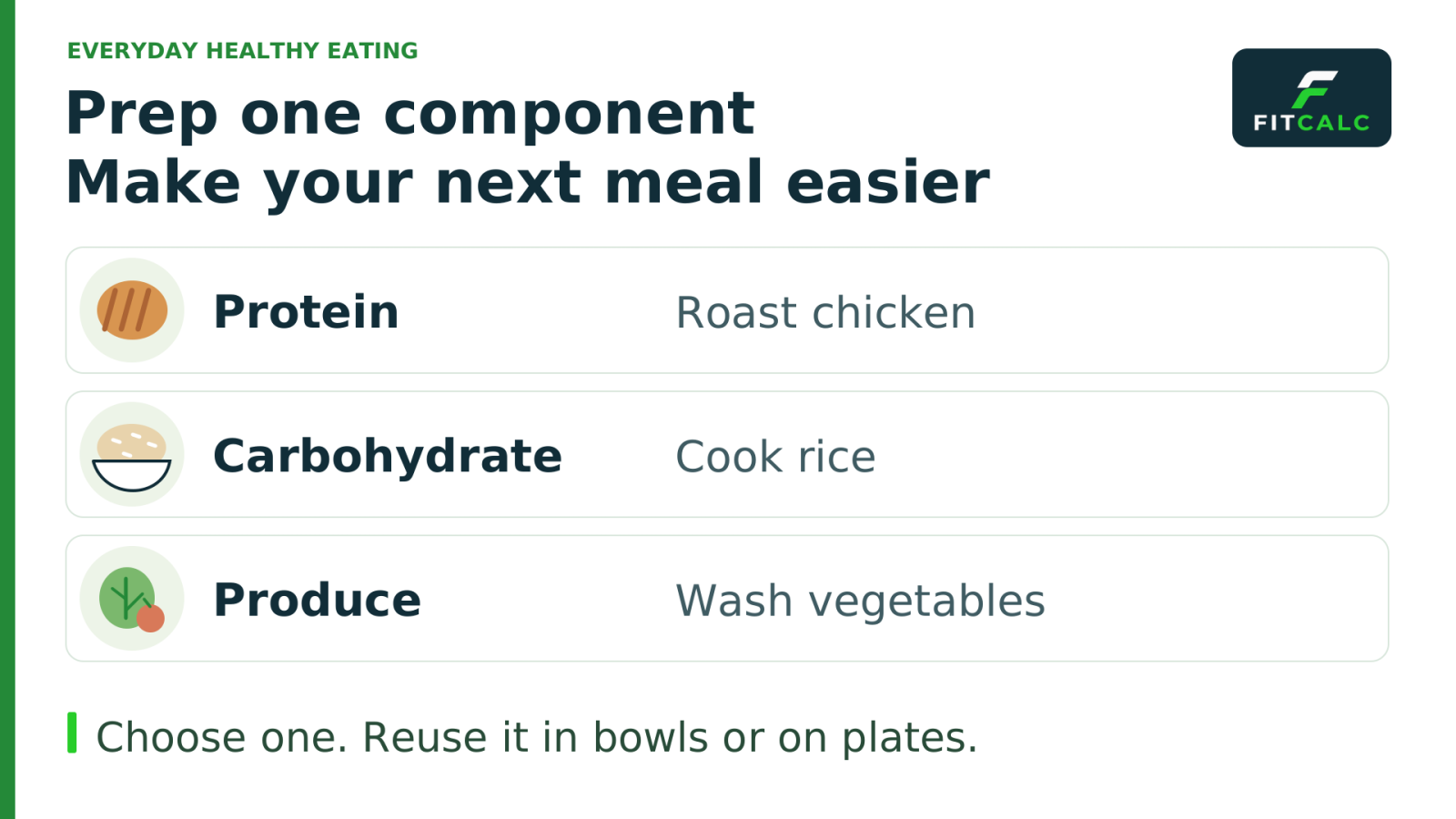
You do not have to spend Sunday filling identical containers. Identify the part of dinner that most often stops you from cooking, then prepare that component ahead.
If waiting for potatoes is the problem, cook a batch. If handling raw chicken after work puts you off, prepare a few portions earlier. If vegetables are routinely forgotten, keep a frozen option alongside your usual protein food. Start with the bottleneck you actually have.
One batch of cooked chicken could become a rice bowl one evening and a sandwich the next. Cooked potatoes could accompany fish one evening and eggs the next. Keeping components separate gives you room to change the meal without starting again.
Food safety still matters. USDA advises refrigerating perishable leftovers within two hours, or one hour above 90°F/32°C, cooling large batches in shallow containers, and keeping the refrigerator at 40°F/4°C or below. Use refrigerated leftovers within three to four days or freeze them; reheat leftovers to 165°F/74°C, checked with a food thermometer. USDA leftovers guidance.
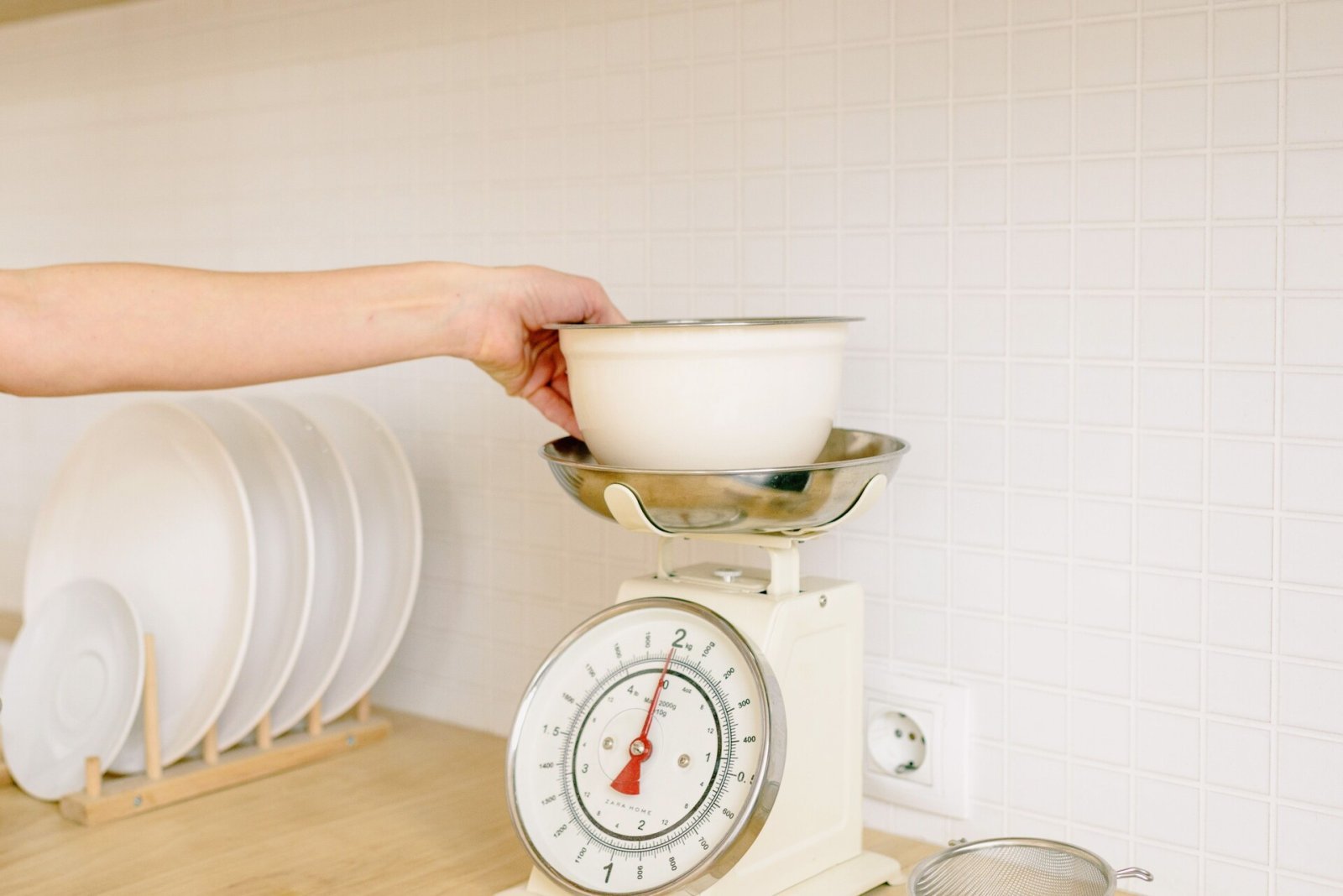
If you track calories, use nutrition information that matches whether you weighed the food raw or cooked. For batch portions and mixed dishes, follow our raw-versus-cooked food-weighing guide rather than trying to reconstruct the recipe each evening.
Adjust the routine to your goal
Two people can use the same basic foods and need different portions. Someone trying to gain weight may need more rice, potatoes, oats, or another energy source alongside their usual protein. Someone managing fat loss may find it useful to review portions of cooking fats, sauces, snacks, and drinks before redesigning every meal.
Avoid assuming that every healthier choice must make the meal smaller. A lunch that leaves you distracted by hunger all afternoon may need more food or a different composition. Pay attention to whether your routine supports your training, fits your schedule, and is something you can sustain.
If calorie and macro targets would help, FitCalc Plan provides starting estimates to review against real-world trends. Those estimates are educational planning tools. They cannot diagnose low energy availability, prescribe a medical diet, or guarantee a particular result.
Start with one change this week
Pick a specific action you can repeat for the next seven days. For example: “I will keep eggs, fruit, and whole-grain toast available for breakfast,” or “I will prepare one dinner component before my two busiest evenings.” Make the action small enough that it still works on an ordinary tired day.
At the end of the week, ask what made it easier and what got in the way. Perhaps you enjoyed the meal but bought too much fresh produce. Perhaps the recipe worked, but the cooking time did not. Change that detail before abandoning the whole idea.
An unplanned meal does not require a compensatory fast or a stricter set of rules the next morning. Return to your usual meals and use what happened to improve the plan. The goal is a routine you can keep adapting.
Need help choosing the actual groceries? Use FitCalc Nutrition to find food options that fit your eating pattern, exclusions, budget preference, and cooking comfort. It provides a practical shortlist rather than a fixed meal plan. Choose a few foods from that list, build one repeatable meal, and give yourself a useful starting point for tomorrow.
Sources
World Health Organization. Healthy diet. General guidance on dietary variety, fruit and vegetables, fiber, and free sugars.
Longland TM and colleagues. Higher compared with lower dietary protein during an energy deficit combined with intense exercise promotes greater lean mass gain and fat mass loss: a randomized trial. American Journal of Clinical Nutrition, 2016. A short trial in young men; its diet and exercise conditions limit generalization.
National Institute of Diabetes and Digestive and Kidney Diseases. Eating, Diet, & Nutrition for Constipation. Practical guidance on food sources of fiber, gradual increases, and fluids.
USDA Food Safety and Inspection Service. Leftovers and Food Safety. Cooling, storage, and reheating guidance for prepared food.