Should You Weigh Food Raw or Cooked for Accurate Calorie Tracking?
You weigh your chicken, enter the number into your food app, and move on. But was that database entry for raw chicken or cooked chicken? The difference matters even when your kitchen scale is working perfectly.
The same problem shows up with rice, pasta, potatoes, and almost anything you prepare in batches. Cooking changes how much food weighs. An accurate measurement paired with the wrong nutrition entry can still produce a misleading calorie total.
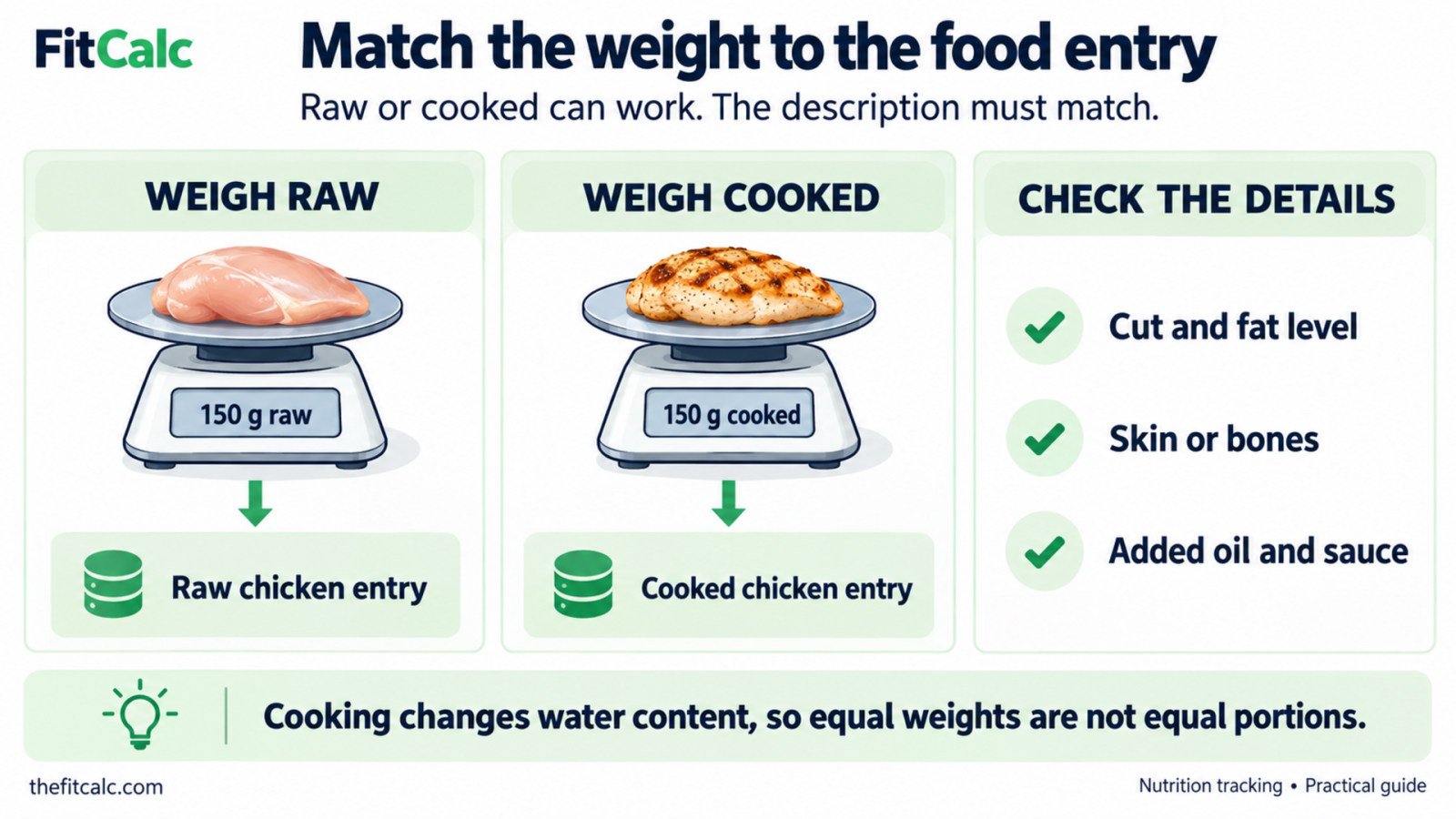
You can weigh food raw or cooked. Match the weight you measure to nutrition information for that same state. For home cooking, weighing ingredients before preparation is often the easiest starting point. For leftovers or food someone else cooked, a suitable cooked-food entry can be more practical.
Here is how to make that work for ordinary meals without turning dinner into a laboratory experiment.
Why food weighs differently after cooking
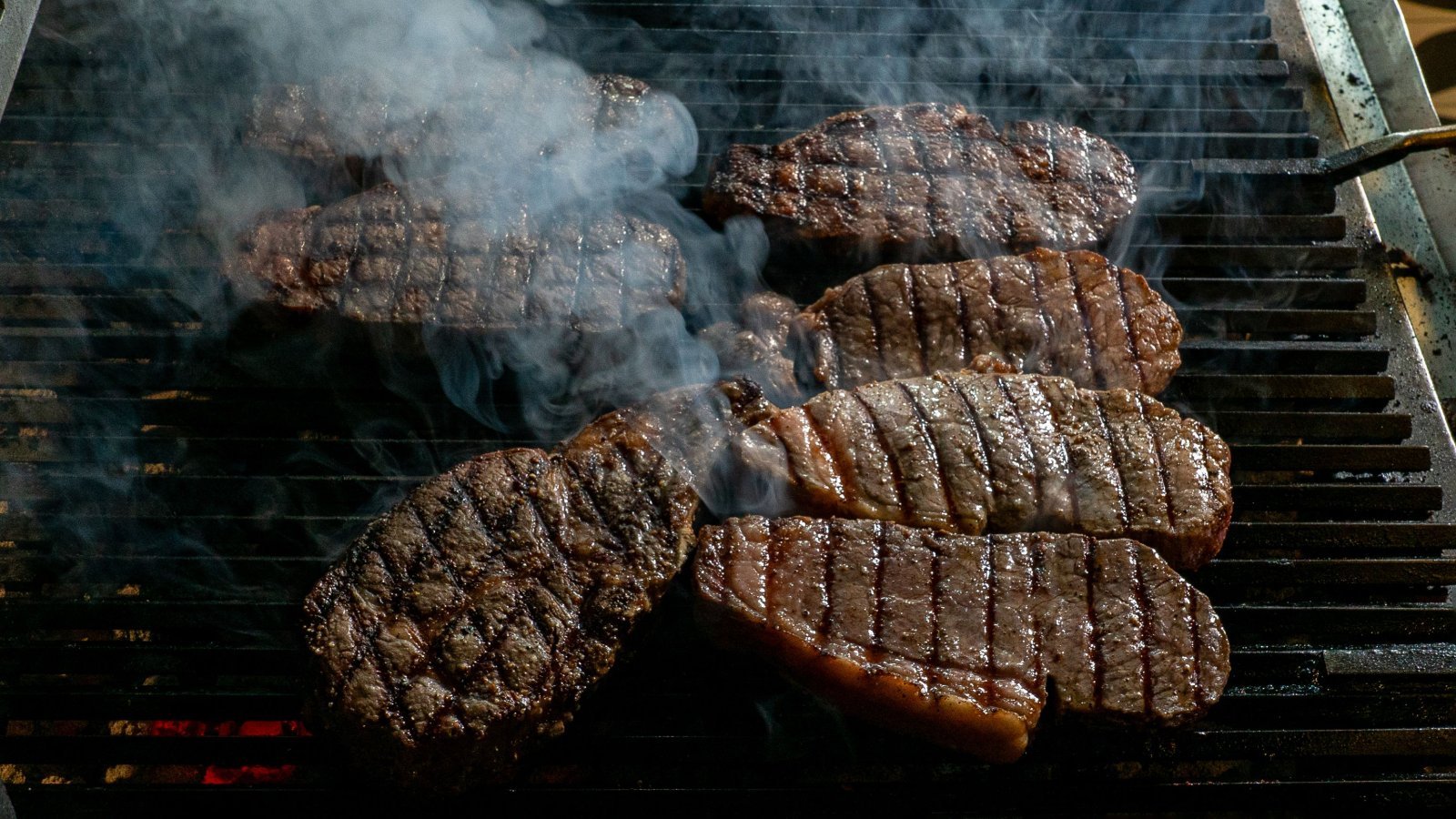
Chicken and beef contain substantial amounts of water. As meat cooks, it can lose moisture, leaving a smaller cooked portion. The USDA explains that cooking temperature affects moisture loss, so two portions with the same starting weight can finish at different weights depending on preparation. [1]
Rice and pasta usually move in the other direction when cooked in water. Water becomes part of the cooked serving, increasing its weight without adding calories of its own. This is why 100 grams of dry rice and 100 grams of cooked rice are very different portions.
Water is only part of the picture. Fat can leave meat during cooking, while added oil can become part of the food. USDA cooking-yield methods account for changes in moisture and fat as separate issues. A change in food weight alone cannot tell you exactly how many calories were lost or gained. [2]
The useful distinction is between the food’s total energy and its energy per gram. Losing water can make a food more calorie-dense by weight without adding any new ingredients.
Start by choosing the right food entry
Before entering a number, read the entire food description. Check whether it says raw, dry, cooked, roasted, boiled, or drained. Then check the cut, fat percentage, skin, and any added ingredients. USDA FoodData Central includes preparation characteristics in food descriptions because these distinctions affect what the entry represents. [3]
For meat, match the cut and preparation
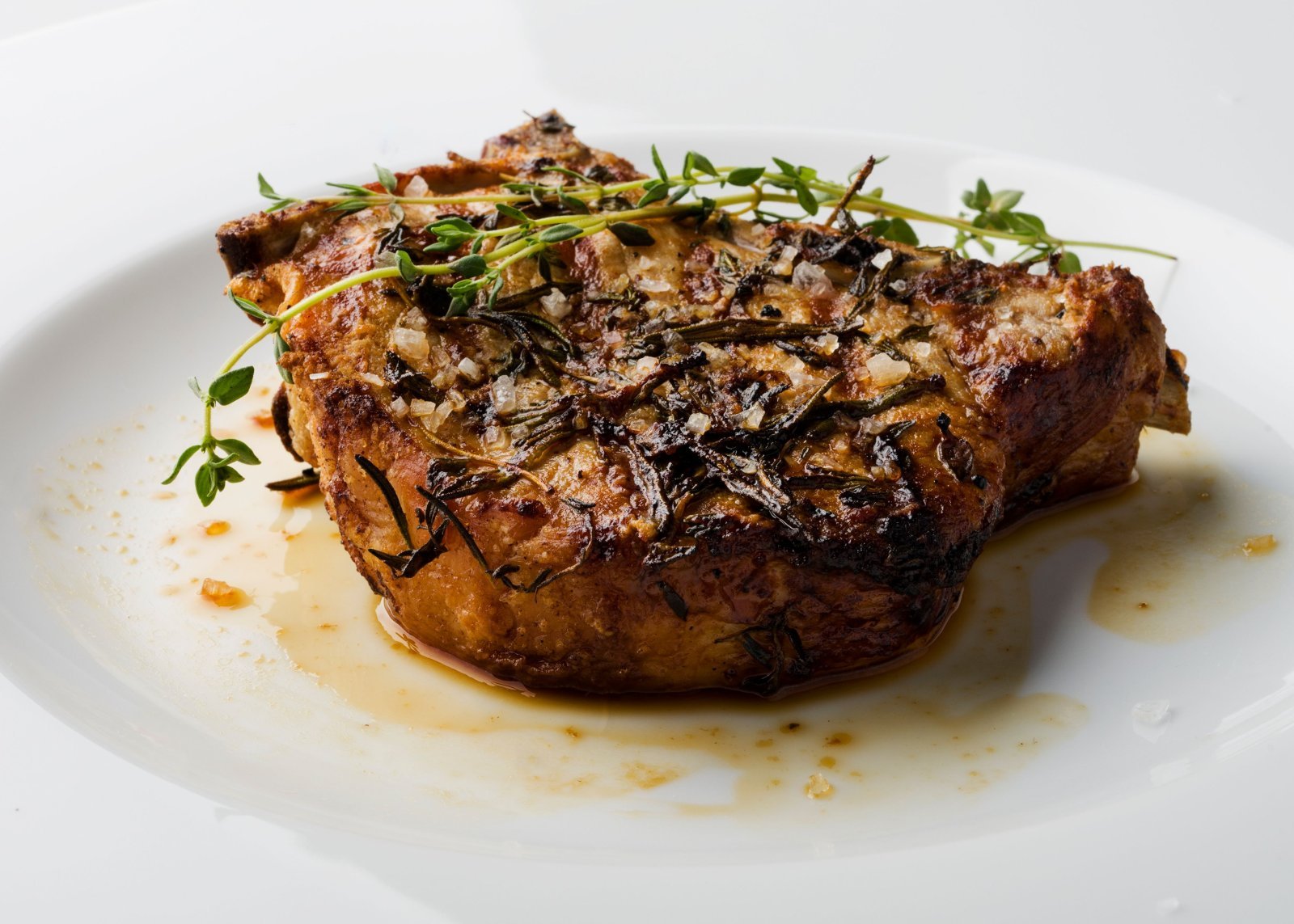
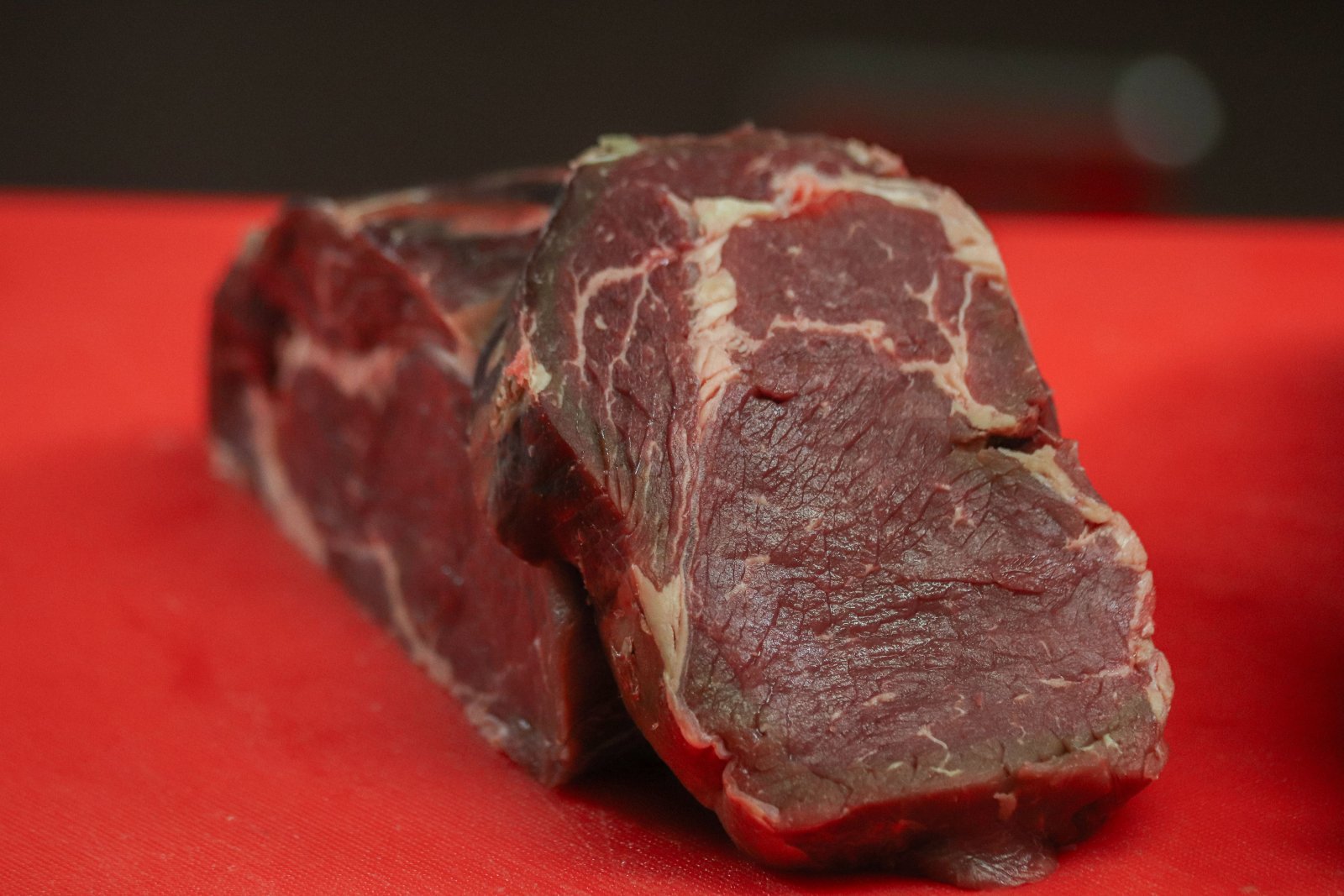
If you weigh raw boneless, skinless chicken breast, use a corresponding raw entry. If the chicken is already roasted, weigh the cooked edible portion and select a roasted entry that matches whether you eat the skin.
Apply the same logic to beef. An entry for cooked ground beef with one lean-to-fat ratio is a poor substitute for a different product just because both say “beef.” A plain steak entry also will not account for butter you add at the table.
For grains, distinguish dry from ready to eat
Weigh dry rice, oats, or pasta before adding water when using dry-food values. If you weigh the finished food instead, choose an appropriate cooked entry or use the batch method below. Ready-to-eat rice from a pouch needs the pouch’s own nutrition information, including any oil or other ingredients already present.
Avoid saving an ambiguous favorite simply called “rice” or “chicken.” Name saved foods clearly, such as “rice, dry, package label” or “chicken breast, cooked, skinless.” That small setup step removes a repeated decision later.
Read the label before weighing the serving
On U.S. labels, packaged-food information generally refers to the product as packaged, with prepared information sometimes provided too. Look carefully for wording such as “dry,” “as prepared,” or instructions that include added milk, butter, or oil. U.S. labeling rules distinguish the packaged product from a prepared version. [4]
Then check the serving’s gram weight. The FDA explains that Nutrition Facts information usually refers to one serving, although some packages also show whole-package values. Eating two servings means using twice the listed amounts. [5]
For a hypothetical label example, suppose a label lists 180 calories per 50 grams of dry food. If you weigh 75 grams dry, that is 1.5 servings, or 270 calories. Use your actual label when logging.
If an app’s barcode result disagrees with the package in your hand, investigate before saving it. Compare the serving weight, calories, and macros. A convenient scan still needs to describe the product you are eating.
Use batch weights for meal preparation
Batch logging lets you measure ingredients once and portion the finished meal later. Our practical recommendation is to save the ingredients as a recipe, then distribute that recipe’s estimated calories and macros according to each serving’s share of the cooked batch.
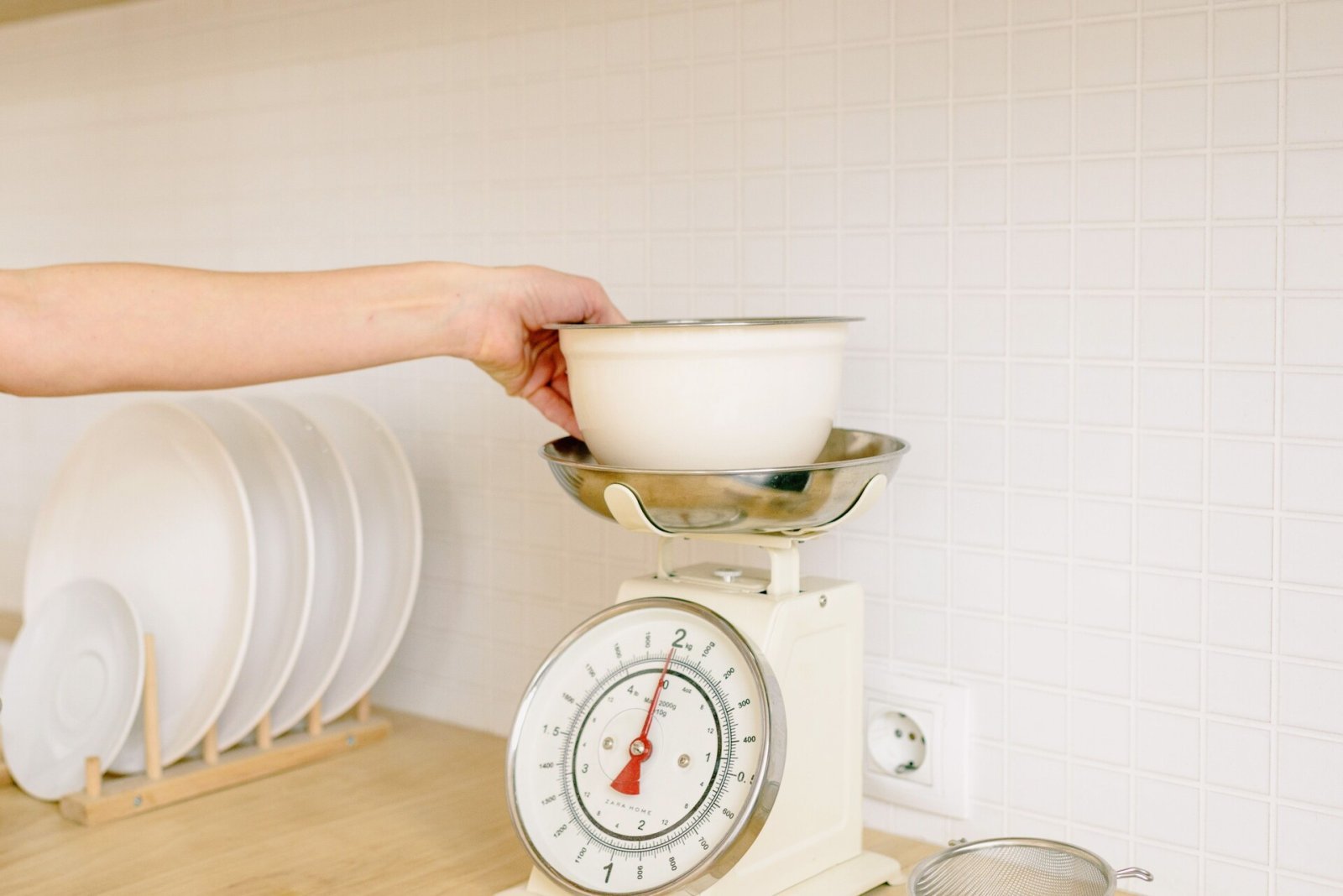
Use a bowl or container and tare the scale so you measure food only. Weigh the complete finished batch before serving any of it. If you subtract a pot’s empty weight instead, remember that the lid and utensils should not be included.
A hypothetical rice example
Imagine you cook 300 grams of dry rice whose label lists 360 calories per 100 grams. The dry rice contributes 1,080 calories. You use water only, keep the entire batch, and measure 900 grams of cooked rice.
A 200-gram serving represents 200 divided by 900 of that batch. Multiply 1,080 by that fraction and the serving contains an estimated 240 calories. It also represents about 66.7 grams of the original dry rice.
Those numbers demonstrate the calculation, not a standard rice conversion. Your rice might finish at another weight. Measure your batch rather than assuming it always triples.
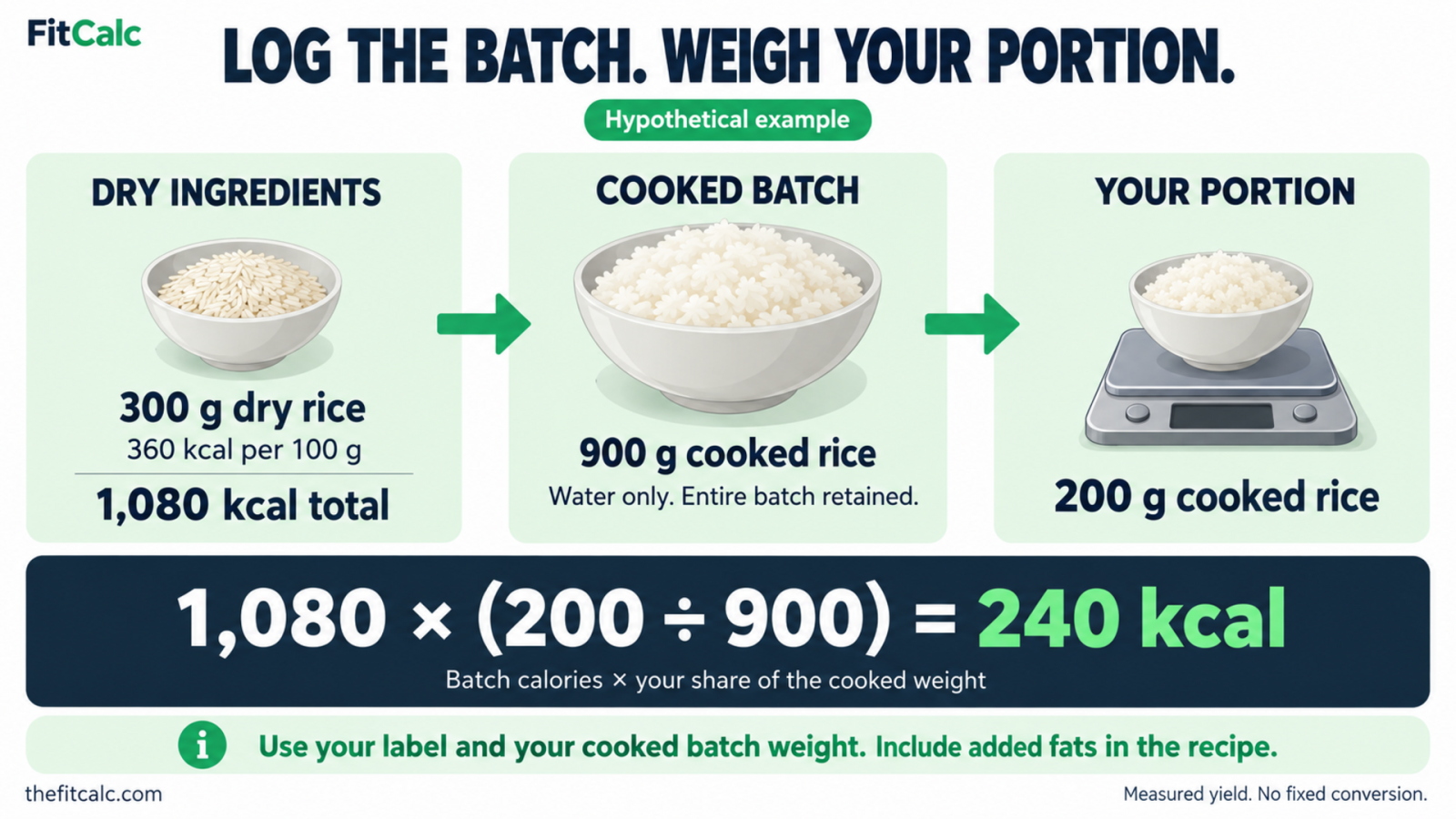
In an app that supports recipe yield by weight, enter the finished 900-gram yield and log your serving in grams. If it only supports a number of servings, you could define nine servings of 100 grams each, then log two servings. Check how your app interprets the field.
A hypothetical meat example and its limitation
Suppose 1,000 grams of raw boneless meat finishes at 750 grams cooked. A 150-gram cooked portion is one fifth of the batch, so it receives one fifth of the recipe’s ingredient totals. That corresponds to 200 grams of the original raw meat for allocation purposes.
This does not prove that every nutrient in those 200 raw grams reached your plate. Discarded fat and juices introduce uncertainty. When you drain fatty ground beef or remove substantial fat after cooking, a cooked-food entry matching the meat and preparation may be more suitable than assuming all raw calories remain.
USDA yield research measures both weight change and fat change. That is why a single “raw to cooked” multiplier cannot fully correct every meat dish. [2]
Account for what enters and leaves the meal
Count additions that you eat: cooking oil, butter, sauces, cheese, milk in oats, or honey stirred into yogurt. If you already included them in a recipe, do not log them a second time when you serve it.
For a home-cooked meal with a small amount of added fat, counting the amount added is a simple, repeatable estimate. It may overestimate intake when some remains in the pan. Treat that as a limitation of the method, rather than inventing an exact absorption percentage.
Deep-frying is harder to estimate this way because the oil supplied to the fryer is not the oil consumed. Use a suitable entry for the finished fried food, accepting that restaurant and homemade versions can differ.
Do not weigh discarded meat drippings and subtract that weight as though it were pure fat. The liquid can contain water and other material. Likewise, subtracting every gram lost during cooking as “lost calories” confuses food weight with energy.
For a stew where you eat the meat, vegetables, and cooking liquid, logging the full ingredients is generally a more straightforward recipe estimate than trying to reconstruct each cooked component afterward.
Weigh the edible portion
USDA Foundation Foods values refer to edible material. Bones, cores, and other refuse are excluded. [3] A bone-in chicken thigh weighing 200 grams is therefore not necessarily 200 grams of the meat described by your entry.
When practical, remove the bone and weigh the meat you will eat. Match “meat only” versus “meat and skin” to your portion. For fruit, weigh the peeled banana or the apple portion you actually consume. For canned foods, check whether the label or database entry describes drained solids or the food with its liquid.
You do not need to make every meal identical. You do need the scale measurement and food description to refer to the same thing. A carefully weighed bone or discarded peel makes your measurement more precise while making your food log less accurate.
Keep leftovers and mixed meals consistent
A recipe’s calories per gram apply to the batch at the weight you measured. If a leftover portion dries out during reheating, its new weight should not automatically be multiplied by the original calories-per-gram figure. Portioning and logging the food before reheating avoids that extra complication.
For mixed dishes, weight-based portions assume the ingredients are reasonably evenly distributed. Stir a stew before dividing it. For separate chicken, rice, and vegetables in meal-prep boxes, portion each component separately rather than assuming every equal-weight box contains equal protein and calories.
Also avoid entering the raw ingredients and then adding the finished meal as another food. Choose one accounting method for each dish. Saving a clearly named recipe makes that easier when the same meal appears several times a week.
Use accurate tracking to make better decisions
If your calorie log is confusing, audit a few meals you repeat often. Check their raw or cooked status, label serving weight, added fats, and recipe yield. Fixing those entries is more useful than chasing tiny differences between nearly identical database listings.
The FitCalc TDEE Calculator can provide an initial estimate of daily energy needs. The Macro Calculator can help turn a goal into calorie and macronutrient targets. Neither can correct a mismatched food entry, so establish a consistent logging method before interpreting your results.
Food composition naturally varies, and a kitchen scale cannot make a database estimate exact. USDA’s documentation explicitly describes variation among food samples. [3] The aim is a useful, repeatable estimate that helps you understand your meals.
The FitCalc approach: weigh raw ingredients when convenient, use matching cooked entries when needed, and record the finished yield for batch recipes. Include the foods and fats you actually eat. Once the method is consistent, you can spend less time second-guessing your lunch and more time following your training and nutrition plan.
Sources
1. USDA Food Safety and Inspection Service. Water in Meat & Poultry. Updated January 8, 2025. Explains meat’s water content and moisture loss during cooking.
2. USDA Agricultural Research Service. USDA Table of Cooking Yields for Meat and Poultry, Release 2. September 2014. Documents cooking yield, moisture change, fat change, and preparation methods.
3. USDA Agricultural Research Service. FoodData Central Foundation Foods Documentation. April 2024 version. Describes food characteristics, edible portions, nutrient calculations, and sample variability.
4. U.S. Food and Drug Administration. 21 CFR 101.9, Nutrition Labeling of Food. Paragraphs (b)(9) and (e) cover food as packaged, drained solids, and additional information for prepared foods.
5. U.S. Food and Drug Administration. Serving Size on the Nutrition Facts Label. Explains gram weights, servings per package, and scaling nutrition information to the amount eaten.