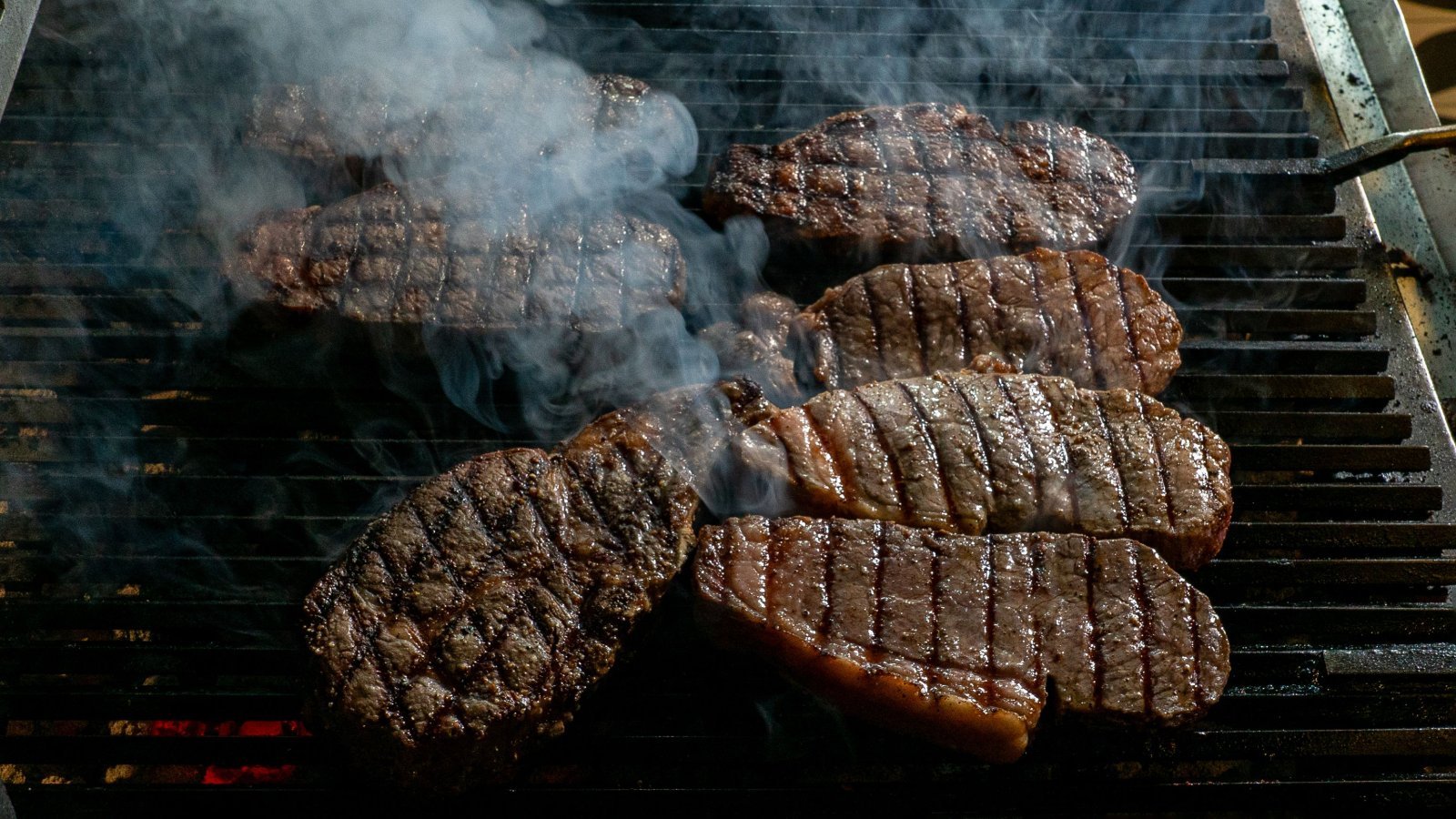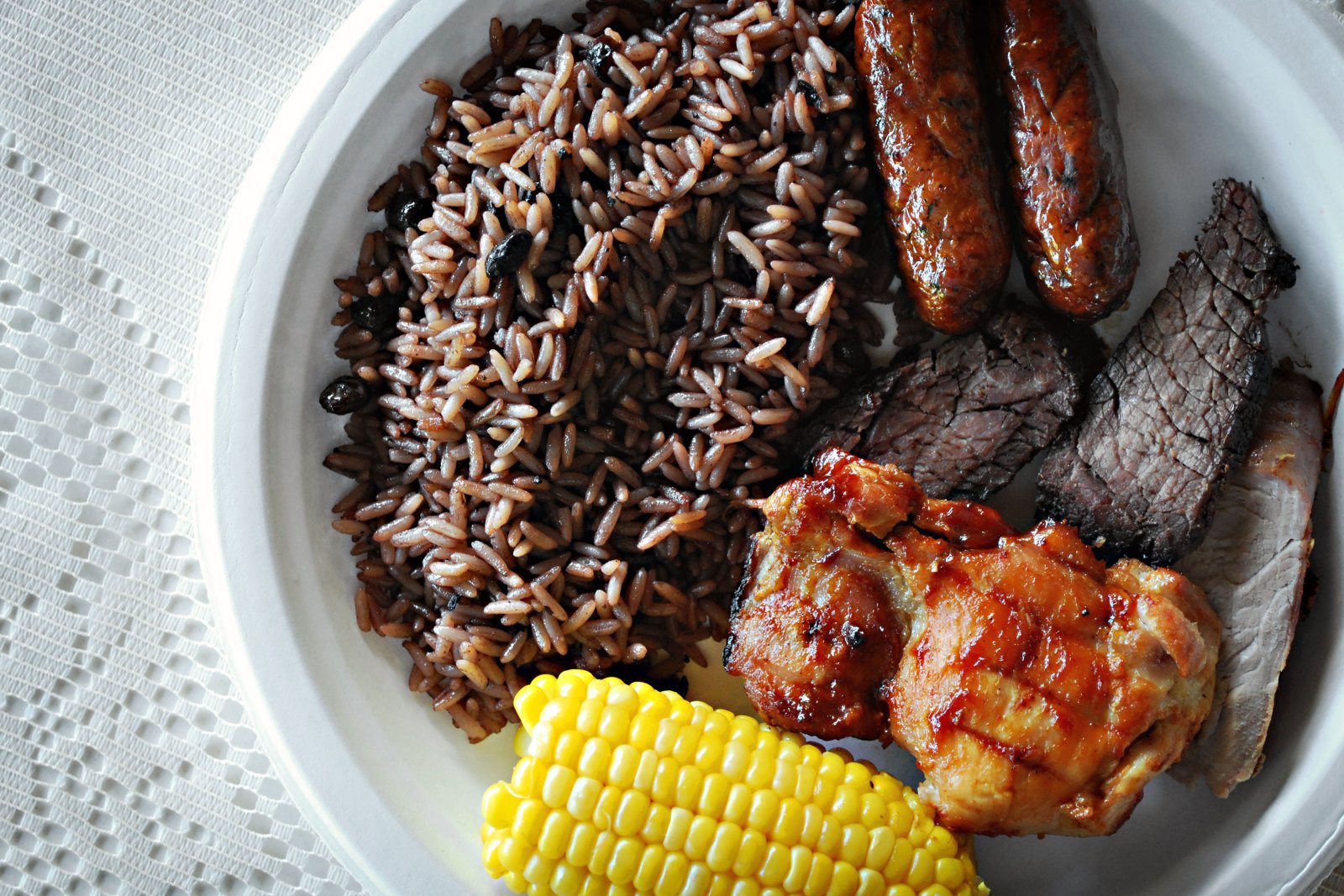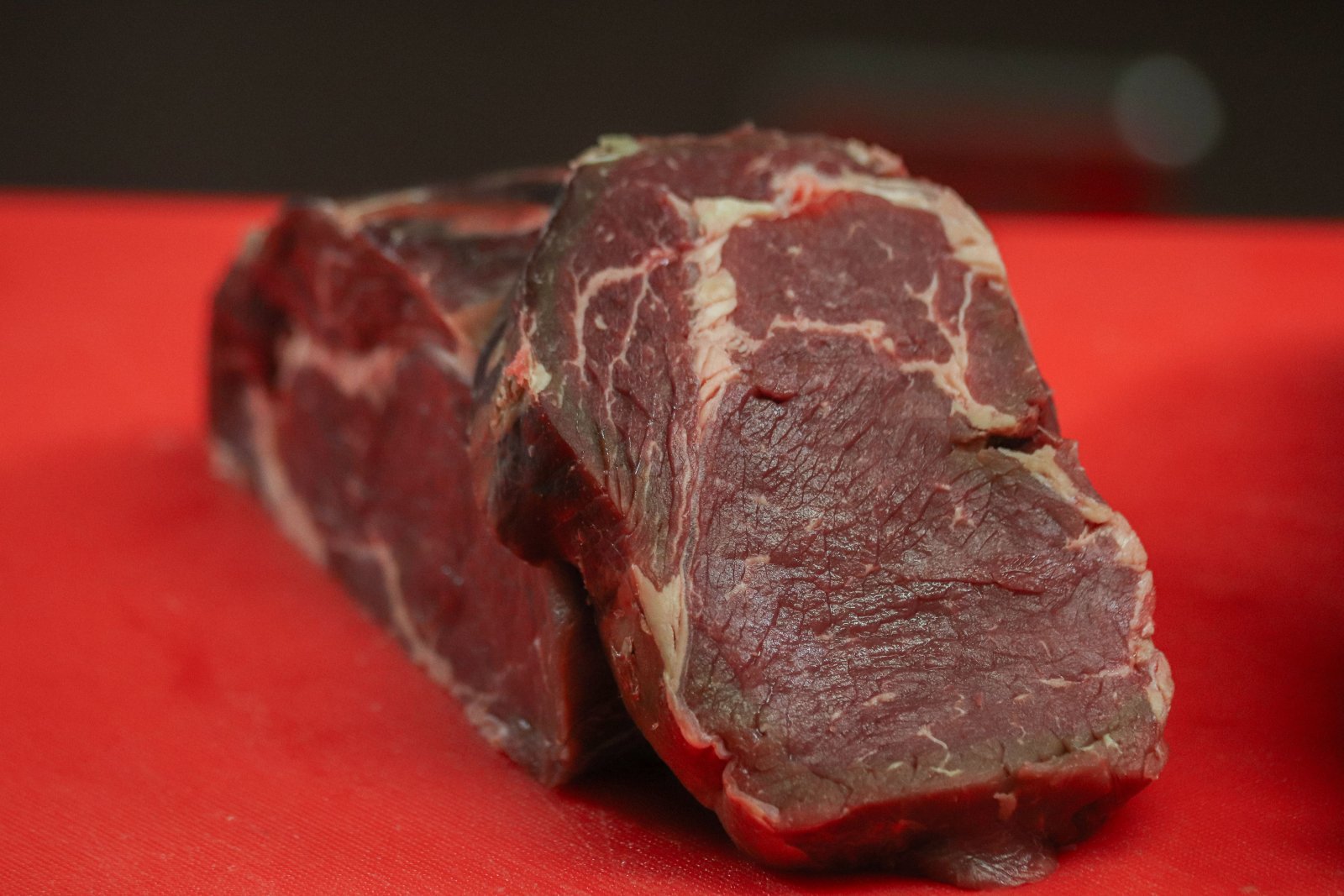
Why Red Meat Is More Than Just a Source of Protein
Red meat has become one of the most controversial foods in modern nutrition. Depending on who you listen to, beef is either one of the most nutrient-dense foods available or something that should be restricted because of saturated fat, cholesterol, cardiovascular disease, or cancer.
At FitCalc, our position is clear: we consider high-quality, unprocessed red meat, especially beef, an excellent food to eat every day. Reducing beef to its saturated-fat content ignores the impressive collection of nutrients contained in the rest of the food, while reducing it to "a source of protein" doesn't go nearly far enough either.
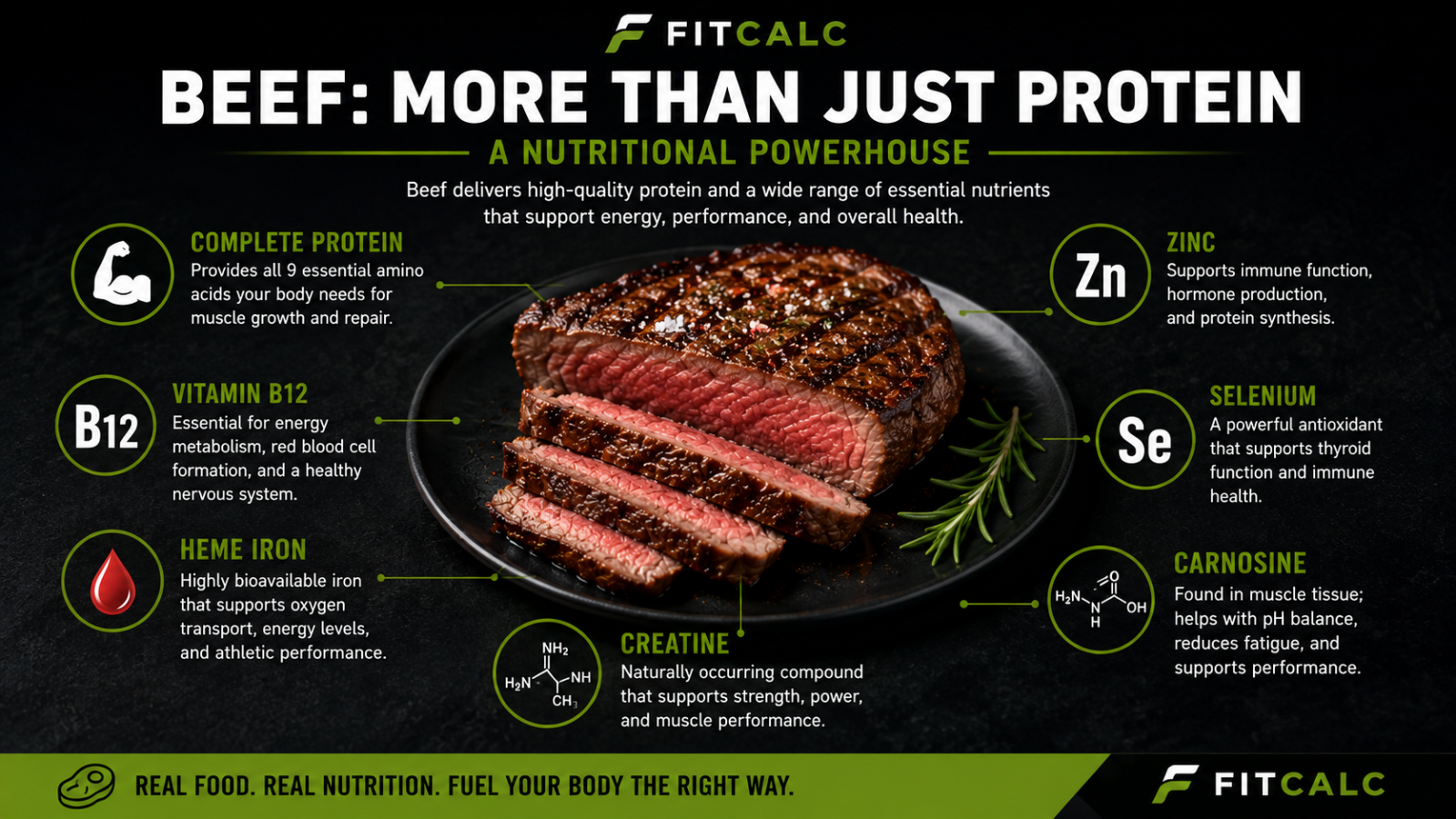
A serving of beef provides complete, highly digestible protein alongside vitamin B12, heme iron, zinc, selenium, creatine, carnosine, and numerous other nutrients. Many of these are particularly relevant for maintaining muscle, producing red blood cells, supporting normal neurological function, and meeting the nutritional demands of an active lifestyle.
There are observational studies associating greater red-meat consumption with certain chronic diseases, and we aren't going to pretend those studies don't exist. But an association observed in a population is not automatically evidence that unprocessed beef caused the outcome, and several modern evidence reviews have found the associations involving unprocessed red meat to be weak, inconsistent, or based on low-certainty evidence.
That distinction matters when we're deciding whether a whole, nutrient-dense food deserves to be feared.
Beef Provides Some of the Highest-Quality Protein You Can Eat
Let's start with the obvious benefit.
Beef is an excellent source of complete protein, meaning it supplies all nine essential amino acids the body needs to obtain through food. Animal proteins also tend to have high digestibility and favorable essential-amino-acid profiles, which makes them particularly useful for supporting muscle repair and growth.
This matters whether you're a bodybuilder or not. Muscle isn't merely something that makes you look better at the beach. Maintaining adequate muscle supports strength, physical function, glucose disposal, mobility, and independence as you age. Protein requirements also become especially important during periods of resistance training, weight loss, injury recovery, or aging.
A typical cooked serving of beef can easily provide 25–40+ grams of protein, depending on the cut and portion size. Someone eating a substantial steak or ground-beef meal can therefore cover a meaningful portion of their daily protein target without relying on powders or heavily processed substitutes.
For someone pursuing hypertrophy, FitCalc generally recommends approximately 1 gram of protein per pound of bodyweight per day when appropriate. Beef makes reaching that target remarkably straightforward.
But protein is only the beginning.
Beef Is Loaded With Micronutrients
One reason we like whole animal foods is that the protein comes packaged with other useful nutrients.
Beef is particularly rich in vitamin B12, an essential vitamin involved in red blood cell formation, DNA synthesis, and neurological function. B12 occurs naturally in animal foods, making meat one of the most straightforward ways to obtain it through the diet.
Then there is iron. Beef provides heme iron, the form found in animal tissue. Heme iron is generally more readily absorbed than non-heme iron from plant foods, and the presence of meat can also improve absorption of non-heme iron consumed elsewhere in the meal.
Iron matters because it is required for hemoglobin and oxygen transport. Inadequate iron status can contribute to fatigue and impaired physical performance, which makes obtaining enough particularly important for people with greater requirements.
Beef is also a useful source of zinc, which contributes to immune function, protein synthesis, DNA synthesis, wound healing, and numerous enzymatic reactions throughout the body. Selenium, phosphorus, niacin, riboflavin, and vitamin B6 add to the nutritional package.
The point isn't that beef is the only food containing these nutrients. It obviously isn't. The point is that one ordinary whole food delivers high-quality protein and a broad collection of essential micronutrients simultaneously.
That's a very different nutritional proposition from viewing steak as nothing more than "30 grams of protein and some saturated fat."
Beef Naturally Contains Creatine
If you've read our article on creatine, you already know how highly we think of it.
Creatine helps maintain phosphocreatine stores that can rapidly regenerate ATP during high-intensity muscular work. Supplementation has been extensively studied for strength, power, resistance-training performance, muscle growth, and increasingly for potential roles in brain energy and cognitive function.
Creatine isn't something invented by the supplement industry. It occurs naturally in animal tissue, with red meat and fish among the major dietary sources.
You would need to eat a large amount of meat to obtain the same creatine dose commonly provided by a 3–5 gram daily supplement, which is why supplementation remains useful even for people who regularly eat beef. But habitual meat consumption still contributes dietary creatine and helps explain why people who eat little or no animal food often begin with lower muscle creatine stores.
Beef also contains carnosine, a dipeptide concentrated in skeletal muscle. Carnosine contributes to intracellular buffering during muscular activity, among other physiological roles. Like creatine, it is found predominantly in animal foods.
These compounds are a good example of why evaluating food only through the familiar protein-carbohydrate-fat framework can miss useful nutritional information.
Nutrient Bioavailability Matters
Nutrition labels tell you how much of a nutrient a food contains. They don't always tell you how easily your body can access and use it.
This is particularly relevant when comparing animal and plant foods. As mentioned earlier, heme iron from animal tissue is generally more readily absorbed than non-heme iron. Protein quality can differ because of digestibility and essential-amino-acid composition. Zinc absorption can also be affected by compounds such as phytate in plant foods.
That doesn't mean vegetables, fruit, or other plant foods have no nutritional value. FitCalc's normal whole-food approach includes fruit and vegetables alongside animal foods. But we don't think a nutrient should be considered interchangeable simply because the same number appears in a nutrition database.
Food is more complicated than that.
Beef provides several important nutrients in forms the human body can use efficiently, while also supplying them together in a single protein-rich food. That's one of the major reasons we consider it such a valuable dietary staple.
What About Saturated Fat and Cholesterol?
This is usually where the argument against beef begins.
Different cuts of beef contain different amounts of saturated fat. Lean sirloin and fatty ribeye obviously aren't nutritionally identical, and ground beef can range from extremely lean to 70/30 or fattier. Beef also contains monounsaturated fats, including oleic acid, alongside saturated fatty acids.
Certain saturated fatty acids can increase LDL cholesterol compared with replacing them with unsaturated fats. That is a real physiological effect, but it does not automatically demonstrate that eating unprocessed beef causes cardiovascular disease.
Those are different questions.
Much of the research connecting red-meat consumption with cardiovascular outcomes comes from observational cohorts. These studies can be valuable, but they cannot completely separate a food from every other difference between people who eat more or less of it. Smoking, bodyweight, exercise, alcohol consumption, overall diet quality, socioeconomic status, and other behaviors can all influence long-term health.
A 2019 systematic review involving more than four million participants judged the evidence linking reductions in unprocessed red meat with improvements in cardiovascular mortality, stroke, myocardial infarction, and type 2 diabetes to be low certainty, with very small absolute associations. The authors specifically cited residual confounding and dietary measurement problems among the limitations.
Another overview of systematic reviews found that confidence in the existing reviews was critically low overall. Evidence concerning several cardiovascular outcomes was graded low or very low, although the authors did find moderate-quality evidence for an association between unprocessed red meat and stroke.
That is a much more complicated picture than "red meat causes heart disease."
What About Cancer?
The cancer question deserves the same precision.
Observational studies have reported associations between higher red-meat consumption and colorectal cancer, which is why major health organizations have recommended limiting intake. We disagree with turning those associations into a blanket instruction that healthy adults should avoid nutrient-dense unprocessed beef.
A particularly useful 2022 analysis published in Nature Medicine evaluated prospective evidence concerning unprocessed red meat and six health outcomes using a methodology designed to account for between-study heterogeneity and quantify evidence strength. The researchers found weak evidence of association between unprocessed red meat and colorectal cancer, breast cancer, type 2 diabetes, and ischemic heart disease, while finding no evidence of association with ischemic or hemorrhagic stroke.
For colorectal cancer specifically, the analysis classified the evidence as two-star evidence on its five-star Burden of Proof scale. When between-study heterogeneity was incorporated, uncertainty around the risk estimates was substantial.
That doesn't prove beef can never influence cancer risk, and we don't need to make that claim. It demonstrates that the certainty behind strong causal statements is considerably weaker than many headlines imply.
At FitCalc, we don't consider weak observational associations sufficient reason to remove one of the most nutrient-dense whole foods from an otherwise healthy diet.
Unprocessed Beef and Processed Meat Shouldn't Automatically Be Treated as the Same Food
Another major problem with the red-meat discussion is the tendency to talk about a steak and a highly processed meat product as though they're nutritionally identical because both originated from an animal.
They're not.
Processed meats can contain substantial sodium and may contain preservatives or other added ingredients depending on the product. An unseasoned steak or package of ground beef has a much simpler composition.
Research has sometimes reflected that distinction. A large 2010 systematic review and meta-analysis involving more than 1.2 million people found no association between unprocessed red meat and coronary heart disease, while each 50-gram daily serving of processed meat was associated with a 42% higher incidence of coronary heart disease.
Newer observational analyses have not always reproduced such a clean separation. A 2023 meta-analysis, for example, reported associations between both unprocessed and processed red meat and cardiovascular disease, although the association was larger for processed meat.
This inconsistency is exactly why we don't think sweeping statements are appropriate.
A steak, ground beef, hot dog, and heavily processed frozen meat product should not automatically be treated as one nutritional exposure. If we're discussing the health effects of unprocessed beef, then the evidence should actually concern unprocessed beef.
Do You Need to Choose the Leanest Beef Possible?
Not necessarily.
If someone is intentionally restricting calories, leaner cuts can make it easier to consume substantial protein without using as much of the calorie budget. Someone trying to gain weight may benefit from fattier beef because it provides more energy without requiring a much larger portion.
We don't recommend fearing naturally occurring animal fat simply because it contains saturated fatty acids. Cuts such as ribeye, chuck, and 80/20 ground beef can fit comfortably into a whole-food diet.
Your overall calorie requirements and goals should influence the choice. A bodybuilder deep into a fat-loss phase and a naturally skinny person trying to gain 20 pounds don't necessarily need the same ground-beef ratio.
The important part is that you're eating actual beef rather than believing the only healthy version of meat is a nearly fat-free piece of protein stripped of everything else.
Should You Eat Beef Every Day?
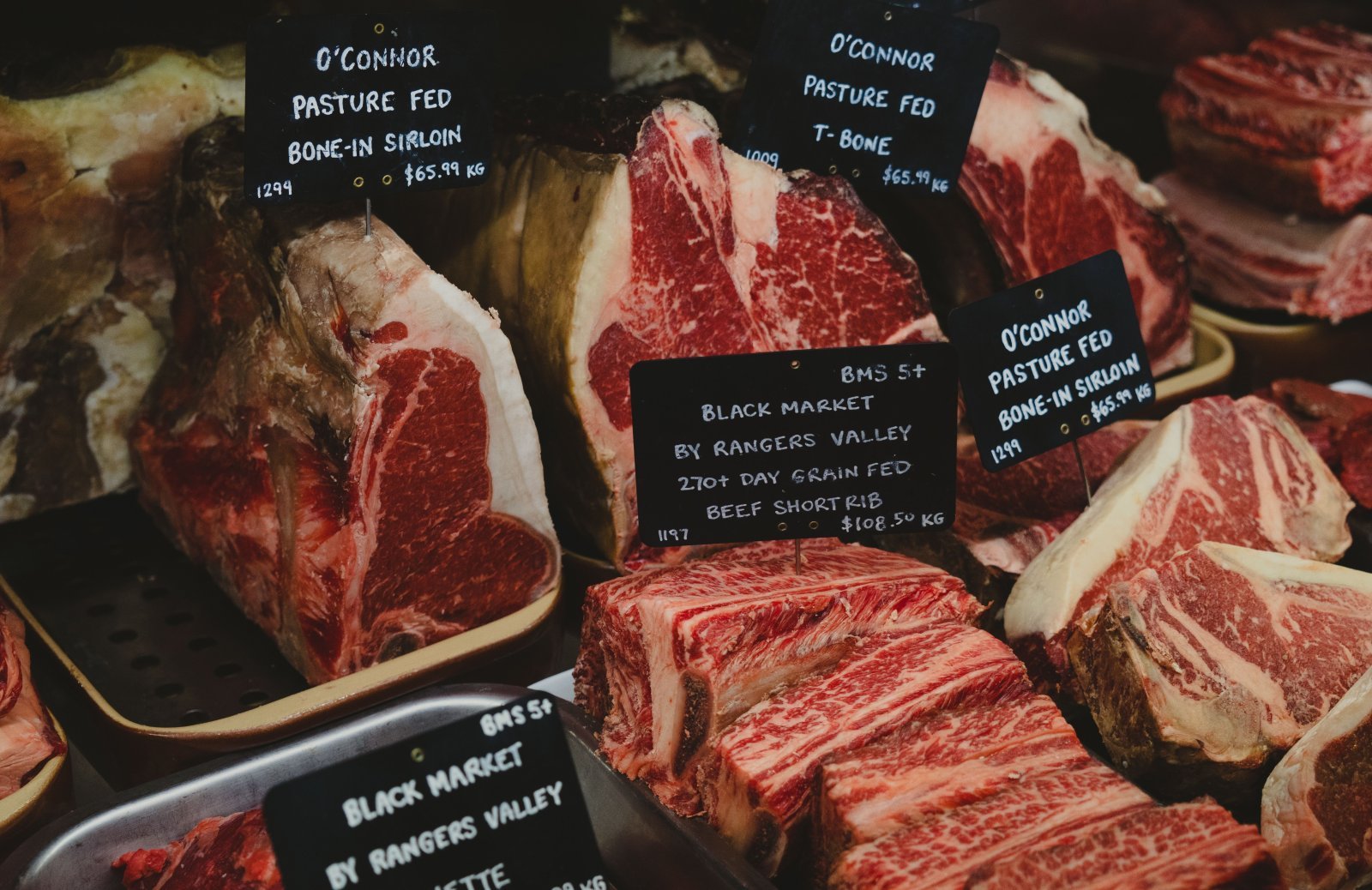
For a healthy adult who enjoys it, FitCalc is comfortable recommending unprocessed red meat, particularly beef, as a daily dietary staple.
That doesn't mean every meal needs to be steak. Eggs, fish, poultry, dairy when tolerated, fruit, vegetables, potatoes, rice, and other whole foods can all contribute to a varied diet. Eating beef every day simply means we see no reason to artificially ration a nutrient-dense whole food because of generalized warnings about "red meat."
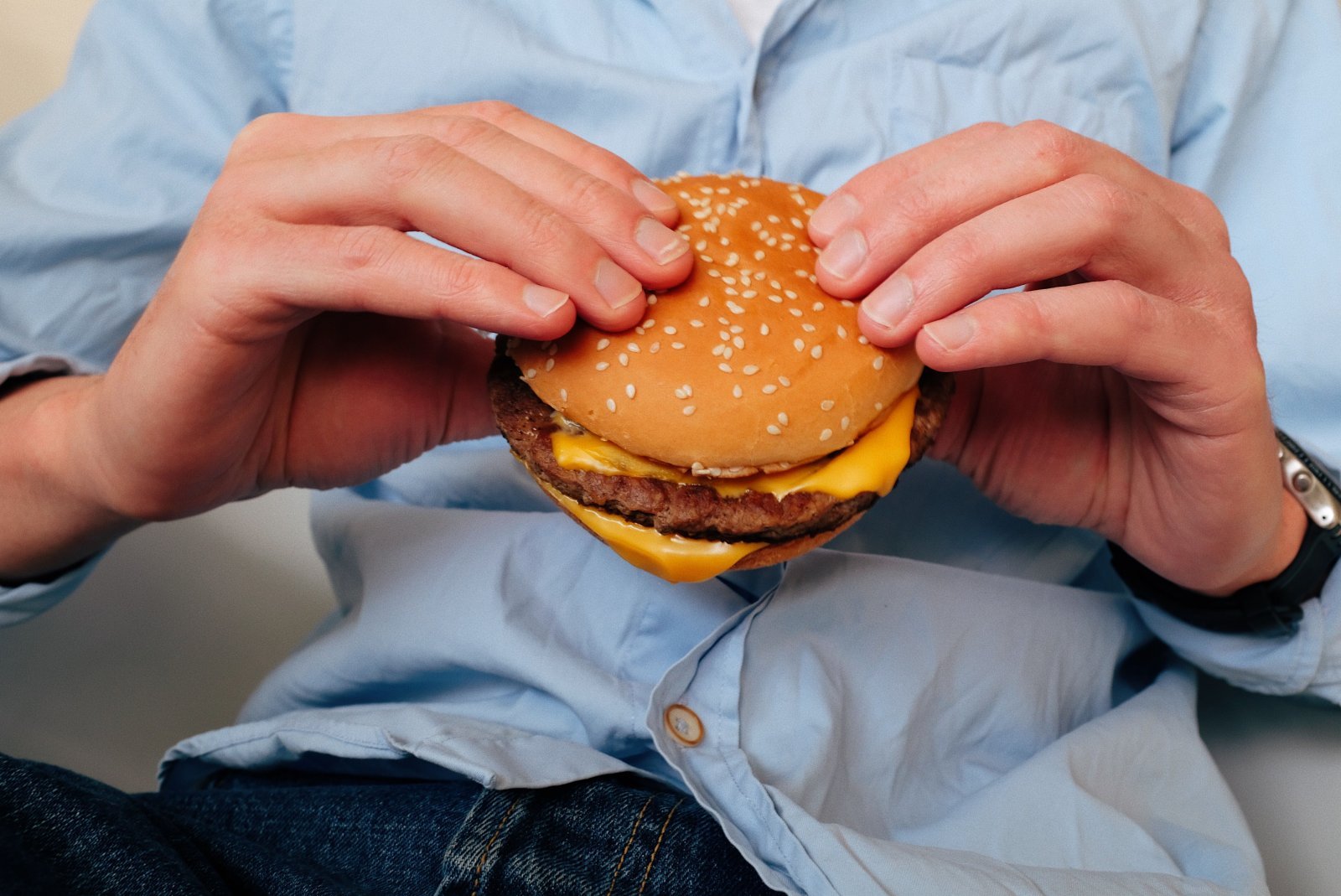
Portion size should still make sense for your calorie and protein requirements. Someone eating 1,800 calories has a different energy budget from someone eating 3,500. The rest of the diet matters as well. Daily beef inside a diet based predominantly on whole foods is not the same dietary pattern as eating a fast-food burger alongside fries, soda, dessert, and ultra-processed snacks every day.
Context matters.
Our preference is straightforward: choose minimally processed beef, cook it using quality fats, pair it with other whole foods, and let your appetite, calorie needs, and protein target determine how much you eat.
The FitCalc Approach
Red meat is much more than a protein source.
Beef provides complete, highly digestible protein along with vitamin B12, heme iron, zinc, selenium, creatine, carnosine, and other nutrients in a highly useful whole-food package. It supports a high-protein diet without requiring complicated meal planning or heavily processed substitutes.
We also don't believe the evidence justifies treating unprocessed beef as something healthy adults need to fear. Some observational research reports associations with cardiovascular disease, diabetes, or cancer. Other analyses find little or no association for particular outcomes, and rigorous evidence assessments have characterized many of the relationships as weak or low certainty.
That uncertainty should be communicated accurately. But uncertainty is not the same thing as proof that beef is harmful.
FitCalc recommends making high-quality animal foods a major part of the diet, and beef is one of the best options available. Eat it with eggs. Eat it with potatoes or rice. Add fruit and vegetables. Adjust the cut and portion to your calorie requirements. Build the rest of your diet around similarly recognizable foods.
For the average healthy adult, we see no compelling reason to treat an unprocessed steak or serving of ground beef like an indulgence that needs to be rationed.
Beef is nutritious, protein-rich, satisfying, versatile, and packed with nutrients your body can actually use.
For us, that's a food worth eating regularly, including every day.
Sources
Stanaway JD, Afshin A, Ashbaugh C, et al. Health effects associated with consumption of unprocessed red meat: a Burden of Proof study. Nature Medicine. 2022. The analysis found weak evidence of association between unprocessed red meat and colorectal cancer, breast cancer, type 2 diabetes, and ischemic heart disease, with no evidence of association for ischemic or hemorrhagic stroke. Nature Medicine
Zeraatkar D, Han MA, Guyatt GH, et al. Red and Processed Meat Consumption and Risk for All-Cause Mortality and Cardiometabolic Outcomes: A Systematic Review and Meta-analysis of Cohort Studies. Annals of Internal Medicine. 2019. The review found very small associations and rated the evidence concerning several outcomes as low certainty, noting residual confounding and dietary measurement limitations. PubMed
Micha R, Wallace SK, Mozaffarian D. Red and processed meat consumption and risk of incident coronary heart disease, stroke, and diabetes mellitus: a systematic review and meta-analysis. Circulation. 2010. The analysis of more than 1.2 million participants found no association between unprocessed red meat and coronary heart disease, while processed meat was associated with higher coronary-heart-disease incidence. PubMed Central
de Medeiros GCBS, et al. Associations of the consumption of unprocessed red meat and processed meat with the incidence of cardiovascular disease and mortality, and the dose-response relationship: A systematic review and meta-analysis of cohort studies. Critical Reviews in Food Science and Nutrition. 2023. The review found associations with total stroke incidence but no positive association between unprocessed red meat consumption and cardiovascular mortality. PubMed
Lescinsky H, et al. Intake of Unprocessed and Processed Meat and the Association with Cardiovascular Disease: An Overview of Systematic Reviews. Nutrients. 2021. The authors found critically low confidence in the included systematic reviews overall, with evidence quality varying substantially across cardiovascular outcomes. PubMed Central