How to Stay Full in a Calorie Deficit Without Cutting More Food
You have already reduced your portions, but now lunch barely feels like lunch. By the time you get home, you are hungry enough to eat the meal you planned and several things you did not. The next move is not automatically to cut another hundred calories.
The FitCalc Calorie Deficit Calculator can help establish a starting target, and the Protein Calculator helps with meal planning. These tools provide estimates, not prescriptions.
A calorie deficit means eating less energy than you use over time. It does not necessarily mean eating the smallest possible amount of food. A useful approach is to make the calories you are already eating more satisfying: build substantial meals, use water-rich foods, include protein, and stop treating every ingredient as something that needs removing.
That will not make hunger disappear. The goal is a manageable eating pattern, not permanent fullness or a test of how much discomfort you can tolerate. Here is how to troubleshoot the meals before tightening the target.
Start With the Difference Between Calories and Food Volume
Energy density describes how many calories a food provides for its weight. For example, a hypothetical meal containing 500 calories in 500 grams of food has an energy density of 1 calorie per gram. A different 500-calorie meal weighing 250 grams has twice that energy density. The calorie totals match; the amount of food does not.
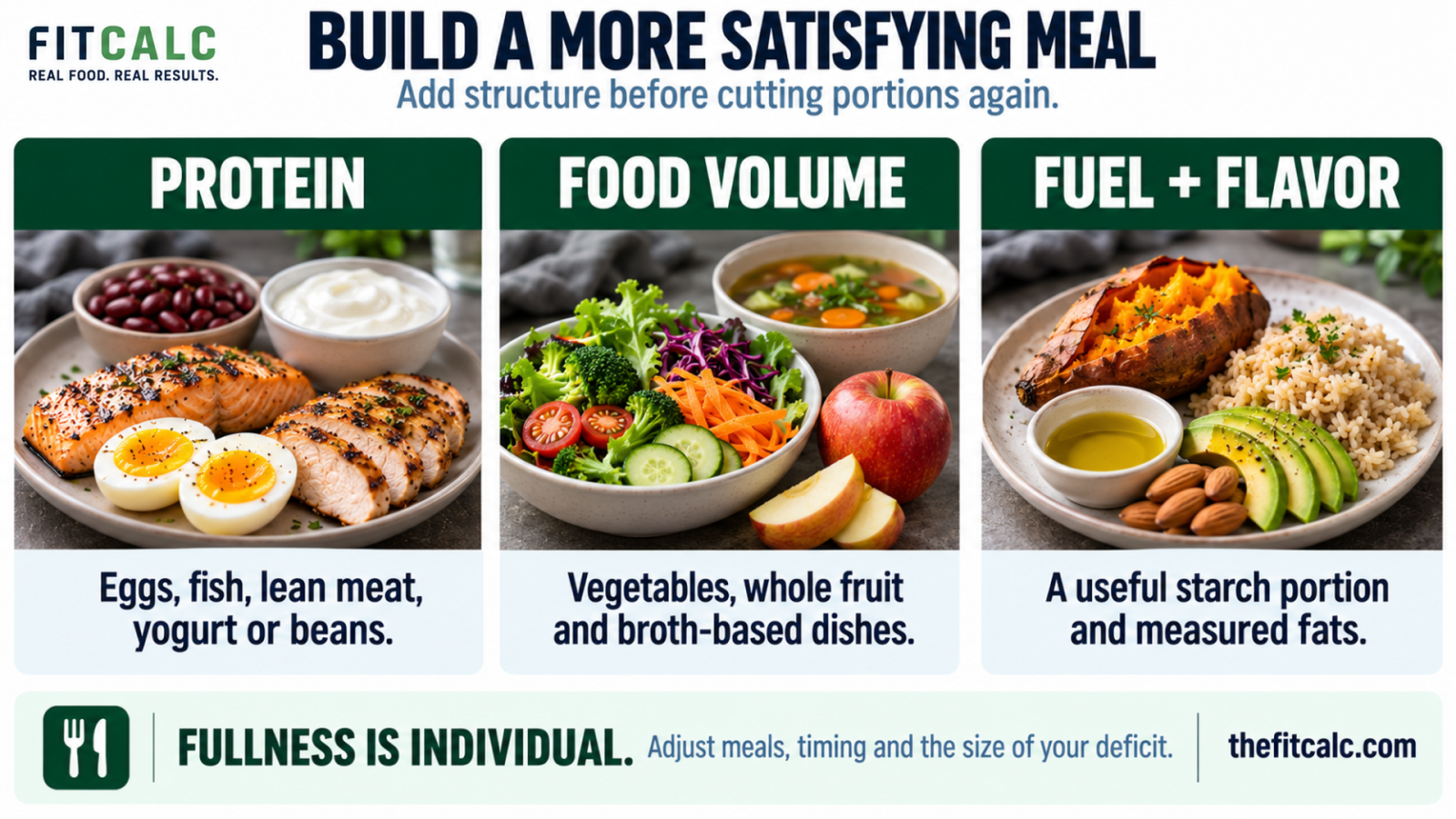
This is not a system for labeling foods good or bad. Nuts, olive oil, cheese, and dried fruit can fit a nutritious diet, but they concentrate energy into relatively small portions. Vegetables, whole fruit, and broth-based dishes generally bring more water to the plate. Preparation matters: a vegetable dish cooked with generous oil is not equivalent to the same vegetables steamed.
In a year-long randomized trial involving 97 women with obesity, advice to reduce fat and increase water-rich foods, especially fruit and vegetables, produced a lower-energy-density diet and less reported hunger than advice to reduce fat alone. Both groups lost weight. The study supports this strategy, but it does not establish a guaranteed result for every lifter or every meal. Read the trial.
Think of food volume as one lever, not a loophole. Adding a large side dish without changing anything else can still raise your total calories. The useful question is what you can rearrange within the meal you already eat.
Build a Meal, Not a Collection of Diet Foods
Start with a recognizable protein food: chicken, fish, lean beef, eggs, Greek yogurt, tofu, beans, or another option you enjoy. Then add produce and a carbohydrate food that suits the meal. Include enough fat or sauce to make it taste like something you actually want to eat.
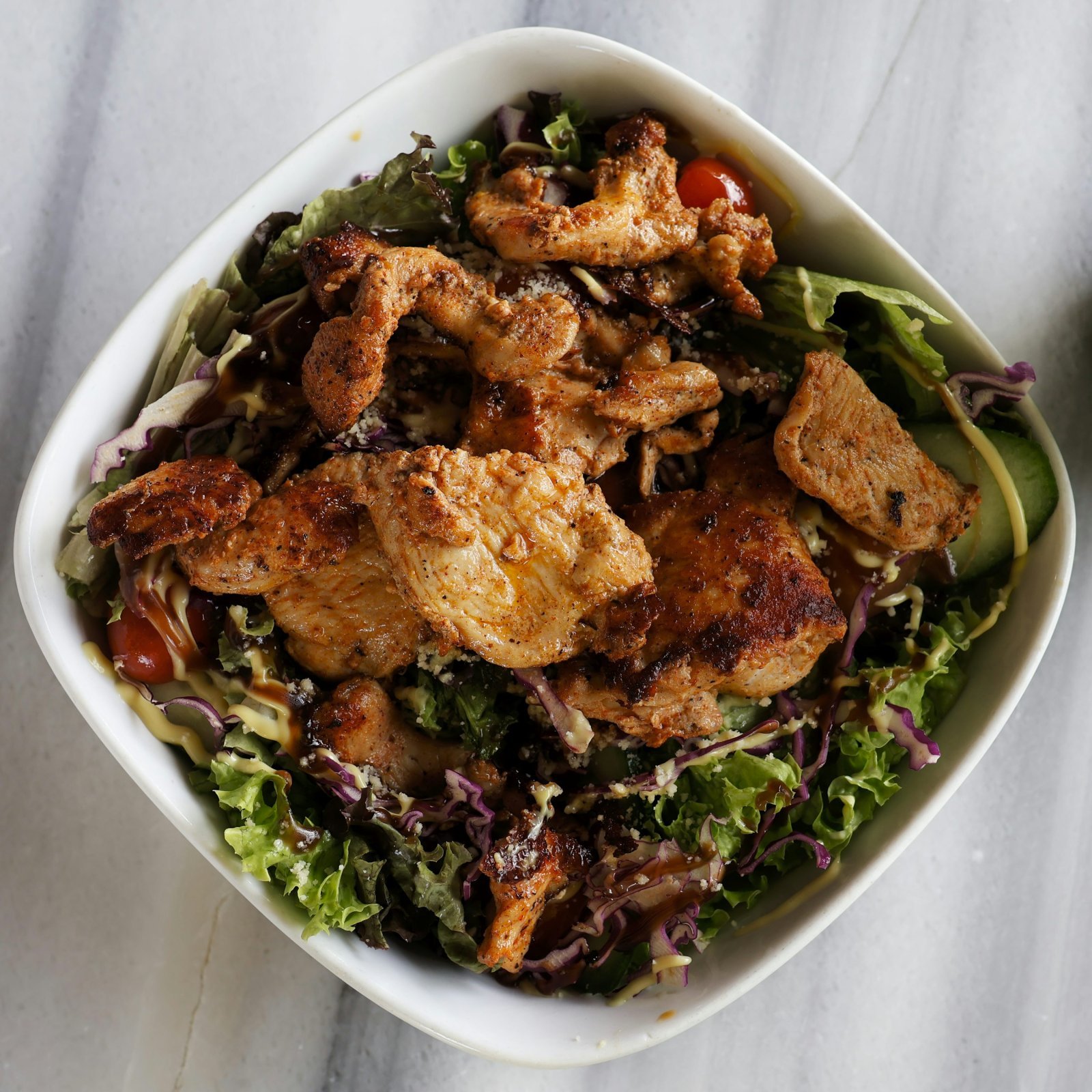
For example, lunch could be leftover chicken, rice, cooked vegetables, and a measured dressing. Dinner might be lean beef and bean chili with tomatoes, peppers, and a side of fruit. Breakfast could be yogurt with oats and berries. These are meal-building examples, not prescribed menus or promises that everyone finds the same foods filling.
Protein can help with appetite control, but more eating occasions are not automatically better. In a small trial of men following an energy-restricted diet, higher protein intake improved some measures of satiety, while increasing eating frequency did not provide the expected advantage. This is not proof that three meals are best for everyone. It is a reason not to assume you must graze all day. Read the study.
If a snack-sized lunch keeps leaving you hungry, try making lunch a proper meal instead of adding increasingly elaborate snacks afterward. Conversely, if a long workday leaves an unavoidable gap between lunch and dinner, a planned snack may be more practical than arriving home ravenous. Choose the structure you can repeat.
Change the Balance Before Shrinking the Plate
Look at a meal you eat often. Keep its identity, but change where its calories come from. A rice bowl does not have to become a bowl of lettuce. You might keep the chicken and rice, add a substantial portion of vegetables, and use a little less of an energy-dense topping. A sandwich can stay a sandwich while gaining a side of fruit and losing an oversized serving of mayonnaise or chips.
Consider a deliberately simplified example. Suppose a topping provides 180 calories and you normally use the whole portion. Using half saves 90 calories. If you replace those 90 calories with a larger, water-rich side, the meal has the same total energy but a different balance. Whether that feels more satisfying is something to test, not an outcome a calculator can guarantee.
Use the actual package label or a matching food entry for the real calculation. There is no universal calorie value for “a little dressing,” and cooking oil counts even when it is added to otherwise low-calorie food. The point is to trade deliberately rather than pile extra food on top and assume it is free.
Do not strip every meal of fat. If a modest amount of dressing makes vegetables enjoyable, that may help the meal remain part of your routine. A technically low-calorie dinner that you dislike and replace with snacks later has not solved the practical problem.
Use Soup or Salad Strategically, Not Magically
A vegetable-heavy starter may be useful when you enjoy one. In a controlled crossover study of 42 women, a lower-energy-density salad before pasta reduced total meal intake, while higher-energy-density versions increased it. The dressing and cheese changed the result. The research tested specific laboratory meals, not an unlimited-salad rule. The study is linked in Sources below.
Similarly, research on low-energy-density soup found lower total intake at a subsequent lunch when soup was served first. That result is relevant to broth-and-vegetable dishes, but it should not become a promise that every soup suppresses appetite. A rich cream soup and a light vegetable soup can have very different energy contents.
In practice, try a small bowl of vegetable soup alongside your usual lunch, while accounting for it in the meal. Or serve the vegetables first because they are ready while the rest of dinner cooks. There is no need to force an extra course if you dislike it, have limited time, or find that it does not change your hunger.
Keep the Foods That Make the Plan Livable
There is a difference between feeling physically full and feeling satisfied with a meal. A mountain of plain vegetables may fill your stomach while leaving you disappointed with dinner. You do not have to answer that by adding more volume indefinitely.
Keep a reasonable portion of the foods you look forward to. That might mean bread with lunch, potatoes with dinner, or a small dessert that you planned rather than negotiated with yourself at the end of the day. Make the rest of the meal useful around it. The National Institute of Diabetes and Digestive and Kidney Diseases emphasizes an eating pattern that fits your preferences and can be maintained over time. Read its weight-management advice.
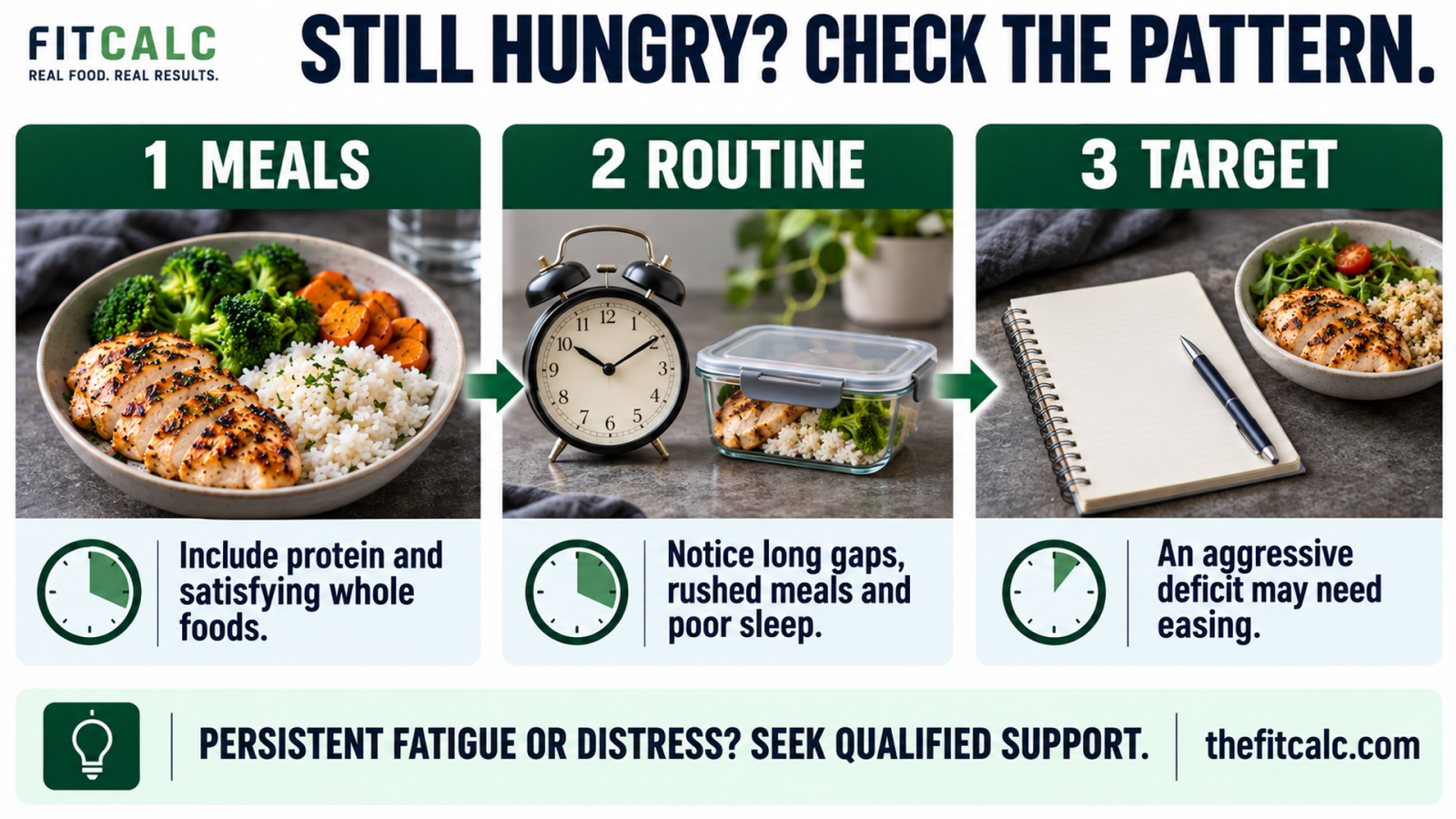
For a week, notice which meals leave you comfortably satisfied and which lead to repeated searching through the kitchen. You do not need a perfect hunger score. A short note such as “lunch too small” or “dinner fine, wanted something sweet” gives you a more specific problem to solve than “I need more discipline.”
Troubleshoot Timing, Sleep, and the Deficit Itself
If hunger peaks at the same time every day, start there. You could move part of your daily food allowance toward that period rather than lowering the total. An afternoon snack might become part of lunch, or some breakfast calories might move to dinner if that fits your appetite and schedule. This is a practical experiment, not a claim that eating at a particular hour overrides energy balance.
Sleep deserves attention too. In a randomized trial of adults with overweight who habitually slept less than 6.5 hours, an intervention to extend sleep reduced objectively assessed energy intake compared with the control group. The intervention period was short, and it was not a trial showing that everyone can sleep away hunger. It does make chronically short sleep worth addressing alongside food choices. Read the trial.
Finally, a calorie estimate is a starting point, not an instruction to ignore how you are functioning. If you are constantly preoccupied with food, repeatedly overeating after restriction, or struggling to sustain normal activities and training, reassess the plan rather than collecting more appetite tricks. A less aggressive target or professional guidance may be more appropriate than another food swap.
This article is general education for adults, not a personalized weight-loss prescription. If you are under 18, pregnant, breastfeeding, managing a condition or medication affected by food intake, or have a history of an eating disorder, seek individualized advice before deliberately restricting calories. Persistent dizziness, faintness, or other concerning symptoms need medical attention, not a more filling lunch.
Test One Change Before Changing Everything
Pick the meal causing the most trouble and make one adjustment for several ordinary days. Keep the protein, improve the balance of the meal, and choose a manageable portion of produce. Record whether the meal tastes good, whether the next few hours are easier, and whether the plan fits work and training.
If it helps, keep it. If it leaves you bloated, dissatisfied, or just as hungry, change the approach. You might prefer cooked vegetables to a huge raw salad, a mixed bowl to a smoothie, or fewer but more substantial meals. Your best routine is not necessarily the one that looks largest in a photograph.
The aim is enough structure to support progress without making eating a constant struggle. You can reduce calories while protecting the experience of having a real meal.
Practical Takeaways
- Before cutting calories again, inspect the meals that leave you hungry. Food volume and calorie content are different.
- Build substantial mixed meals with protein, produce, a carbohydrate food, and enough flavor to make them enjoyable.
- Trade some energy-dense extras for water-rich food rather than assuming extra vegetables or soup cancel other calories.
- Use meal timing and planned snacks to suit your actual hunger pattern. More frequent eating is not automatically more filling.
- If hunger is relentless or the plan is affecting your well-being, reassess the deficit and seek appropriate support instead of pushing harder.